
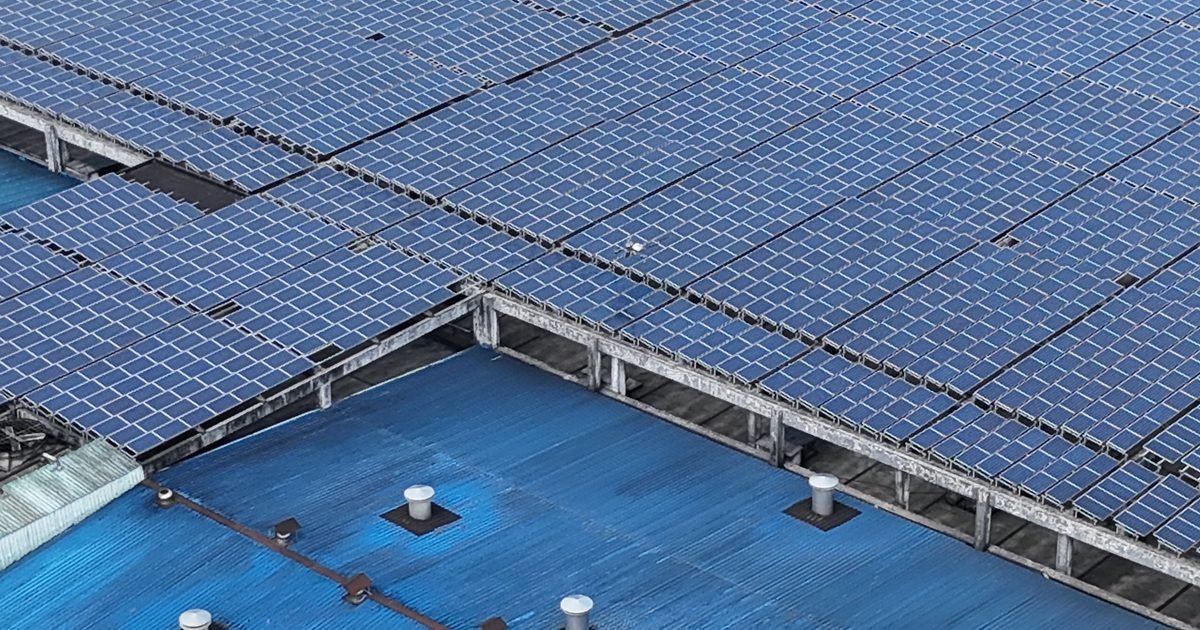
Legal Handbook: Rooftop Solar Projects in Industrial Parks
Thousands of square meters of factory rooftops in industrial parks are a solar goldmine — but mining it needs the right legal framework, especially after Decree 243/2026/ND-CP (26/6/2026) changed the game. This handbook systematizes the legal corridor for enterprises in industrial parks.
1. The legal framework: 4 texts to know
- 2024 Law on Electricity (61/2024/QH15) — general framework for power and renewables.
- Decree 58/2025/ND-CP — renewable energy, including self-produced/self-consumed rooftop solar.
- Decree 57/2025/ND-CP — direct power purchase agreements (DPPA).
- Decree 243/2026/ND-CP (26/6/2026) — amending rooftop solar and DPPA rules; the latest and most investor-friendly text.
2. Decree 243/2026's biggest change: raising the surplus-sale cap
Previously, surplus from self-consumed rooftop solar was capped at 20% of output — killing economics for businesses with low daytime use. Decree 243/2026 fundamentally changes this:
- New cap: 50% — surplus sales by agreement but not exceeding 50% of electricity generated at the rooftop source's output (up from 20%).
- Flexibility until 31/12/2030: parties may agree above 50% if the local grid can absorb it while ensuring system safety.
- Surplus scope: from the rooftop source plus storage systems charged from it (if any); measured at the inverter output.
3. Surplus pricing: how it works
Per Decree 243/2026: the purchase price follows the average annual wholesale electricity market price of the preceding year, not exceeding the price cap of the ground-mounted solar tariff framework. Parties negotiate the specific price within this band with the buyer (EVN/power corporation or park retail unit).
Practical note: surplus prices sit below the retail price businesses pay for grid power — so maximizing the self-consumption ratio (using solar directly in daytime) is the best economics; surplus sales are the "second offtake."
4. Procedures: significantly simplified
Good news for park enterprises: under Decree 243/2026, self-produced/self-consumed rooftop solar serving large customers needs no development registration. Still required:
- Grid-connection agreements with the grid operator / park retail power unit;
- Bidirectional metering, output measured at the inverter;
- Maximum installed capacity per the decree's formula based on the meter's rated current and voltage;
- Compliance with electrical safety, fire prevention, and roof structural rules.
5. Four industrial-park specifics
First — deal with the park's "landlord." In many parks, the retail power unit in the zone/cluster is the trading counterparty. Decree 243/2026 clarifies its role in DPPA and surplus trading — engage early on connection, metering and pricing.
Second — the factory roof. Assess structural load capacity (panels + frames + storm winds), waterproofing, and maintenance access. Plus fire-prevention compliance — sloppy solar installs are a fire risk.
Third — capacity vs. load. Size the system to daytime factory load: oversized systems depend heavily on surplus sales (low price); right-sized systems for daytime load give the best economics.
Fourth — consider DPPA. For offtake beyond self-use, direct power purchase via private or national grids — with the park retail unit participating — adds outlets. Decree 243/2026 also widened large-customer eligibility (data centers, EV charging stations…).
6. Implementation checklist
- Choose the model: self-use + surplus sales, or plus DPPA.
- Model daytime load → system size → capacity per the decree's formula.
- Agree with the park retail power unit on connection, metering, surplus trading.
- Assess roof structure + fire prevention + electrical safety.
- Sign surplus PPA / DPPA (watch price, metering, payment terms).
- Install, commission, operate — keep full technical dossiers.
7. The economics: quick payback math
For industrial-park enterprises, the rooftop solar decision is ultimately a numbers game. Four variables drive it — and Decree 243/2026 touches each directly.
Variable 1 — Self-consumption ratio. The most important variable: each self-consumed kWh replaces a kWh bought from the grid at retail price (industrial peak-hour tariffs can exceed VND 3,000/kWh), while surplus sold to the grid earns only the prior-year average market electricity price — significantly lower. A 3-shift factory with heavy daytime load can reach 70–80% self-consumption and pay back far faster than an office-hours-only operation.
Variable 2 — The 50% surplus cap (Art. 14). The old 20% cap forced many projects to undersize their systems — "excess power with nowhere to sell." The new 50% cap allows bigger systems that use the full roof area, which matters most for warehouses with large roofs but moderate loads. Until 31/12/2030, an even higher ratio is negotiable where the grid allows.
Variable 3 — Investment cost and cost of capital. Ask contractors for an itemized breakdown: equipment, construction, grid connection, maintenance. Financing cost directly determines payback time.
Variable 4 — Policy and technical risk. The surplus price tracks the prior-year average market price and fluctuates; panel efficiency degrades over time; and the post-2030 surplus ratio awaits further regulation.
Quick formula: Payback (years) ≈ Total investment ÷ (Annual electricity-bill savings from self-consumption + Annual surplus-sale revenue − O&M costs). With self-consumption above 70%, many industrial-park projects pay back in 4–6 years — then produce near-"free" electricity for the rest of the panels' 25-year life.
Legal note: bake surplus-price assumptions into the surplus power purchase agreement (Art. 14 leaves pricing to the parties' agreement) to avoid disputes when market prices move.
FAQ
Q: What is the legal framework?
A: 2024 Law on Electricity; Decree 58/2025 (renewables); Decree 57/2025 (DPPA); Decree 243/2026 (26/6/2026, amending — latest, raising the surplus cap).
Q: How much surplus can be sold?
A: Max 50% of generated output (up from 20%); above 50% by agreement until 31/12/2030 if the grid can absorb it safely (Decree 243/2026).
Q: How is surplus priced?
A: Average annual wholesale market price of the preceding year, capped at the ground-mounted solar tariff ceiling; parties negotiate specifics.
Q: Are project development permits needed?
A: No — self-consumed rooftop solar for large customers needs no development registration (Decree 243/2026); connection, metering, safety, fire and structural compliance remain.
Q: What's special inside industrial parks?
A: Engage the park retail power unit; assess roof + fire safety; apply the decree's capacity formula; consider DPPA for extra offtake.
References
- 2024 Law on Electricity 61/2024/QH15.
- Decrees 58/2025/ND-CP; 57/2025/ND-CP; 243/2026/ND-CP (26/6/2026).
- Decree 243/2026 figures verified via nangluongvietnam.vn and vietstock.vn on 28/9/2026; verify against the original text when applying.
—


