
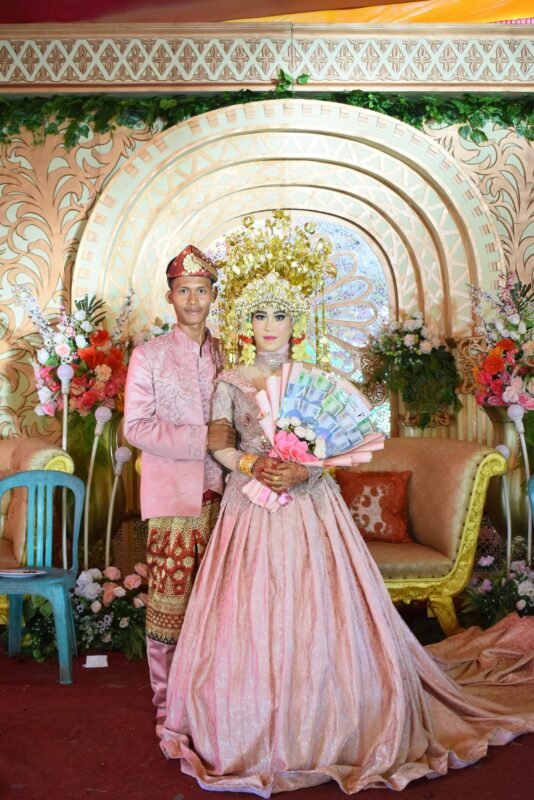
A real-life situation: A French man has fallen in love with a Hmong woman in Ha Giang. Her family wants a full traditional wedding with multi-day rituals. The foreign groom-to-be wonders: is there any different marriage procedure compared with marrying an ethnic Kinh person, and does such an elaborate customary wedding already make them legally married?
One uniform law for every ethnicity
The short answer: there is no ethnicity-specific marriage procedure. The 2014 Law on Marriage and Family applies uniformly to all Vietnamese citizens regardless of ethnicity or religion. Marriage conditions, registration procedures, and spousal rights and obligations are identical whether you marry a Kinh, Hmong, Thai, or Cham person.
This uniformity is an anchor for multicultural couples: every dispute and every right afterward is handled under the same legal framework — there is no “separate ethnic law.” Conversely, do not expect exemptions from marriage conditions on customary grounds — the law recognizes no such exception.
A customary wedding does not replace marriage registration
This is the point many highland couples miss. However grand a traditional ethnic wedding may be, it carries only cultural and communal significance. Legally, under Article 9 of the 2014 Law on Marriage and Family, only registration with the competent state authority creates a marital relationship.
The consequences of “customary wedding only, no registration” are very real: the two are not legally spouses, jointly built assets are not marital community property, and the foreigner cannot use the relationship to obtain a spousal residence card. After the customary celebration, the couple must still go to the commune-level People’s Committee where either party resides to complete marriage registration under the general rules.
The red lines custom must not cross
The law respects customs, but some limits are absolute. Article 5 of the 2014 Law on Marriage and Family prohibits child marriage — marrying where one or both parties are below the legal marriage age (20 for men, 18 for women). Some early-marriage customs in highland areas, if they result in underage marriage, violate not only civilized custom but the law itself.
Equally prohibited are forced marriage, deceptive marriage, and obstructing voluntary marriage. A “bride capture” custom that turns into forcing a woman to marry against her will has crossed from cultural beauty into conduct the law does not allow. Foreigners marrying in highland areas must be especially clear on this: both parties’ voluntariness is a mandatory condition with no cultural exception.
Registering marriage in remote areas: what extra preparation is needed
Procedurally, the couple registers at the commune-level People’s Committee like everyone else, with the same file: the declaration form, identity documents, the foreigner’s marital-status certificate (consular-legalized and translated with notarization), and health certificates. The only practical difference in remote areas is that travel and access to public services can be harder, so the couple should contact the commune-level People’s Committee in advance to confirm working schedules and the exact document list.
One small but valuable tip: where the two families are far apart geographically and culturally, take time beforehand to learn the rituals of the customary wedding to avoid misunderstandings. Respecting the bride’s family customs is not just politeness — it is the foundation of a durable multicultural marriage.
Legal basis
- Article 2, 2014 Law on Marriage and Family — Marriages among Vietnamese citizens of all ethnicities are respected and protected by law.
- Article 5, 2014 Law on Marriage and Family — Child marriage, forced marriage, deceptive marriage, and obstructing marriage are prohibited.
- Articles 8 and 9, 2014 Law on Marriage and Family — Marriage conditions and the registration requirement.
- Decree 120/2025/ND-CP (effective 01/07/2025) — Marriage registration at commune-level People’s Committees under the two-level government model.
Key takeaways
- No ethnicity-specific marriage procedure exists — one law for all citizens.
- A customary wedding, however large, never substitutes for marriage registration.
- Child marriage and forced marriage are absolutely prohibited, with no customary exception.
- After the customary wedding, complete registration at the commune-level People’s Committee.
Frequently asked questions
1. We held the ethnic customary wedding but never registered — what is our status?
Culturally you are husband and wife in the community’s eyes, but legally you are not. You have no spousal rights or obligations, no community-property regime, and the foreigner cannot obtain a spousal residence card. Treat marriage registration as a mandatory step right after the customary wedding.
2. Does the “bride capture” custom of some ethnic groups break the law?
It depends on the facts. If it is a symbolic ritual with the consent of both parties and both families, it is culture. But if the woman is forced to marry against her will, that is forced marriage, which the law prohibits. Voluntariness is always the deciding factor.
3. Is the marriage file any different when marrying an ethnic minority person?
Not at all. The file, the procedure, and the handling authority (the commune-level People’s Committee) are exactly the same as when marrying an ethnic Kinh person. The only extra note is practical: in remote areas, contact the commune-level People’s Committee in advance to confirm schedules and prepare complete documents, avoiding repeated trips.
FLAT Law Firm accompanies multicultural couples from understanding customs and preparing foreign-related marriage files to post-wedding residence procedures. Contact us for advice that honors both family custom and Vietnam’s legal framework.
Related articles
- Volunteering in retirement in Vietnam: do you need a work permit?
- Opening a bank account as a foreign retiree in Vietnam
- Banking Phishing Targeting Foreigners in Vietnam: Spotting It and Responding
- Paying Overseas Tuition from Vietnam: Limits and Paperwork
- Leaving Vietnam Permanently: How to Properly Close Your Bank Accounts
This legal analysis has been verified against current Vietnamese regulations and cross-border FDI transaction practices by the attorneys at FLAT LAW FIRM.

