
Scenario: a components factory in Hai Phong consumes about 1.2 million kWh a month. Its European customer requires that from 2027, at least 50% of electricity consumed must come from renewable sources, with proof. Management weighs three options: signing a DPPA with a wind project, buying REC certificates, or installing rooftop solar. This article compares the three on legal and commercial grounds.
Option 1: DPPA — buying directly from a renewable project
The direct power purchase agreement (DPPA) mechanism is governed by Decree 57/2025/ND-CP (issued 03/3/2025, effective the same day; amended by Decree 243/2026/ND-CP effective 26/6/2026; consolidated in document 53/VBHN-BCT 2026). Two forms exist:
- Via a private connection grid: the factory and the renewable generator sign a power purchase contract with direct delivery through a dedicated line. The price is negotiated bilaterally, capped at the generation price bracket for that source type.
- Via the national grid: the renewable generator sells all output on the spot market; the factory signs a forward contract with the generator while continuing to buy its supply needs from the power company. This form requires connection at 22 kV or above.
Eligibility: the factory must qualify as a large electricity consumer — currently defined by the Ministry of Industry and Trade as average consumption of 200,000 kWh per month or more. At 1.2 million kWh a month, the factory in the scenario qualifies. DPPA strengths: long-term price stability and clear origin proof for EU customers. Weaknesses: complex negotiation, dependence on the source project’s schedule, and technically intricate settlement mechanics for the national-grid form.
Option 2: buying RECs — fast, but understand what they are
A REC (Renewable Energy Certificate) certifies that 1 MWh of electricity came from renewable sources. Vietnam has no state-issued REC framework; the market runs on international systems (such as I-REC) where private bodies certify renewable projects. A factory buys RECs to “attach” green attributes to grid electricity it consumes.
Strengths: fast to deploy, low cost, no infrastructure investment. The biggest weakness: not every EU customer accepts RECs in place of physical renewable power — some supply chains demand additionality or a DPPA contract. Buying RECs without prior customer confirmation can be wasted money.
Option 3: self-investing in rooftop solar
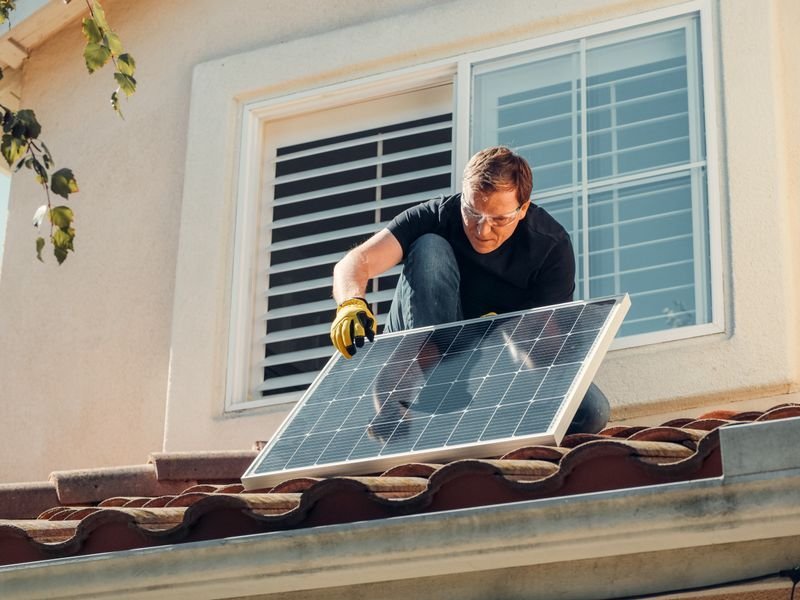
The factory installs solar on its own roofs for self-consumption. Legal frame: the Law on Electricity 61/2024/QH15 (effective 01/02/2025) and Decree 58/2025/ND-CP on renewable and new-energy development. Strengths: full control, lower peak-hour bills, indisputable origin proof. Weaknesses: large upfront capex, limited roof area (a 1.2-million-kWh-a-month plant can hardly cover 50% of demand from rooftops alone), plus fire-prevention, roof-structure and grid-connection compliance.
Recommendation: do not pick one — combine
For a 50% renewable target with proof for EU customers, the workable mix is usually combined: rooftop solar for daytime self-consumption (cutting peak-hour costs), DPPA for the remaining bulk (long-term proof), and RECs only as a bridge while the DPPA is being arranged. Before signing anything, send each option’s draft proof to the EU customer for acceptance — the cheapest step, and the one most companies skip.
Frequently Asked Questions
How much electricity must a factory consume to join a DPPA?
It must qualify as a large electricity consumer: currently average consumption of 200,000 kWh per month or more under Ministry of Industry and Trade rules. The national-grid form additionally requires connection at 22 kV or above.
Who sets the DPPA price?
The two parties negotiate it in the power purchase contract; the price may not exceed the maximum of the generation price bracket for that source type. The state does not fix individual contract prices.
Do EU customers recognise RECs as renewable consumption?
It depends on each customer’s supply-chain policy. Some accept RECs; others require physical renewable power via DPPA or self-generation (additionality). Get written confirmation before buying.
What rules apply to self-built rooftop solar?
The general frame is the Law on Electricity 61/2024/QH15 and Decree 58/2025/ND-CP on renewable development, plus fire-prevention, roof-structure safety and grid-connection rules. Take technical and legal advice before investing.
This article has been quality-reviewed by the FLAW AI Legal Council


