
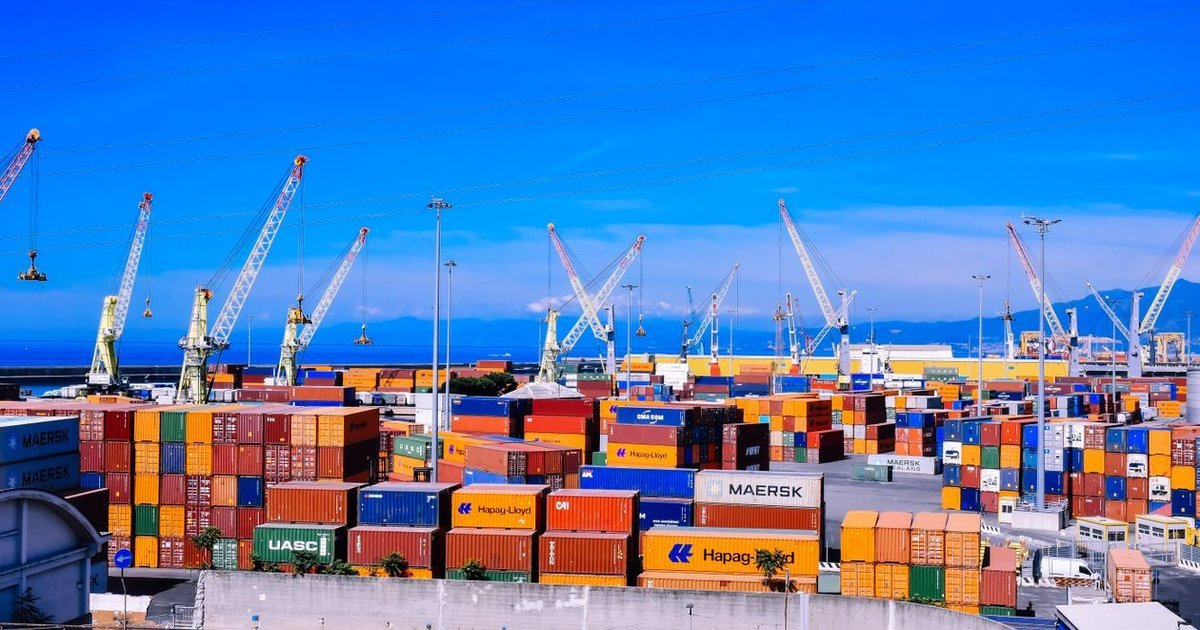
Goods delivered and received, but the money never comes. This is the nightmare of many exporters dealing with a Chinese counterparty that does not pay for exported goods: the cargo is on the ship, through the other side's port, but when payment falls due the buyer invents excuses and goes silent. This article walks through a concrete hypothetical scenario, analyzing each handling option legally — from negotiation and mediation to arbitration and court litigation — so businesses can choose the most fitting path.
Table of contents
- 1. The scenario (hypothetical)
- 2. The legal questions
- 3. Analysis
- 4. Conclusion and recommendations
- 5. Extended questions
1. The scenario (hypothetical)
Company A (established under Vietnamese law, headquartered in Dong Nai) signed an international sale-of-goods contract with Company B (established in Guangdong, China) in January 2026: exporting 200 tons of robusta coffee, CIF at the buyer's port, total value about VND 9 billion, payment by wire transfer (T/T) within 30 days of the bill of lading. A delivered the contractual quantity and quality; B accepted the goods but has not paid although 60 days past due. B replied by email and WeChat that it faces financial difficulties, promised to pay gradually but offered no payment schedule, then became unresponsive. The contract agrees no governing law and has no arbitration clause. A keeps the full contract, invoices, bill of lading, customs declarations, and all of B's debt-admission exchanges; B has assets only in China. The scenario below is hypothetical, for illustration purposes.
The given FACTS of the scenario:
- F1: Company A established under Vietnamese law, headquartered in Dong Nai; Company B established in Guangdong, China.
- F2: Contract for 200 tons of robusta coffee, CIF, worth about VND 9 billion, T/T payment within 30 days of the bill of lading.
- F3: A delivered the contractual quantity and quality; B accepted the goods and raised no quality complaint.
- F4: B is 60 days overdue; B admitted financial difficulty and promised gradual payment by email/WeChat but gave no schedule, then became unresponsive.
- F5: The contract agrees no governing law and has no arbitration clause.
- F6: A keeps complete transaction documents and debt-admission exchanges; B has assets only in China.
2. The legal questions
From these facts, the scenario raises four legal questions:
- Q1: Which country's law governs this dispute — Vietnam or China?
- Q2: How long is the limitation period, and from when does it run?
- Q3: Should A negotiate, choose arbitration, or sue in Vietnamese courts?
- Q4: If A wins in court or arbitration in Vietnam, can it enforce in China, where B's only assets are?
3. Analysis
This section walks through the legal framework for the scenario, then analyzes three handling options in turn — negotiation and mediation, commercial arbitration, litigation in Vietnamese courts — and closes with a comparison table to weigh them.
3.1 The applicable legal framework
Governing law of the contract (F1, F5). Because A and B have different nationalities, this is a civil relationship with foreign elements. Article 683(1) of the 2015 Civil Code lets the parties agree on the applicable law, but here they did not (F5). Article 683(2)(a) then provides: for sale-of-goods contracts, the law of the country where the seller resides (if an individual) or is established (if a legal person) is deemed the law of the country with the closest connection. The seller is Company A, established in Vietnam — so the contract is governed by Vietnamese law, specifically the 2005 Commercial Law.
Limitation period (F4). Article 319 of the 2005 Commercial Law sets a two-year limitation for commercial disputes, counted from the moment lawful rights and interests were infringed. For a time-bound payment obligation, that moment is the contractual payment deadline — 30 days after the bill of lading. A must mark this date to not lose the right to sue. Also note: if the dispute were resolved under Chinese law (should the parties later agree otherwise, or resolve in China), the limitation under Article 188 of the Chinese Civil Code is three years — a point the author has only cross-checked via an academic source, not the full text from an official Chinese source, so it is mentioned for cautious reference only.
Complaint deadlines for goods (F3). Article 318 of the 2005 Commercial Law sets complaint periods: three months from delivery for quantity complaints, six months for quality, nine months for other violations — absent other agreement. B accepted the goods and raised no complaint within these periods. It follows that B can hardly later invoke goods quality to refuse payment; B's payment obligation is clear.
Forms of dispute resolution. Article 317 of the 2005 Commercial Law lists three groups of forms: negotiation between the parties; mediation by an agency, organization, or individual the parties agree to choose as intermediary; and resolution at arbitration or courts. The three options below follow this exact framework.
Jurisdiction of Vietnamese courts (F1, F5, F6). Article 469 of the 2015 Civil Procedure Code sets the general jurisdiction of Vietnamese courts over foreign-element civil cases, where Article 469(1)(e) covers civil relationships involving the rights and obligations of an organization headquartered in Vietnam — which is exactly A. Additionally, the delivery work partly performed by A on Vietnamese territory (loading at a Vietnamese port) may be considered under Article 469(1)(d). This is, however, a legal inference; whether the court accepts the case depends on the competent authority's assessment in each matter.
Electronic evidence (F4, F6). Article 94 of the 2015 Civil Procedure Code lists electronic data as a source of evidence; Article 95(3) provides that electronic data messages take the form of electronic data interchange, electronic documents, emails, and similar forms under the law on electronic transactions. Thus B's debt-admission emails and WeChat messages have evidentiary value, provided A preserves the exchange history intact and authenticates the account identities.
Sanctions for breach (F4). Article 300 of the 2005 Commercial Law lets the aggrieved party demand breach penalties if the contract so agrees, and Article 301 caps agreed penalties at 8% of the value of the breached contractual obligation. In parallel, Article 302 sets damages as actual, direct losses plus the direct profit the aggrieved party would have earned absent the breach; Article 303 states the grounds for damages liability (a breaching act, actual damage, the breach directly causing the damage); Article 307 allows applying both penalties and damages where the contract agrees penalties.
3.2 Option A: Negotiation and mediation
Content. A sends a formal debt-collection letter, invoking the contractual payment obligation and legal sanctions (breach penalties, damages under Articles 300–307 of the 2005 Commercial Law), with a proposed secured payment schedule (e.g., installment payments with a bank guarantee or a partial upfront deposit). If direct negotiation deadlocks, the parties may use an agreed organization or individual mediator under Article 317 of the 2005 Commercial Law.
Legal basis. Article 317 of the 2005 Commercial Law recognizes negotiation and mediation as forms of commercial dispute resolution; Articles 300–307 give A legal leverage in negotiation.
Advantages. Lowest cost, preserves the business relationship, fastest if B still acts in good faith. With F4 — B has admitted the debt and promised gradual payment — negotiation has a realistic basis for success, since B does not deny the obligation but only cites financial difficulty.
Risks and limits. Negotiation and mediation outcomes lack the enforceability of judgments or arbitral awards; if B keeps stalling, A must still move to Option B or C. Moreover, prolonged negotiation can let the two-year limitation (Article 319) expire if A takes no right-preserving measures — every debt commitment from B should be put in signed writing to serve as a basis for recalculating limitation and as later evidence.
3.3 Option B: Commercial arbitration
Content. Although the original contract has no arbitration clause (F5), the parties may still sign a supplementary arbitration agreement after the dispute has arisen to bring the case to an arbitration institution — for instance the Vietnam International Arbitration Centre (VIAC). If B refuses to sign, A could consider arbitration in China (e.g., CIETAC) to pressure enforcement where B's assets are, but costs and feasibility need careful assessment.
Legal basis. Commercial arbitration law lets the parties agree to arbitrate even after the dispute has arisen; arbitral awards are final, effective from issuance, and enforced under civil judgment enforcement law. The key point with F6: both Vietnam and China are members of the 1958 New York Convention on the recognition and enforcement of foreign arbitral awards — the Convention requires each member state to recognize and enforce awards rendered in the territory of another member state. An award in A's favor thus has a full legal basis for recognition and enforcement in China, where B's assets are.
Advantages. Finality and cross-border enforceability are far superior to court judgments where B's only assets are in China. Arbitral proceedings are also usually more discreet, suiting A if it wants to protect its commercial reputation.
Risks and limits. Arbitration is only viable if B agrees to sign the supplementary arbitration agreement — no easy feat with a party already stalling payment. Arbitration costs (tribunal fees by dispute value, counsel fees, travel) are significantly higher than negotiation; with a debt of about VND 9 billion, A must weigh these costs before deciding.
3.4 Option C: Litigation in Vietnamese courts
Content. A sues B in a competent Vietnamese court, demanding payment of the goods price, breach penalties (if agreed), and damages.
Legal basis. General jurisdiction of Vietnamese courts under Article 469 of the 2015 Civil Procedure Code as analyzed in section 3.1; the two-year limitation under Article 319 of the 2005 Commercial Law; sanctions under Articles 300–307 of the 2005 Commercial Law.
Advantages. A acts entirely on its own initiative, independent of B's consent as in arbitration. Court proceedings in Vietnam are familiar to domestic businesses, and litigation costs (advance court fees by dispute value) are generally lower than international arbitration.
Risks and limits. This is the weakest option at the enforcement stage — and enforcement is the destination when B's only assets are in China (F6). A Vietnamese court judgment to be enforced in China must go through recognition under the 1998 Vietnam–China Judicial Assistance Agreement on civil and criminal matters: Article 1 lists recognition and enforcement of court decisions on civil matters (with "civil matters" understood to include commercial ones) as a form of assistance; Articles 15 and 16 set the scope and application dossier. In practice, however, this Agreement has few public precedents for commercial judgments, and serving process abroad takes long. In other words, A may win in Vietnam yet face the risk of "winning but collecting nothing".
3.5 Comparing the options
| Criterion | Option A: Negotiation, mediation | Option B: Arbitration | Option C: Litigation in VN courts |
|---|---|---|---|
| Legal basis | Article 317 of the 2005 Commercial Law | 2010 Law on Commercial Arbitration; 1958 New York Convention | Article 469 of the 2015 Civil Procedure Code; Articles 319, 300–307 of the 2005 Commercial Law |
| Enforceability | None — depends on B's goodwill | Yes — final award, enforced like a judgment | Yes — judgment with legal effect |
| Enforcement in China | Not applicable | Most viable — 1958 New York Convention, both countries members | Difficult — recognition under the 1998 Agreement, few precedents |
| Duration | Fastest if successful | Medium | Usually long, especially serving process abroad |
| Costs (statutory) | Lowest | High — tribunal fees by dispute value, counsel fees | Advance court fees by dispute value, generally lower than arbitration |
| Main risk | B stalls, limitation expires | Requires B to sign the supplementary arbitration agreement | Winning the case but unable to enforce in China |
4. Conclusion and recommendations
Conclusion. On exactly the given facts, the best fit for A is combining Option A immediately with parallel preparation of Option B. Grounds: F4 shows B admits the debt rather than denying the obligation — negotiation has a realistic chance and is the fastest, cheapest way to recover the goods price; F6 (B's assets only in China) makes Option C ineffective at enforcement, while Option B gives A the most viable enforcement path thanks to the 1958 New York Convention. Option C should be the backup when B refuses every arbitration agreement and negotiation collapses — then A at least has a judgment to create legal pressure and ground further steps.
Concrete next steps recommended for A:
- Within the next 7 days: review and systematize the entire evidence file (contract, invoices, bill of lading, customs declarations, B's debt-admission emails/WeChat), back up and preserve electronic data per Articles 94 and 95 of the 2015 Civil Procedure Code.
- Right after: send B a formal debt-collection letter, invoking the payment obligation and sanctions under Articles 300–307 of the 2005 Commercial Law, fixing a specific payment deadline and proposing a secured repayment schedule.
- In parallel: invite B to sign a supplementary arbitration agreement to open the path for Option B; every debt commitment from B must be put in writing signed by an authorized person.
- Throughout: closely track the two-year limitation under Article 319 of the 2005 Commercial Law from the payment deadline; never let negotiation drag on and kill the right to sue.
Important note: this conclusion holds only for the given assumptions F1–F6. Change one fact — e.g., B has assets in Vietnam, the contract has an arbitration clause, or B denies the obligation entirely — and the analysis may reverse. A real business's case needs its own counsel assessment based on the specific file.
5. Extended questions
1. When does the limitation period start in this scenario?
Under Article 319 of the 2005 Commercial Law, the limitation for commercial disputes is two years, counted from the moment lawful rights and interests were infringed. For a contractual payment debt, that moment is usually the agreed payment deadline — in the hypothetical, 30 days after the bill of lading. Businesses should mark this date when signing the contract, instead of calculating it only when the counterparty starts stalling.
2. With no arbitration clause in the contract, can arbitration still be used?
Yes. The absence of an arbitration clause in the original contract does not exclude arbitration: the parties may sign a supplementary arbitration agreement after the dispute has arisen. The prerequisite is that this agreement be signed by both parties and clearly express the will to resolve the dispute by arbitration. In practice, a party stalling payment is rarely keen to sign, so businesses should use the negotiation phase to secure this agreement.
3. Is an arbitral award rendered in Vietnam enforceable in China?
There is a legal basis. Both Vietnam and China are members of the 1958 New York Convention on the recognition and enforcement of foreign arbitral awards, under which each member state must recognize and enforce awards rendered in the territory of another member state. In practice, enforcement requires recognition proceedings before Chinese courts under Chinese law, so each specific case needs its own counsel assessment.
4. Is a debt admission by email or WeChat enough to claim the debt?
It counts if preserved properly. Article 94 of the 2015 Civil Procedure Code lists electronic data as a source of evidence, and Article 95(3) provides that electronic data messages include electronic data interchange, electronic documents, emails, and similar forms. Businesses must keep the exchange history intact, authenticate the account identities and the payment-related content — as early as possible, before the counterparty deletes or retracts messages.
5. What if the Chinese counterparty is completely insolvent?
When the debtor can no longer pay, every recovery option becomes difficult. The business must assess the counterparty's financial state under the law of its domicile, while considering the earliest possible measures to preserve its rights. This is a situation for cross-border-experienced counsel to weigh the cost of pursuit against realistic recovery prospects, instead of pouring more resources into an unrecoverable debt.
Is your situation different in the details?
Every case has its own details — contract value, payment terms, available evidence, and the counterparty's financial state all affect the option choice. If your business faces a similar situation, contact FLAT Law Firm at hotline 0988424851 for an assessment based on your specific file.
Language versions
References
- 2005 Commercial Law (No. 36/2005/QH11) — in force: Article 317 (forms of dispute resolution), Article 318 (complaint deadlines), Article 319 (two-year limitation), Articles 300–303, 307 (breach penalties, damages).
- 2015 Civil Code (No. 91/2015/QH13) — in force: Article 683 (applicable law for contracts), Article 429 (three-year contractual limitation).
- 2015 Civil Procedure Code (No. 92/2015/QH13) — in force: Articles 94, 95 (evidence sources and determination, electronic data), Article 469 (general jurisdiction of Vietnamese courts over foreign-element civil cases).
- 2010 Law on Commercial Arbitration (No. 54/2010/QH12) — in force: Article 5 (arbitration agreements), Article 61 (finality of arbitral awards), Article 66 (enforcement of arbitral awards).
- 1958 New York Convention on the Recognition and Enforcement of Foreign Arbitral Awards — Vietnam a member since 1995; China a member.
- 1998 Vietnam–China Judicial Assistance Agreement on civil and criminal matters — in force: Article 1 (scope of assistance), Articles 15, 16 (recognition and enforcement of decisions).
—