
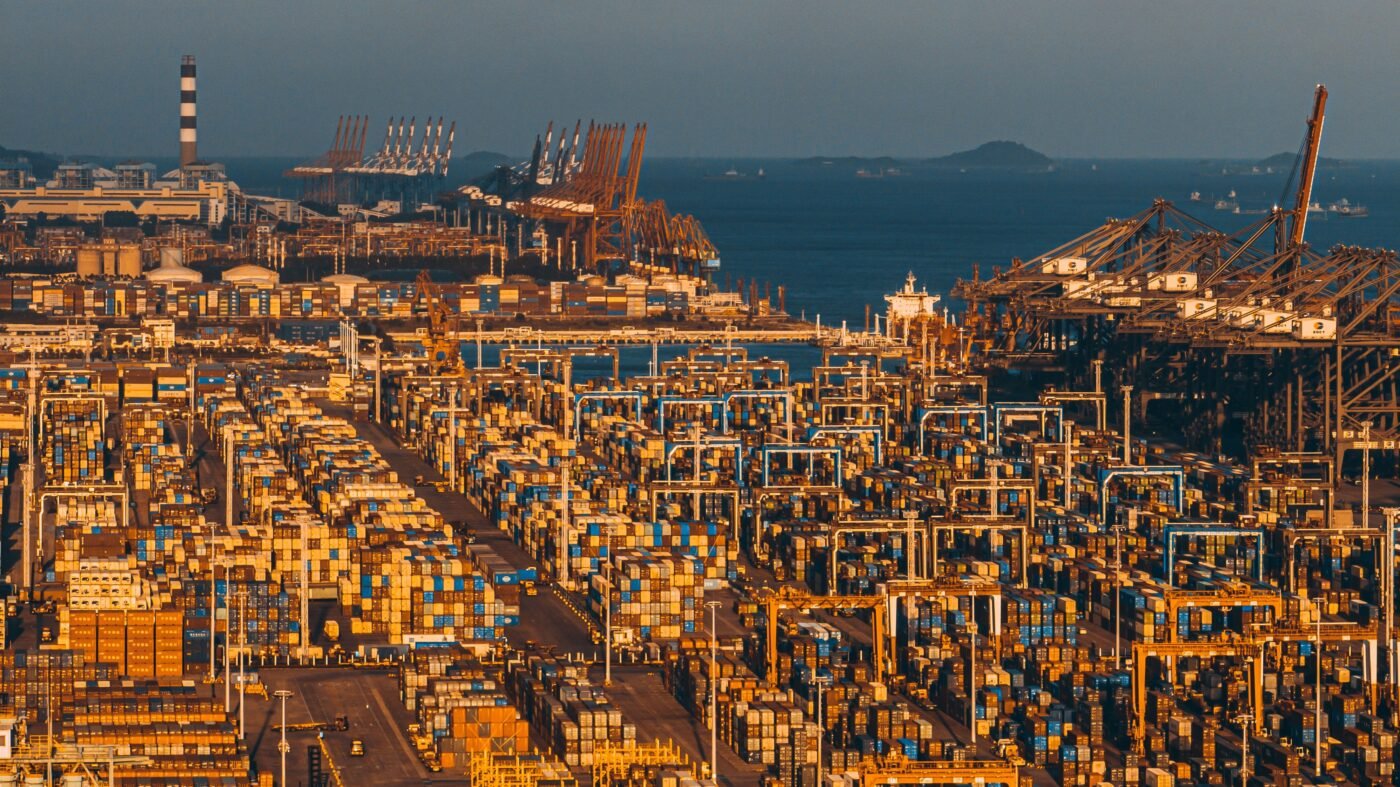
A Chinese investor opening an export factory in Vietnam — the first question: locate near seaports (Haiphong, Cai Mep) or near the China border (Lang Son, Lao Cai, Mong Cai)? The answer depends on your supply chain — there is no universal answer. This article gives the decision framework.
1. Two supply-chain models
- Model A — Inputs from China, exports global: import Chinese components → assemble in Vietnam → ship to the US/EU — near-port wins;
- Model B — Inputs from China, selling back to China: process then re-export — near-border wins;
- Model C — Local inputs, exports: little China dependence — near-port, near input sources;
- First question: where do your goods go — seaport or border gate?
2. Near seaports: pros and cons
- Pro: direct exporting — containers to ships fast, low logistics cost;
- Pro: mature industrial-park infrastructure — Haiphong and BR–VT have industrial ecosystems;
- Pro: near large labour markets and full support services;
- Con: high land rents — fierce competition;
- Con: far from Chinese supply — higher input-import costs.
3. Near the China border: pros and cons
- Pro: Chinese inputs and components arrive cheap and fast — trucks cross the gate within the day;
- Pro: low land rents — border economic-zone incentives;
- Pro: Chinese experts easily come over — close to home, convenient travel;
- Con: distant exports need transloading to ports — extra cost and time;
- Con: border-congestion risk — gates open/close with policy and health measures.
4. Border-congestion risk: real lessons
- Reality: gates can jam or restrict clearance — policy, quarantine, holidays;
- Consequence: inputs stuck — lines stop, orders delay;
- Prevention: keep safety stock — no absolute just-in-time at the border;
- Diversify: have 2 backup gates — Huu Nghi, Lao Cai, Mong Cai;
- Plan B: the sea route from Chinese ports to Haiphong — slower but stable.
5. Freight costs: the calculation frame
- Formula: total = in-China transport + border crossing + in-Vietnam + to-port;
- Compare: run both options on the same sample shipment;
- Don’t forget: the cost of time — goods in transit are dead capital;
- Get quotes: a logistics firm quotes your actual cargo profile;
- Rule: decide on numbers, not gut feeling that “near China is cheap”.
6. Hiring and experts: the human factor
- Near border: Chinese experts come easily — weekends home; local workers speak Chinese;
- Near port: labour is plentiful but hiring competition is fierce — many IPs;
- Management: finding Chinese-speaking middle managers is easier at the border;
- Training: fewer vocational schools at the border — more in-house training;
- Consider: staffing is a long-term cost — don’t look only at land price.
7. Investment incentives by locality
- Border economic zones: dedicated incentives — tax, land (verify each zone);
- Port-area IPs: incentives by difficult-area status or incentivised sectors;
- Compare: actually received incentives — after conditions and commitments;
- Stability: incentives in writing — not verbal promises;
- Advice: counsel compares incentive packages across localities for your project.
8. The hybrid model: must you choose one?
- Border plant + port warehouse: manufacture at the border, distribution warehouse in Haiphong;
- Two plants: big projects — split by market (domestic/border + export/port);
- Phasing: start at the border (cheap, near supply) → expand to the port as exports grow;
- Flexibility: supply chains change — locations should have a roadmap too;
- Reality: many Chinese groups already run hybrid models.
9. Quick decision table
| Criterion | Near port | Near border |
|---|---|---|
| Global exports | Wins | Loses |
| Chinese inputs | Loses | Wins |
| Land price | High | Low |
| Chinese experts | Harder | Easier |
| Logistics risk | Low | Border jams |
| Selling back to China | Loses | Wins |
10. Location checklist
- Where do goods go — port or border gate?
- Where do inputs come from — China or local?
- Total logistics costed for both options?
- Backup plan for border jams?
- Actually-received incentives — verified in writing?
- Long-term staffing — costed?
11. Transport infrastructure: the deciding details
- Roads: the Hanoi–Haiphong and Hanoi–Lao Cai expressways — check actual conditions;
- Rail: the Lao Cai–Hanoi–Haiphong line — cheap heavy-freight transport;
- Ports: Haiphong, Cai Mep–Thi Vai — capacity and international routes;
- Border gates: Huu Nghi, Lao Cai, Mong Cai — daily clearance capacity;
- Survey: physically travel your cargo route — don’t trust maps.
12. Power, water and environment
- Power: manufacturing needs stable electricity — check the regional grid;
- Water: water-intensive industries (dyeing, food) — supply sources;
- Environment: environmental impact assessment (EIA) — mandatory;
- Industrial parks: pick IPs with ready treatment infrastructure — fewer procedures;
- Costs: power and water tariffs vary by region — factor into costing.
13. Land: lease vs allocation
- Industrial parks: sub-lease from the IP developer — fastest route;
- Outside IPs: land allocation/lease from the state — slower, more procedures;
- Term: land-use terms up to 50 years — check the specific grant;
- Price: border provinces cheaper — but verify infrastructure;
- Legal check: counsel verifies the land-use right before any deposit.
14. Neighbours: the industrial ecosystem
- Suppliers: are your suppliers nearby — or will everything travel far;
- Customers: other factories buying your output — cluster benefits;
- Services: maintenance, mould-making, testing labs — the support layer;
- Competition: too many rivals nearby — wage wars;
- Network: talk to existing tenants — the best intelligence.
15. Quick answers
- Cheapest compliant setup? Border provinces — but verify power, water and roads;
- Fastest to export? Haiphong-area IPs — port at the doorstep;
- Can we start small and expand? Yes — pick IPs with adjacent available land.
16. Security and local order
- Reality: some border areas are complex on security — research first;
- Guarding: factories need professional security — high-value goods;
- Relations: good standing with local authorities — support when needed;
- Insurance: property and cargo insurance — don’t skimp;
- Assessment: survey security alongside the site survey.
17. Expanding later: don’t lock yourself in
- Land bank: pick IPs with adjacent free land — expand without relocating;
- Contracts: first-refusal clauses on neighbouring land — negotiate upfront;
- Utilities: power and water with spare capacity for phase 2;
- Licences: amending the IRC to expand — simpler than a new one;
- Vision: choose the site for 10 years — not 2.
18. Talking to IP developers: what to ask
- Occupancy: who are the current tenants — any from your industry;
- Utilities: guaranteed power/water capacity — in writing;
- Support: one-stop licensing support — how real is it;
- Fees: management fees, hidden charges — total cost of occupancy;
- Exit: sub-lease transfer terms — if you need to leave.
19. Negotiating with local authorities
- What to ask: incentives, land price, utility guarantees, labour support — in writing;
- Who decides: provincial People’s Committees approve major incentives — know the authority;
- Commitments: authorities expect investment, jobs, timeline commitments in return;
- Follow-through: deliver on commitments — credibility compounds for phase 2;
- Counsel: have lawyers review every incentive document — verbal promises evaporate.
20. Final word: the site is the strategy
- Irreversible: location is the hardest decision to undo — choose carefully;
- Data-driven: numbers beat instincts — model both options fully;
- Visit: walk the sites — no spreadsheet replaces boots on the ground;
- Plan B: every site needs a contingency — border jams, power cuts, labour shocks;
- Decide: then commit — half-hearted sites underperform everywhere.
Contact us
FLAT Law Firm advises Chinese investors throughout the Vietnam investment cycle — from deal structuring and licensing to operations and compliance. Contact us for advice tailored to your project.
This article has been quality-reviewed by the FLAW AI Legal Council