
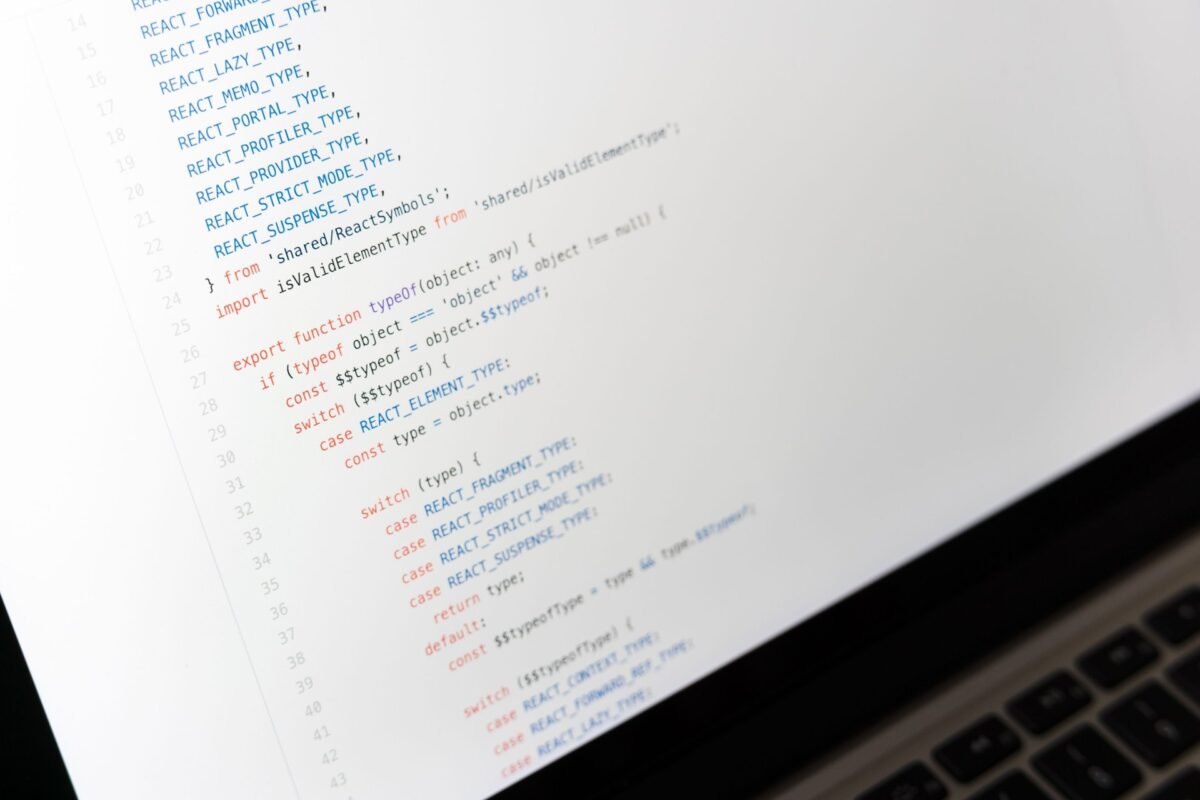
Scenario: your lead developer resigns; a month later he launches his own startup with a product “coincidentally” 80% identical to your codebase — same architecture, same modules, only variable names changed. You suspect he copied the source. But the first legal question is not “did he copy”, it is: who owned the software copyright in the first place?
Economic rights belong to the company — if the software came from assigned work
Computer programs are copyrightable subject matter (Art. 14.1(m), Intellectual Property Law), and the right arises automatically upon creation — registration is not required (Art. 6). The decisive rule is Art. 39: an organization that assigns tasks to, or contracts with, an author owns the economic rights in works created under that assignment or contract. In practice: a developer writing code during working hours, per company tickets/sprints, on the company repo — the rights to exploit, reproduce, and distribute belong to the company. The employee keeps moral rights (authorship credit) but has no right to walk off with the code.
The only significant exception: software the employee wrote entirely off-hours, without company resources, unrelated to the job — that belongs to the individual. This boundary is the battlefield of every such lawsuit.
Recovery in four escalating steps
Step 1 — Cease-and-desist: write to the individual and his new company, citing Art. 39, demanding they stop using/distributing and pull the product. Many cases end here because the other side wants no publicity. Step 2 — Civil lawsuit: ask the court to order cessation, public apology and correction, and damages (Arts. 202, 205, IP Law) — covering lost profits and enforcement costs. Step 3 — Administrative sanctions: request the authorities to penalize the copyright violation (Decree 131/2013/ND-CP). Step 4 — Criminal complaint: Art. 225 of the Penal Code 2015 (amended 2017) criminalizes copyright infringement at commercial scale or with large illicit gains — a high-pressure route that demands solid evidence.
Evidence decides the case — and must be gathered before suing
Courts do not rule on “it looks similar”. Build the evidentiary chain: (1) the employment relationship and job description proving the code was written on assignment; (2) repo history — git logs, commits, pull requests under the employee’s name during employment; (3) source-code comparison: engage an IP assessor to analyze structural and algorithmic overlap (identical architecture matters more than identical variable names); (4) distribution proof: the other side’s product on sale, website, contracts. Note: electronic evidence must preserve integrity — notarize it or have a third party witness collection, or it may be attacked as fabricated.
Prevention: three things cheaper than any lawsuit
One, IP clauses in the employment contract: state that all source code and technical documents created during employment belong to the company, with duties to hand over and delete copies upon departure. Two, access management: repo permissions on a need-to-know basis, revoke all access on the departure day, log all downloads before the employee leaves. Three, register the copyright with the Copyright Office of Vietnam: not mandatory, but the certificate is powerful ownership evidence in disputes.
Frequently asked questions
1. The employee wrote code at home in the evenings — does the company own it?
It depends on the nature of the work: if the module falls within assigned duties or was developed from the company codebase, it belongs to the company regardless of where or when it was written. Only fully independent work, unrelated to the job and using no company resources, belongs to the individual.
2. The company never registered the software copyright — can it still sue?
Yes. Copyright arises automatically upon creation (Art. 6, IP Law), independent of registration. Registration only eases proof; it is not a condition for suing.
3. What if the other side only “took the idea” and rewrote everything?
Copyright protects expression, not ideas. If they merely learned the idea and rewrote independently, a claim is hard. But if the “rewrite” preserves the core architecture, data structures, and algorithms, expert assessment can prove an unauthorized derivative work.
4. Can the ex-employee’s new company be held liable?
Yes, if you prove the new company knew or should have known the source code was infringing yet still exploited it — it may be treated as a joint infringer, jointly liable for damages.
5. How long does a software copyright lawsuit take?
Civil IP litigation in Vietnam typically runs 12-24 months through two instances, excluding assessment time. Hence the first rungs (negotiation, cease-and-desist) are always worth trying first — faster and relationship-preserving.
Related articles
- Exclusive patent licence agreements for Vietnamese subsidiaries
- CIT on patent assignments to foreign parties
- Valuing patents transferred within multinational groups
- International design registration (Hague) designating Vietnam
- GUI and app icon designs: protection in Vietnam
This legal analysis has been verified against current Vietnamese regulations and cross-border FDI transaction practices by the attorneys at FLAT LAW FIRM.

