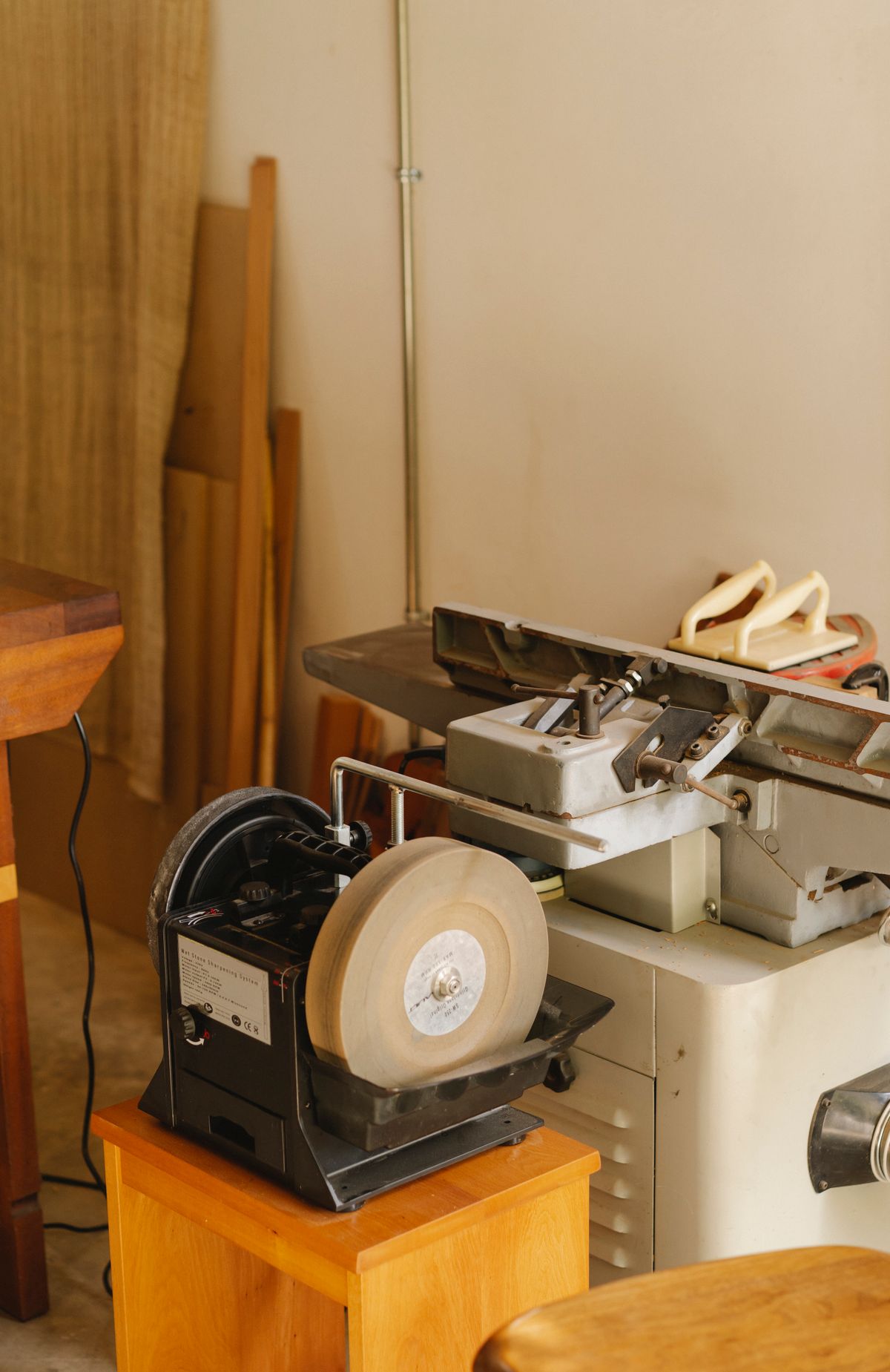
Image: Woodworking workshop — Source: Pexels, by Ono Kosuki (Pexels License).
One wrong line can cost a whole consignment its preference
A Vietnamese furniture maker ships dining sets to Poland. On the commercial invoice, the documentation team types the origin statement using the template the company has used since 2021. Polish customs rejects it: the wording does not match the current model, and the origin criterion stated does not correspond to the rule applicable to the goods. The consignment pays MFN duty — a five-figure euro difference.
Under the EVFTA, a statement on origin is not decorative text on an invoice. It is a legal document with a prescribed model, and a single wrong detail — the criterion, the exporter reference number, the language version — is enough to lose the tariff preference.
Self-certification under the new circular
Since 10 May 2026, Circular No. 14/2026/TT-BCT of the Ministry of Industry and Trade (replacing Circular No. 11/2020/TT-BCT and Circular No. 41/2022/TT-BCT) governs rules of origin under the EVFTA, including exporter self-certification.
Vietnamese exporters make out the statement on the invoice, delivery note, or any other commercial document containing sufficient information about the goods — typed, stamped, or printed — using the model wording in Annex VI of the circular, in one of the language versions set out there and in line with Vietnamese law. Handwritten statements are accepted only if written in ink and in capital letters.
Technical points that are easy to miss:
- “Other commercial documents” may be a dispatch note, a pro-forma invoice, or a packing list — but transport documents such as bills of lading or air waybills do not qualify. A statement on a bill of lading is invalid.
- The statement may not be made out on a separate form; it may appear on another page of the commercial document provided that page is recognisably part of it.
- A statement may be issued retrospectively, as long as it is presented in the importing member state no later than two years (or per that state’s rules) after the goods entered its territory.
Determining the criterion for wooden furniture
This is the hardest part — and where most errors occur. The criterion is not a symbol to fill in at random; it must result from matching the product against the product-specific rule in Annex II of Circular 14/2026 for the correct HS heading (furniture generally falls under Chapter 94).
Two questions must be answered before writing anything:
Where did the wood come from? If all timber and materials originate in Vietnam (or in an EVFTA member whose materials may be cumulated) and the product is made entirely from them, the wholly-obtained criterion may apply. If timber was imported from outside the EVFTA area, the Annex II rule — change of tariff classification or value-added requirement — must be checked.
Was the processing in Vietnam sufficient? Mere sawing, planing, or simple packing can be treated as minimal operations, insufficient to confer origin. Full furniture manufacturing — cutting, joinery, sanding, finishing, assembly — normally meets the sufficient-processing threshold, but the exporter must hold production-process records proving it.
The golden rule: the criterion on the invoice must be the criterion your internal records can prove. EU customs do not just read the words; during verification they compare them against bills of materials and actual production processes.
Recurring mistakes
- Using the old model wording from Circular 11/2020 instead of the Annex VI model under Circular 14/2026.
- Omitting or mistyping the exporter’s self-certification reference number — Annex VI notes require it in the blank following the reference-number phrase for approved exporters.
- Stating a criterion that does not match the product rule, e.g. claiming wholly-obtained status while using non-EVFTA imported timber.
- Placing the statement on a bill of lading — not a commercial document.
- Keeping no supporting records — exporters must submit proof of origin when the competent authority asks.
Conclusion
The statement on origin for wooden furniture shipped to the EU is a legal document with a fixed model in Annex VI of Circular 14/2026/TT-BCT — not free prose. Exporters must determine the correct criterion from the product-specific rule (Annex II) before writing, complete the exporter reference, use a proper commercial document, and — most importantly — ensure internal production records substantiate exactly the criterion stated. A correct line today is far cheaper than a duty recovery tomorrow.
Frequently asked questions
Can the statement be placed on an ocean bill of lading?
No. Under Circular 14/2026/TT-BCT, transport documents such as bills of lading or air waybills are not “other commercial documents.” Use the commercial invoice, delivery note, or packing list.
Do consignments under 6,000 EUR need an approved exporter?
Under self-certification, ordinary exporters may self-certify consignments not exceeding 6,000 EUR; higher-value consignments require an approved or registered exporter. Check the applicable conditions in Circular 14/2026 for each shipment.
Are handwritten statements accepted?
Yes, if written in ink and capital letters following the Annex VI model. Typing or printing is recommended in practice to avoid errors.
What criterion applies if the furniture uses partly imported non-EVFTA timber?
Check the product-specific rule for the HS code in Annex II of Circular 14/2026 (classification-change or value-content rule) against the product’s actual material composition before stating any criterion. Do not guess.
What changed in the model wording?
The current model is in Annex VI of Circular 14/2026/TT-BCT (effective 10 May 2026), replacing the models under Circular 11/2020/TT-BCT. All statements issued from 10 May 2026 should follow the new model.
This article has been quality-reviewed by the FLAW AI Legal Council
Related articles
- Vietnam–Netherlands Data Transfers: GDPR Meets Law 91/2025 — Two Doors, Two Directions
- Vietnamese Investors Acquiring EU Companies: EU Merger Regulation and the FDI Screening Net
- Environmental Permits for Factories in Vietnam and the US: One Unified System vs Two-Tier Federalism
- Forming a Company in Vietnam or the Netherlands: 1-Cent BV vs 'Zero-Dong' LLC
- EVIPA: The EU–Vietnam Investment Protection Deal — Signed but Not in Force