
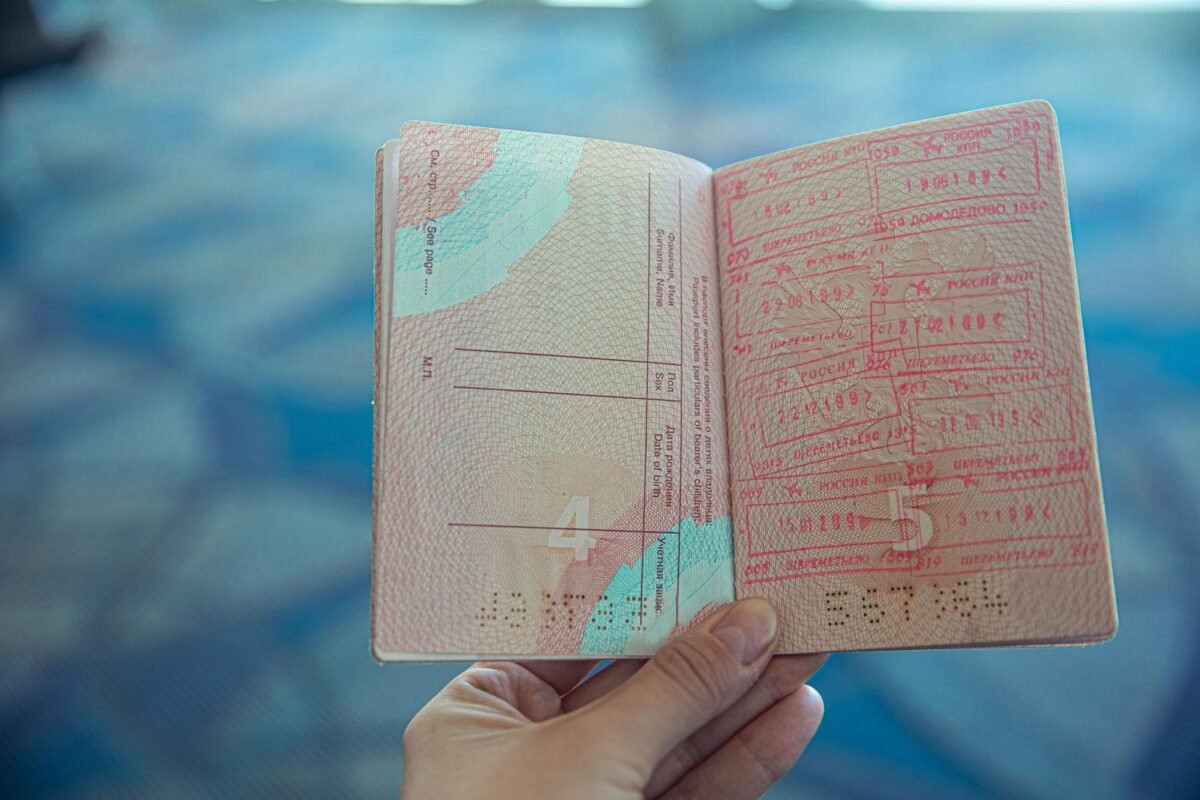
Taiwan passport holders applying for Vietnamese visas — same as mainland Chinese passport holders? The answer: same in principle (both need visas), different in procedure. Many companies confuse the two, preparing wrong documents, filing at the wrong place, and delaying whole specialist teams. This article distinguishes the cases clearly: visa policy, filing venues, accepted documents, and practical notes for Taiwanese applicants.
What’s the same: both need visas
Both Taiwan and mainland Chinese passport holders entering Vietnam are not visa-exempt — both must obtain visas in advance (the e-visa up to 90 days being the most popular choice for both). At Vietnamese gates, both are processed as visa-required foreigners — no discrimination in entry conditions.
What’s different: documents and filing venues
Travel document types
Taiwan and mainland Chinese passports are different travel documents issued by different authorities. For visa applications, residence registration and work permits — the nationality on the document governs, not a generic “Chinese” label. Misdeclaring nationality (“China” for a Taiwanese holder or vice versa) causes trouble on document cross-checks.
Where to file for sticker visas
The biggest practical difference: Vietnam has no diplomatic mission in Taiwan — Taiwanese applicants can’t file locally for sticker visas as mainland applicants can; they typically file via economic–cultural offices or use the fully online e-visa. With e-visas this difference nearly vanishes — both apply online and receive the e-visa by email. Practical recommendation: for Taiwanese holders, the e-visa is the simplest option — sidestepping all filing-venue complications.
Work permits and residence
Work permits and residence cards follow identical procedures for both — Decree 152/2020/ND-CP doesn’t distinguish. The only watchpoint is document consistency: passport, visa, work permit and residence card must record the same nationality/document — inconsistencies (e.g. visa per Taiwan passport but work permit saying “China”) cause problems on renewal or inspection.
Notes for companies with both Taiwanese and mainland staff
Many groups have both Taiwanese and mainland personnel on the same Vietnam project. Manage two separate document tracks: don’t merge them into one “Chinese staff” list — each person gets a file with exact nationality/documents. When sponsoring DN visas, the Vietnamese company must list each person’s correct passport type. And in internal communications, respect the document/identity difference — a sensitive matter where tact avoids needless trouble.
Getting it right the first time: a filing playbook
Most Taiwan/mainland confusion is preventable with a simple playbook. First, classify at onboarding: record each incoming person’s exact travel document type in the HR system — never a generic “Chinese passport” field. Second, default to e-visa: for both document types it is the path of least resistance, and it eliminates the filing-venue problem for Taiwanese holders entirely. Third, build a per-person document map: passport → visa → work permit → residence card, with the nationality field identical across all four — audit the map before each renewal, not during. Fourth, brief the sponsor: the Vietnamese company’s visa-sponsorship letters must name the correct document type per person, because a sponsorship letter saying “Chinese passport” for a Taiwan-passport holder can stall the application. Fifth, keep the distinction out of office politics: HR systems and team communications should use neutral, document-accurate labels. None of this is legally complex — it is administrative discipline, and the companies that systematise it never think about it again.
Taiwanese nationals applying for Vietnam visas — key distinctions
Why “different”? The context to grasp
Cross-strait relations give Taiwanese documents distinctive features: Taiwanese passports are recognised by Vietnam for immigration (decades of practice), but some administrative procedures have special requirements (e.g. consular legalisation of Taiwan-issued documents goes through a special mechanism). Read correctly: not “harder” — just “different” (different channels, different contact points).
Three practical distinctions
(1) Consular legalisation: Taiwan-issued documents (criminal records, degrees) for Vietnamese use need legalisation — via the Taipei Economic and Cultural Office in Vietnam and corresponding mechanisms (not embassies like other countries). Time planning: this runs longer than ordinary legalisation — start 1–2 months early. (2) Entry approval letters: procedures for Taiwanese mirror other nationalities (via the Immigration Department) — but declarations must be consistent (birthplace, nationality exactly per passport). (3) Work permits: files like other foreigners — the only difference is document legalisation (see (1)).
Realistic timeline for Taiwanese specialists
3 months before: start legalising criminal records and degrees in Taiwan. 2 months before: entry approval letter + foreign-labour demand approval. 1 month before: file the work permit. After work permit: enter → TRC. Total: Taiwanese specialist procedures typically run 1 month longer than nationalities with embassies in Vietnam — never schedule “tight”.
HR process for Taiwanese staff — a separate checklist
Separate the process: (1) separate dossiers (visa and work-permit templates for Taiwan passports — never PRC templates); (2) knowledgeable owners (HR staff who can’t distinguish get retrained); (3) periodic audits (re-scan nationalities on existing files — fix errors before renewals). Goal: zero dossiers returned over nationality issues.
Onboarding sensitivity — day-one matters
Day-one mistakes linger: (1) never introduce Taiwanese colleagues as “from China” (use Taiwan — or better, let people introduce themselves); (2) forms offering “China” as the only option for Taiwan-passport holders offend — provide accurate nationality fields; (3) team briefings (when mainland and Taiwanese staff mix — set respectful norms early, not after incidents). Reality: most friction comes from carelessness, not malice — but the felt impact is identical. Thoughtful onboarding prevents problems that policies can’t fix.
Visa checklist: Taiwanese vs mainland holders
(1) Identify each person’s exact passport type (Taiwan / mainland China); (2) prefer e-visas for both — simplest, especially for Taiwanese holders; (3) for sticker visas: mainland applicants file at Vietnamese missions in China, Taiwanese via economic–cultural offices or e-visa; (4) declare nationality consistently across all documents (visa, work permit, residence card); (5) manage per-person files, don’t merge; (6) track validity and renew on time equally. Principle: same entry conditions, different paperwork — prepare correctly upfront and nothing is complicated.
Contact us
FLAT Law Firm advises Chinese investors in Vietnam across the full lifecycle: investment structuring, IRC/ERC procedures, tax, labour, intellectual property and dispute resolution. Contact us for advice tailored to your case.
This article has been quality-reviewed by the FLAW AI Legal Council
Related articles
- Work permits for foreign experts: degrees, experience and how to prove the criteria
- The 4 work permit categories: experts, managers, executives, technicians
- Job titles on work permits: how to state them correctly
- Employers forcing excessive overtime: where can workers complain?
- Work stoppage due to disasters or epidemics: how must wages be paid?