
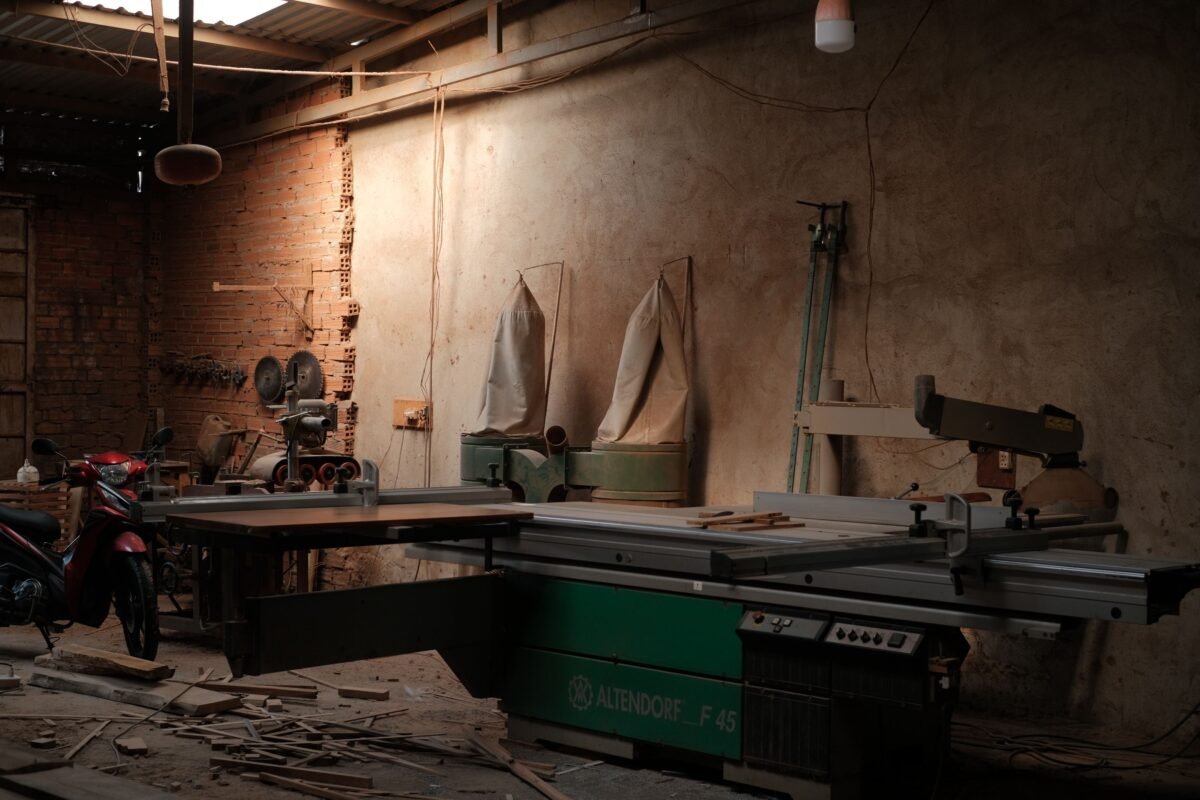
Vietnam is the world’s second-largest wood-furniture exporter — and growing numbers of Chinese manufacturers are moving furniture factories to Vietnam to export to the US and EU. The advantages are clear: cheaper labour, available timber, preferential tariffs. But behind them sit two big risks: US anti-dumping/circumvention investigations targeting “Vietnamese-disguised” furniture, and the EU’s anti-deforestation regulation (EUDR). This article analyses the advantages and risks for Chinese exporters placing furniture factories in Vietnam.
Four advantages of Vietnam for furniture
(1) Labour and cost: Vietnamese furniture workers are skilled (craft-village traditions), with labour costs 30–50% below China — furniture is labour-intensive, so this gap decides unit economics. (2) Raw materials: Vietnam’s plantation forests (acacia, eucalyptus) supply cheap timber, plus imported wood from Laos, Cambodia and Africa through Vietnamese ports — a complete timber supply chain (Binh Duong and Dong Nai are the furniture “capitals”). (3) Tariffs: Vietnamese furniture exports to the EU enjoy EVFTA (duties phasing to zero), with CPTPP/RCEP preferences elsewhere — advantages Chinese-origin goods lack. (4) Industry cluster: thousands of factories, component suppliers, seaports, logistics — a complete ecosystem new entrants plug into immediately.
Risk 1: US anti-dumping and circumvention investigations
The US is Vietnam’s largest furniture export market — and where the Department of Commerce (DOC) investigates most aggressively. Risks for Chinese-owned factories in Vietnam: (1) Circumvention inquiries: if the DOC finds “Vietnamese-made” furniture is really Chinese components given a light assembly to dodge China-applicable AD duties — duties get applied retroactively; (2) New AD investigations directly targeting Vietnamese-origin furniture if export volumes surge; (3) “Substantial transformation” tests: factories must prove full manufacturing processes in Vietnam (cutting, planing, sanding, finishing, assembly — not just assembling pre-made kits). Defences: high localisation ratios (maximum Vietnamese wood and components), complete records proving the production process (BOMs, goods-receipt slips, production-worker payrolls), and monitoring DOC proceedings for early response. Golden rule: the more the factory looks like a real factory (machinery, workers, complete processes), the safer — “phantom factories” that merely stamp origin are target number one.
Risk 2: EUDR — the EU’s anti-deforestation regulation
EU Regulation 2023/1115 on deforestation (EUDR), applicable from 30/12/2025, requires furniture entering the EU to prove deforestation-free status — with supply-chain due diligence and geolocation of the production area. Impact on Chinese-owned factories in Vietnam: (1) trace timber back to the plantation/harvest plot — unknown-origin wood can’t enter the EU; (2) wood from high-risk sources (some African, Lao, Cambodian origins) faces heavier scrutiny; (3) the EU–Vietnam FLEGT/VPA system (FLEGT licences) is an advantage — FLEGT-licensed timber counts as meeting EUDR legality requirements (deforestation due diligence still needed). Preparation: build a traceability system (timber plot → exported product), prioritise certified Vietnamese plantation wood (FSC/PEFC), and avoid high-risk timber sources. Factories that do EUDR now gain a major competitive edge — late movers will lose EU orders while scrambling.
Timber sourcing: the origin game that decides margins
For furniture, timber is 40–60% of unit cost — sourcing is the biggest financial decision. Four main sources: (1) Vietnamese plantation wood (acacia, eucalyptus): cheapest, clearest origin, safest for EUDR — but only suits low/mid-range furniture (acacia can’t do high-end); (2) Legally imported timber (American oak/walnut, NZ pine): high quality, clear origin — 2–3× pricier, suits mid-to-high-end; (3) Lao/Cambodian wood: good price, beautiful grain — but the highest origin risk (illegal logging, EUDR scrutiny); (4) Recycled/engineered wood (MDF, particleboard): cheap, stable — suits flat-pack and office furniture. Smart strategy: diversify across 2–3 sources (never depend on one), sign long-term contracts with plantation suppliers (price stability), and keep origin files per timber batch (invoices, harvest permits, certificates) — your EU “ticket” and your investigation shield. Warning: suspiciously cheap timber almost certainly has origin problems — cheap today, EU market lost tomorrow. Beyond cost, timber choice shapes product positioning: plantation acacia anchors the value segment, imported hardwoods unlock premium pricing, and engineered wood enables the flat-pack scale game — pick the wood that matches the customer you’re chasing, not just the cheapest available. Timber contracts should also include origin warranties from suppliers — a contractual backstop if a batch’s paperwork turns out to be fiction.
Risk 3: competition and the race to the bottom
Vietnam’s furniture sector has thousands of firms — price competition is brutal. New Chinese entrants face: (1) Vietnamese firms’ long-standing US/EU customer relationships; (2) pressure to cut prices for orders — export furniture margins are typically just 5–10%; (3) skilled-labour shortages in some areas (fierce carpenter recruitment competition in Binh Duong/Dong Nai). Strategy: don’t race Vietnamese firms to the bottom in the mass segment — target mid-to-high-end (good design, high quality, on-time delivery), where Chinese factories’ production capabilities (modern machinery, strong management) shine. Or do OEM for major brands — stable, low market risk. A further edge: design capability. Most Vietnamese factories compete on manufacturing; few invest in design. A Chinese entrant with in-house designers who understand Western tastes can move from OEM to ODM (original design manufacturing) — higher margins, stickier customers, and far harder for price-warrriors to displace. Design-led factories also attract better buyers — premium retailers who value reliability over the lowest bid. The factories that thrive in Vietnam’s furniture cluster are rarely the cheapest — they’re the most reliable, and reliability is a capability Chinese manufacturers already know how to build.
Building the “investigation-proof” factory file
Whether or not a DOC inquiry ever names your company, operating as if it will is cheap insurance. The file to maintain from day one: (1) production records — work orders, machine logs and QC reports proving each manufacturing step happened in Vietnam; (2) procurement records — supplier contracts and invoices showing the origin mix of every input, updated quarterly; (3) labour records — payrolls and headcounts tying workers to production lines (investigators count people); (4) financial records — cost accounting that reconciles raw-material purchases with finished-goods shipments (gaps suggest undeclared inputs). Review it annually with trade counsel: origin rules and DOC practice evolve, and a file built for last year’s standards may miss this year’s questions. Factories that can hand investigators a complete, consistent story in 30 days routinely get better outcomes than those that spend six months reconstructing one — and the discipline of maintaining it usually improves actual operations too. Start the file this quarter; the factories that scramble after receiving an inquiry notice never catch up in time.
Checklist: Chinese furniture maker entering Vietnam
1. Pick your segment: mid-to-high-end or OEM — avoid mass-market price wars. 2. Pick your location: Binh Duong/Dong Nai (cluster) or neighbouring provinces (cheaper land, easier hiring). 3. Invest in a real factory: full machinery, closed-loop processes — circumvention defence. 4. Localisation ratio: maximise Vietnamese wood and components. 5. Timber traceability system (EUDR-ready) — down to the forest plot. 6. Prioritise certified wood (FSC/PEFC) and FLEGT licences. 7. Keep complete production records (BOMs, receipts, payrolls) — DOC-inquiry-ready. 8. Monitor US AD/circumvention proceedings. 9. Build direct US/EU customer relationships (don’t rely on intermediaries forever). 10. Model real margins (5–10%) — no illusions.
Contact us
FLAT Law Firm advises Chinese investors in Vietnam across the full lifecycle: investment structuring, IRC/ERC procedures, tax, labour, intellectual property and dispute resolution. Contact us for advice tailored to your case.
This article has been quality-reviewed by the FLAW AI Legal Council
Related articles
- How Chinese Firms Prevent Transshipment Risk: Designing Substantial Production Lines in Vietnam
- Repatriating Profits to China: Holding Routes and SAFE Tightening Risks
- Lao Cai vs Lang Son: Which China Border Gate for Logistics Investors?
- Chinese PHEVs Entering Vietnam: The 50% Import Tax and the CKD Assembly Route
- Lessons from a Chinese Investor's JV Exit: Asset Split Disputes


