
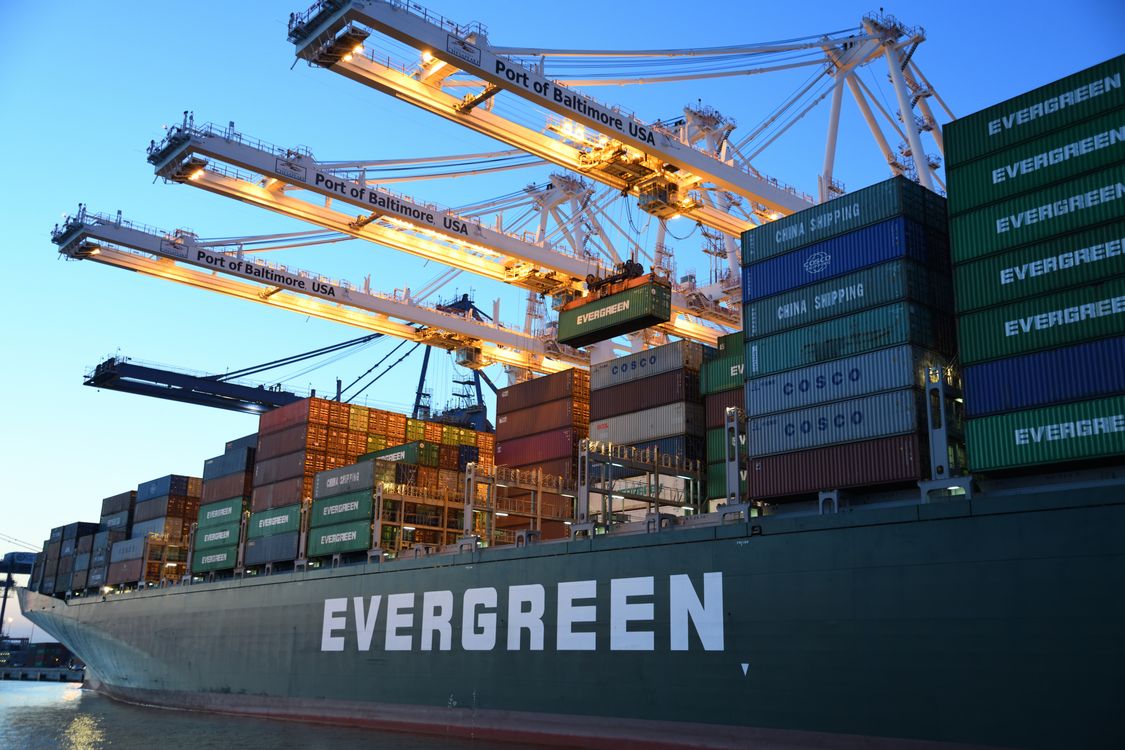
Illustration: a container ship at sea, illustrating international sea freight — source: Pexels (free to use).
A real-world scenario: A wooden furniture exporter in Binh Duong signs a contract to sell 12 containers to the UK, shipping in Q1 2027. The forwarder offers two options: transshipment via Singapore/Port Klang, 18% cheaper at 32–35 days; or a direct service, pricier but only 24–26 days. The director hesitates: is nearly a week worth the money — and legally, does the choice of route change your rights if cargo is damaged or lost? This article covers both sides: commercial and legal.
1. The reality of Vietnam–UK sea routes
Most container cargo from Vietnam (Cat Lai, Hai Phong) to the UK (Felixstowe, Southampton, London Gateway) moves on transshipment services: feeder vessels carry the goods to a major hub (Singapore, Port Klang, or Hong Kong), then transfer to a mother vessel bound for Europe. Direct calls from Vietnam to the UK are very rare, usually appearing only in peak season when carriers add sailings.
Choosing a route is a commercial decision balancing three factors: freight rate, transit time, and reliability (schedule integrity). Transshipment is cheaper, but every transshipment is an extra handling of your cargo — raising the risk of damage, loss, and knock-on delays. For high-value, fragile goods, or orders with late-delivery penalties, a direct service (where available) or a route with fewer transshipments is usually worth the rate difference.
Legally, whichever route you choose, the carrier’s liability for the goods is governed by the same framework — but that framework has two ends: Vietnamese law at origin and English law at destination.
2. The Vietnamese end: Maritime Code 95/2015 (consolidated text 52/2026)
As of the date of writing (18 October 2026), Vietnam’s Maritime Code 95/2015/QH13 remains in force, with the latest consolidated text VBHN 52/VBHN-VPQH of 2026. The Code governs contracts for the carriage of goods by sea, the carrier’s duties (receiving, loading, caring for, and discharging goods per the bill of lading), and the liability regime for cargo damage or loss.
The point businesses must remember: the ocean bill of lading (B/L) is simultaneously a receipt for the goods, evidence of the contract of carriage, and a document of title. The type of B/L and the clauses printed on its reverse determine your right to claim. Before signing, read the exception, limitation of liability, and governing law clauses carefully — never treat the B/L as mere “paperwork.”
Update warning: a draft new Maritime and Waterways Code is under discussion, with effectiveness expected from 1/1/2028. It is still a draft — businesses should track the legislative process to update long-term shipping contracts covering periods after 2028.
3. The UK end: the Hague-Visby Rules and COGSA 1971
When goods arrive at a UK port, the carrier’s liability is governed by English law — specifically the Carriage of Goods by Sea Act 1971 (COGSA 1971), which gives the Hague-Visby Rules the force of law in the UK. The key feature of Hague-Visby is the limitation of carrier liability: 666.67 SDR (Special Drawing Rights) per package or unit, or 2 SDR per kilogram of gross weight — whichever is higher.
The practical consequence: if a container of furniture worth USD 80,000 is totally damaged through the carrier’s fault, the compensation under the Hague-Visby limit may be far below the cargo’s real value. Hence cargo insurance is a commercial necessity, not an option — never rely on carrier liability to cover the full loss.
One more point: Hague-Visby imposes a one-year time bar for suit, running from the date of delivery (or the date delivery should have occurred). Miss it and the claim against the carrier is gone. Businesses need a process: inspect cargo immediately on receipt, note damage on the delivery record, and send a written notice of claim promptly.
4. Contract clauses to lock in before the goods leave Vietnam
- Governing law and dispute resolution: many international carriers’ B/Ls choose English law and London arbitration (LMAA — the London Maritime Arbitrators Association). If you cannot negotiate this away, at least know where you will litigate when things go wrong.
- Delivery terms (Incoterms): FOB Cat Lai versus CIF Felixstowe decides who buys insurance and who bears the sea-leg risk. For Vietnamese sellers, CIF comes with a duty to procure at least minimum insurance — buy cover matching the cargo’s value, not a token policy.
- Transshipment clause: require the forwarder/carrier to give advance notice of transshipment ports and the number of transshipments; agree compensation for delays caused by the carrier’s faulty transshipment.
- P&I and cargo insurance: confirm the carrier’s P&I (shipowner’s liability) cover is in force; on the cargo side buy insurance on suitable terms (typically Institute Cargo Clauses A for high-value goods).
- Claims file: keep the original B/L, commercial invoice, survey report, and photographs — miss one link and an international claim is very hard to win.
The information in this article is general reference on the law as of the date of writing (18 October 2026) and does not replace legal advice for any specific case.
Frequently asked questions
1. Is there a direct shipping service from Vietnam to the UK?
Very rarely. Most cargo goes via transshipment through Singapore, Port Klang, or Hong Kong to UK ports (Felixstowe, Southampton, London Gateway). Direct services usually appear only in peak season.
2. Who do I claim against if cargo is damaged in transit?
Claim against the carrier under the bill of lading terms. Note the Hague-Visby liability limits in the UK and the one-year time bar — send a written notice of claim early.
3. Which type of bill of lading should I use?
For L/C payment, banks usually require an original shipped bill — straight or order B/L. With trusted partners on T/T terms, a seaway bill is faster. The B/L type directly affects cargo release at the UK port.
4. How do FOB and CIF differ on risk?
FOB: risk passes to the buyer once goods cross the ship’s rail at the Vietnamese port; the seller is done with the sea leg. CIF: the seller charters the vessel and buys insurance, but risk still transfers when goods are loaded — the seller procures insurance on the buyer’s behalf.
5. How does the draft new Maritime Code affect current contracts?
The new draft is expected to take effect on 1/1/2028 and is not yet law. Contracts signed and performed before then remain under the 95/2015 Code. But long-term framework contracts extending into 2028 should include a review clause for when the new law takes effect.
This article has been quality-reviewed by the FLAW AI Legal Council