
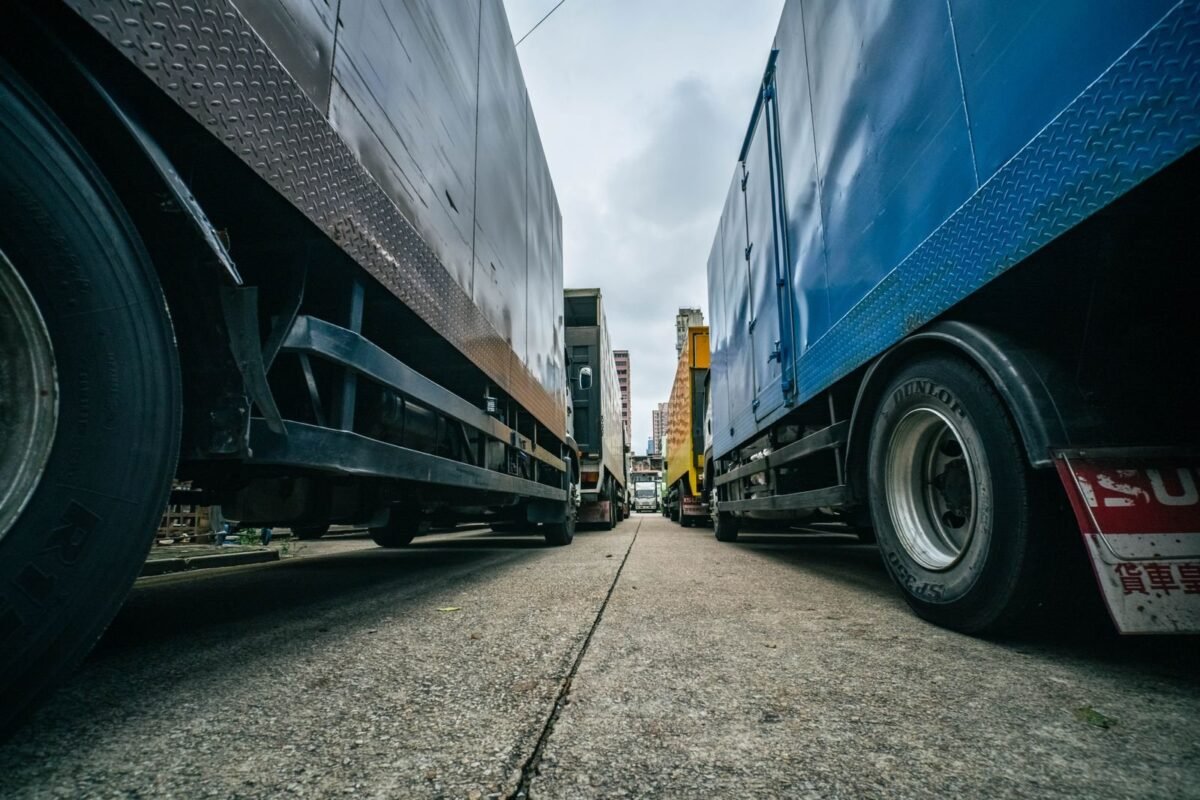
Scenario: a regional logistics operator wants a cross-border distribution hub serving the whole Mekong subregion — Bangkok in Thailand, or the Cai Mep – Thi Vai and Hai Phong areas in Vietnam? Thailand has the East-West Economic Corridor and Laem Chabang port, operating for decades. Vietnam has deep-sea ports taking mother vessels straight to the US and EU, plus cheaper premises. In logistics, the hub decision is governed by ownership law and network routes, not just warehouse rent.
Thailand’s hand: corridors and customer habit
Thailand sits at the centre of the Mekong subregion: the East-West Corridor links Vietnam through Laos to Myanmar, and the southern corridor reaches Cambodia. Transit and regional distribution via Bangkok is a habit for many shippers. But services are a restricted sector under Thailand’s Foreign Business Act B.E. 2542 (1999): a foreign operator wanting to provide many logistics services itself needs a Foreign Business Licence or a BOI/IEAT route with its own conditions — a structural barrier to price in from the start.
Vietnam’s framework: more open, but with per-segment caps
In Vietnam, logistics business conditions sit in Decree 163/2017/ND-CP. Foreign investors may set up logistics companies, but several segments carry foreign-equity caps under Vietnam’s WTO commitments — international maritime transport, road transport, warehousing and freight agency each have different schedules and limits, while container handling, customs clearance and courier services are relatively open. The project still needs an IRC under the Investment Law 143/2025/QH15 where investment licensing applies, and logistics centres usually lease land in industrial parks or port areas under Decree 35/2022/ND-CP. The practical point: the equity structure must be designed around the exact registered segments — registering an extra segment with a low cap can lock the whole project.
Infrastructure: deep-sea ports versus land corridors
Vietnam wins on long sea legs: Cai Mep – Thi Vai takes large vessels directly to the US West Coast and Northern Europe, Lach Huyen serves the North, and the North-South expressway network is cutting cross-country trucking times. Thailand wins on cross-border road links to Laos, Cambodia and Myanmar and on the maturity of warehousing around Bangkok. If customers’ cargo is mainly sea containers to the US or EU, a Vietnamese hub removes a transshipment leg; if it is overland Mekong distribution, Bangkok is still smoother.
Tax, land and operating costs
Logistics is not among Vietnam’s deepest tax-incentive sectors, but projects in coastal economic zones or difficult areas still receive incentives under the CIT Law 67/2025/QH15; warehouse rents and labour in Vietnam are clearly below the Bangkok area. Goods in transit through Vietnam are duty-free under the transit regime of the Customs Law 54/2014/QH13 — a key factor for consolidating Lao and Cambodian cargo out through Vietnamese seaports. On the Thai side, BOI incentive details for logistics shift with policy periods and need local-counsel updating.
Conclusion by business model
Choose Thailand if the main revenue is overland Mekong distribution and customers are used to a Bangkok hub. Choose Vietnam if the model is consolidating export cargo for sea freight, serving FDI factories inside Vietnam, or needing a more flexible ownership structure in the open logistics segments. In all cases, settle the segment-and-cap map before choosing the site — restructuring equity after signing a warehouse lease is an expensive problem.
Frequently Asked Questions
1. The East-West Corridor through Thailand versus Vietnam’s seaports — which is better for cross-border logistics?
It depends on the cargo flow. Thailand’s East-West Corridor and road network are strong for distribution into Laos, Cambodia and Myanmar. Vietnam’s Cai Mep – Thi Vai and Lach Huyen deep-sea ports are strong for containers sailing directly to the US, EU and Northeast Asia without Singapore or Hong Kong transshipment. Many operators run a two-hub model: Bangkok for Mekong road cargo, Vietnam for ocean exports.
2. How deep is the cross-border logistics supply chain in each country?
Thailand is deep in services: international-standard warehousing around Bangkok, cross-border trucking fleets and customs brokers with subregional experience. Vietnam is growing fast in port infrastructure and warehousing near FDI industrial parks, but specialised services such as multi-temperature cold storage and cross-border e-commerce fulfilment are still being built. Both countries lack senior logistics management talent compared with Singapore.
3. What do tax and land incentives for logistics look like in each country, at framework level?
Vietnam: location-based incentives under the CIT Law 67/2025/QH15, industrial and coastal economic-zone land rents below the Bangkok area, and duty-free transit under the Customs Law. Thailand: incentives via BOI/IEAT by policy period, and foreign-investor logistics services are conditioned by the Foreign Business Act. All Thai specifics need local-counsel confirmation.
4. How does tariff risk differ when exporting from each country?
Logistics is a service, so tariff risk lands on customers’ goods: exports from Vietnam are backed by the EVFTA/CPTPP/RCEP, while Thai goods lack EU and US FTAs. Under US reciprocal-tariff policy in 2025–2026, duties on Vietnamese and Thai goods have at times differed materially — a variable to refresh when signing customer contracts. The Thai-law content here is framework only; check with local counsel.
Related articles
- Underground Money Transfers: VND 10–100M Fines & Art. 189 Prosecution
- Leaving Vietnam: Moving Money Out — 6-Step Checklist
- Are Charitable Donations PIT-Deductible? 3 Conditions
- Do Parental Cash Gifts Get Taxed? Cash Is PIT-Free
- Gifting Real Estate in Vietnam: Notarisation, PIT & Registration Fee
This legal analysis has been verified against current Vietnamese regulations and cross-border FDI transaction practices by the attorneys at FLAT LAW FIRM.

