Illustration: Container port at sunset — Source: Wikimedia Commons (CC).
When a fund manager in Amsterdam weighs expansion into Southeast Asia, the spreadsheet holds more than labour costs. He looks at three things: how goods from the new plant reach Europe, how Dutch technology can upgrade Vietnamese agriculture, and which legal framework protects the investment for the next twenty years. Vietnam answers all three — which is why Dutch capital keeps arriving.
The Rotterdam gateway: an advantage not found on Vietnam’s map
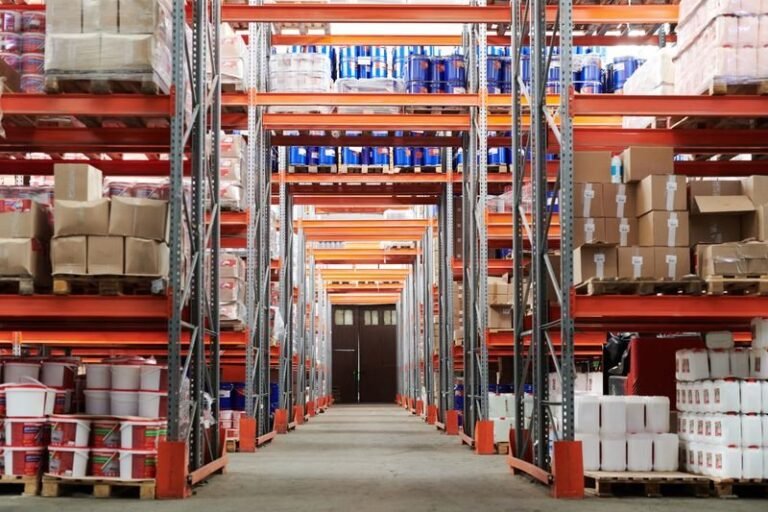
Rotterdam is Europe’s largest seaport — and for Vietnamese goods bound for the EU, it is the natural gateway. A container from Cat Lai to Rotterdam, then onward across the EU by inland waterway, rail and road: that is a logistics chain Dutch investors know best, because they operate it themselves.
The EVFTA (in force since 1 August 2020) eliminates most tariffs between Vietnam and the EU on a phase-down schedule, turning the Vietnam–Rotterdam sea route into a preferential trade lane. For Dutch investors in logistics, warehousing and distribution, Vietnam is not just an investment destination — it is the Asian end of the very network they already run in Europe.
High-tech agriculture: a fit both sides need
The Netherlands is small in land area but an agricultural powerhouse built on technology: greenhouses, seed varieties, water management, cold chains. Vietnam has abundant land, climate and farm labour, but needs technology to lift value-added.
The combination creates a two-way investment model: Dutch firms bring greenhouse technology, new varieties and smart irrigation to Vietnam; Vietnamese farm produce is processed to standard and shipped back to the EU via Rotterdam under EVFTA preferences. The legal frame for this model includes Law on Investment 143/2025/QH15 (effective 1 March 2026, replacing the 2020 Law on Investment), governing foreign investment activity in Vietnam, alongside EVFTA market-access commitments.
“China + 1”: supply-chain logic
After global supply-chain shocks, many European groups adopted a “China + 1” diversification strategy — keeping a China footprint while adding a Southeast Asian manufacturing base. Vietnam benefits from political stability, competitive costs, an abundant workforce and a broad FTA network (EVFTA, CPTPP, UKVFTA).
For Dutch investors, that “+1” carries an extra layer: goods made in Vietnam enter the EU under EVFTA preferences and Britain under the UKVFTA — one plant serving multiple preferential markets. Few countries in the region solve that equation as completely.
What Vietnamese businesses should prepare when working with Dutch partners
First, high compliance standards. Dutch firms typically require supply chains meeting environmental, labour and transparency benchmarks — prepare ESG files, certifications and internal audit processes before negotiating.
Second, detailed contracts in the European style. Dutch counterparts are used to dense contracts on quality, delivery, penalties and dispute resolution. Vietnamese businesses should have counsel review from the very first draft, not after signing.
Third, use the FTA frame inside the negotiation. When discussing price, model the EVFTA/UKVFTA tariff advantage for the goods to be exported — that is real money at the table, not a slogan.
Frequently asked questions
Which sectors do Dutch investors favour in Vietnam?
Notably logistics, seaports, high-tech agriculture, renewable energy and processing industries. This article focuses on logistics and agritech per the topic angle; other sectors have their own legal frames needing separate analysis.
What does the EVFTA concretely offer Dutch investors?
Most tariffs eliminated on schedule, an investment protection framework, and openings in some services sectors and public procurement. The specifics vary by sector — check the agreement’s commitment schedules for your field.
What should agri-tech investors note about land in Vietnam?
Land in Vietnam is under whole-people ownership; investors obtain land use rights via allocation or lease under current land law. This differs fundamentally from the Netherlands — take land-law advice before committing capital.
Where are disputes with Dutch partners resolved?
As agreed in the contract: international arbitration (e.g. SIAC, VIAC) or courts are both possible. The dispute-resolution clause should be negotiated upfront, not when conflict erupts.
This article has been quality-reviewed by the FLAW AI Legal Council
Related articles
- Sourcing British Agricultural Goods for Processing in Vietnam: The Reverse Flow
- Pharma and Medical Devices: French Companies Entering Vietnam
- Global Minimum Tax: French Groups with Vietnamese Subsidiaries
- IP: Plant Varieties and Patents in Vietnam vs the Netherlands
- Losing EVFTA Preferences over Origin Errors for Seafood (Shrimp, Pangasius): 5 Common Mistakes to Avoid