
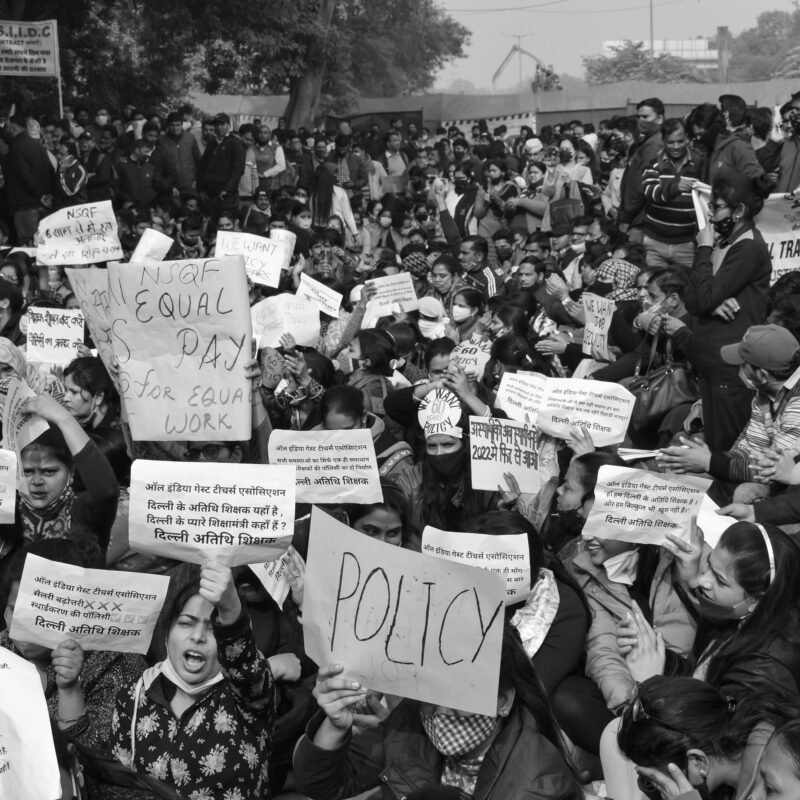
Scenario: a strike erupts at plant X, halting not only the striking workers but also the warehouse, transport teams and a satellite plant of the same system. HR receives three questions at once: do strikers get paid, do non-strikers sent home get paid, and what if the company itself shuts the whole plant? Article 208 of the Labor Code, together with the stoppage-pay mechanism, is the framework answering all three.
Three groups of employees — three pay regimes under Article 208
Group one, employees directly participating in the strike: under Article 208 of the Labor Code No. 45/2019/QH14, striking employees receive no wages and no other rights or benefits during the strike, unless the parties agree otherwise. This rule follows actual participation and applies whether the strike is lawful or unlawful, procedurally proper or not — the strike’s legality affects other regimes (damage compensation, handling of organizers), not the no-pay principle for strikers. Group two, employees who do not strike but must stop work due to the strike’s effects: they receive stoppage pay as agreed between the parties but not below the regional minimum wage, on the base mechanism of Article 99. Group three, employees in unaffected units who keep working normally: full contractual wages.
The payroll mistake made most often is group classification: the criterion is each person’s actual conduct on each strike day (participating or not, and affected to the point of being unable to work or not), not their nominal team or workshop. A worker from a striking workshop who actually came in and worked that day belongs to group three. Timekeeping for strike days must be kept in these three groups with noted bases, as it is the first document reconciled when post-strike complaints arise.
Where the company temporarily closes the workplace
Article 109 of the Labor Code allows the employer to temporarily close the workplace in statutory cases tied to collective dispute resolution and strikes (for instance to prevent damaging acts and ensure security and safety), with advance notice duties to employees and the managing authority as prescribed. During a temporary closure, pay consequences follow each group’s position: non-striking employees receive stoppage pay under the Article 99 mechanism referenced by Article 208 — as agreed but not below the regional minimum wage; strikers remain under Article 208’s no-pay rule. Closure is not a tool to “lock away” the non-striking group’s rights, and a closure outside the statutory cases or without proper notice is treated as a stoppage at the employer’s fault, attracting the higher Article 99 stoppage rate (full contractual wages).
After the strike ends, parties commonly record in the production-restoration minutes how the stoppage days are handled; an agreement more favorable to employees than Article 208 (for example partial pay for strikers) is entirely valid because the article itself opens the exception “unless the parties agree otherwise”, and it should be documented to avoid later interpretation disputes.
Illegal strikes: the damage-compensation layer is separate from wages
When a court declares a strike illegal under Article 204 of the Labor Code, beyond Article 208’s no-pay rule an additional liability layer arises: employees joining an illegal strike who cause damage to the employer must compensate it under the law, and related organizations and individuals bear responsibility according to their roles. This compensation is an independent civil relationship, determined by actual damage and specific fault; the company may not offset it into later wages outside the Article 102 deduction mechanism (capped at 30% of net pay after withholdings), and still less “net it off” by cutting the non-striking group’s entitlements.
Closing out a strike stoppage financially involves four tasks: finalize the three-group classification day by day; compute and pay stoppage wages for the affected group in the nearest pay cycle; document any agreement departing from Article 208; and separate the damage-compensation file (if pursued) into its own case with complete damage evidence. Doing these four properly restores labor relations instead of extending a wage dispute into a second round of conflict.
Frequently Asked Questions
Do participants in a lawful strike get paid?
No. Article 208 of the Labor Code provides that employees participating in a strike receive no wages and no other rights or benefits during the strike, unless the parties agree otherwise. The rule follows actual participation and covers lawful strikes too: lawfulness protects workers from illegality declarations and damage liability, but does not create a right to wages for strike days.
I did not strike but the plant stopped — how much am I paid?
Stoppage pay as agreed between the parties but not below the regional minimum wage, under Article 208 on the base of the Article 99 stoppage-pay mechanism. The exact level depends on the stoppage’s nature and the enterprise’s agreements; where the stoppage in substance results from a company closure outside the Article 109 statutory cases, the applicable level is employer-fault stoppage pay under Article 99 — full contractual wages.
Who pays stoppage wages during a strike?
The employee’s own employer. The stoppage-pay duty for the non-striking but affected group belongs to the enterprise where the employee works; no state fund or union organization pays this wage share in its place. Union support activities for members under the union’s own charter are separate from the company’s wage obligations.
Can the company deduct strikers’ pay from later pay periods?
No such “offset” mechanism exists. Strike days simply generate no wages under Article 208. If the strike is declared illegal and actual damage exists, compensation is a separate relationship to be established on proper grounds; any wage deduction (if implemented) must obey Article 102 of the Labor Code — only for property-damage compensation under Article 129 and capped at 30% of net pay after withholdings per month.
Related articles
- Accused of Discrimination in Hiring: Response
- Harassment Accused Is the Director: Managing the Conflict of Interest
- Mass Layoffs Without Reporting to Labor Authority: Fined
- 3 Months Wage Arrears, Workers Sue: Payment Priority
- Terminating Older Workers, Then Sued: Compensation
This legal analysis has been verified against current Vietnamese regulations and cross-border FDI transaction practices by the attorneys at FLAT LAW FIRM.

