
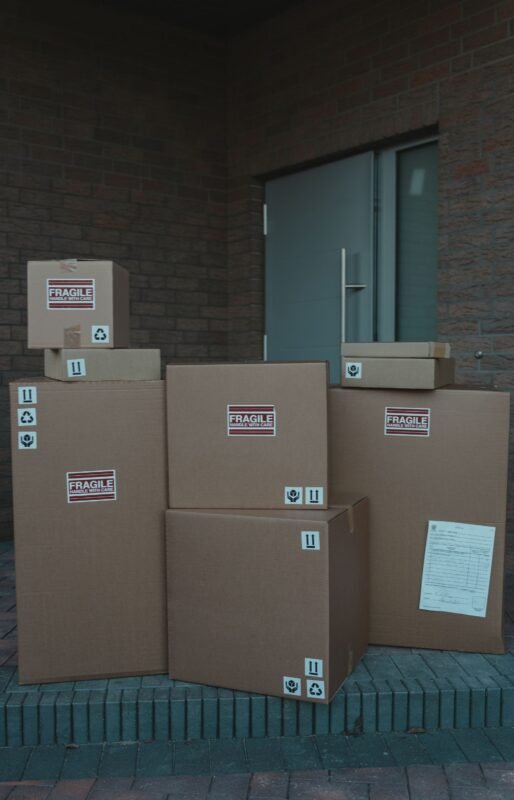
Receiving product samples, gifts or aid goods from abroad without a sale contract or payment does not exempt the shipment from customs control. Under current Vietnamese law, non-commercial goods must still complete full customs procedures, be declared under the correct declaration codes, and may still be subject to import duty and VAT. This article summarises the regulations in force as of 14 October 2026.
What are non-commercial goods? Samples vs gifts vs aid goods
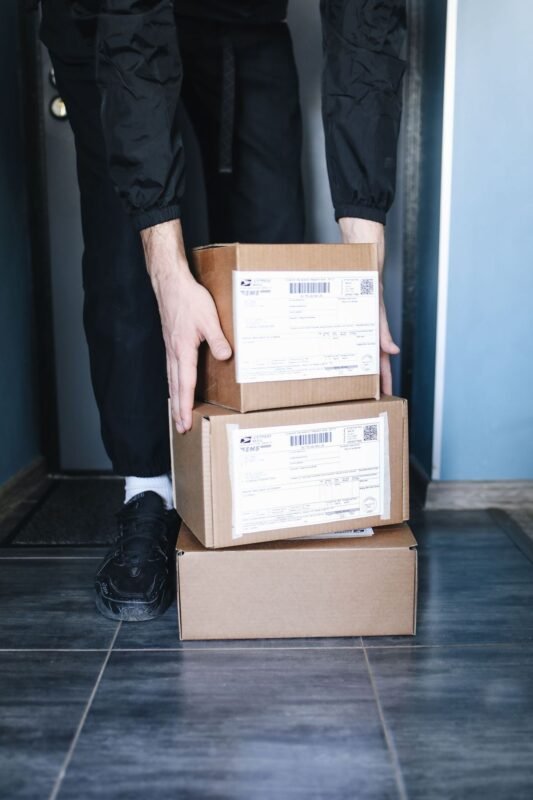
Non-commercial goods are imports or exports not intended for trade: no sale contract and no payment. Typical cases include: unpaid product samples; gifts from organisations or individuals; humanitarian aid and non-refundable aid; personal movable assets; personal baggage sent under a bill of lading; goods of diplomatic missions and international organisations.
A key distinction: unpaid samples fall into the non-commercial group, while paid samples are ordinary commercial goods and must be declared under the normal commercial declaration codes — never under the non-commercial codes.
Must samples and non-commercial goods clear customs?
Yes. Non-commercial goods and samples must complete full customs procedures like ordinary imports and exports, under Article 24 of the Customs Law 54/2014/QH13 (customs dossiers) and Clause 1, Article 6 of Decree 08/2015/ND-CP (as amended by Decree 167/2025/ND-CP).
Electronic declaration via the VNACCS system is the default. Paper declarations are allowed only in the five cases listed in Clause 2, Article 25 of Decree 08/2015/ND-CP, as amended by Point a, Clause 12, Article 1 of Decree 167/2025/ND-CP (effective 15 August 2025): (1) baggage exceeding the duty-free allowance; (2) imports/exports/temporary exports/re-imports serving national security or defence; (3) goods of individuals entitled to privileges and immunities; (4) failure of the customs electronic data-processing system or the electronic declaration system; (5) other goods as prescribed by the Minister of Finance.
Note: older guidance (2015–2020) requiring paper declarations (form HQ/2015/NK, two originals) for non-commercial goods is outdated, as it relied on the original Decree 08/2015 and Decree 59/2018/ND-CP — the latter fully repealed by Decree 167/2025/ND-CP.
Electronic declaration for non-commercial goods: codes H11/H21
The applicable declaration codes under the import/export code table issued with Decision 1357/QD-TCHQ dated 18 May 2021 of the General Department of Customs, effective 1 June 2021 (replacing Official Letter 2765/TCHQ-GSQL dated 1 April 2015):
- H11 — Import of other goods: for non-commercial imports.
- H21 — Export of other goods: for non-commercial exports.
Goods declarable under H11/H21 include: gifts; goods of diplomatic missions and international organisations; movable assets; humanitarian and non-refundable aid; unpaid samples; personal baggage sent under a bill of lading or exceeding the duty-free standard.
Declaring the wrong code (e.g. a commercial code for samples, or vice versa) may lead to administrative penalties under Article 9 of Decree 169/2026/ND-CP (effective 1 July 2026, replacing Decree 128/2020/ND-CP).
What does the import dossier for non-commercial goods include?
- Electronic customs declaration (code H11 for imports, H21 for exports);
- Bill of lading or transport documents;
- Non-commercial (proforma) invoice — valid only as the basis for declared value, not for payment;
- Packing list, if goods are not uniformly packed;
- Written request for non-commercial import (for organisations);
- Authorisation letter if a customs broker declares on your behalf;
- For individuals: personal identification documents;
- Import/export licence or specialised-inspection result notice, if the goods are subject to specialised management.
How is customs value determined without a contract or commercial invoice?
For goods with no sale contract and no commercial invoice, the customs value is the declared value stated by the declarant. If the customs authority has grounds to find the declared value inappropriate, it will re-determine the value under the customs valuation principles and methods. Legal basis: Clause 5, Article 17 of Circular 39/2015/TT-BTC (as amended by Clause 9, Article 1 of Circular 60/2019/TT-BTC).
Declarants must not declare “0” or “no value” arbitrarily. The declared value must reflect the actual value of the goods; an unreasonably low declaration may be re-determined by customs and penalised.
Are samples subject to import duty and VAT?
Non-commercial does not mean duty-free. Only gifts are exempt from import/export duty within the allowance: customs value not exceeding VND 2,000,000, or above VND 2,000,000 but total payable duty below VND 200,000, up to 04 times per year. Legal basis: Clause 2, Article 16 of the Import/Export Duty Law 107/2016/QH13; detailed in Article 8 of Decree 134/2016/ND-CP (as amended by Decree 18/2021/ND-CP). There is no separate duty-free allowance for “samples”.
Special note for goods sent by express delivery: Decision 01/2025/QD-TTg (issued 3 January 2025, effective 18 February 2025) fully repealed Decision 78/2010/QD-TTg — express-delivered imports valued at VND 1,000,000 or less are no longer exempt from import duty and VAT. Samples sent by express, however small in value, remain subject to import duty and VAT before clearance (Article 9 of the Import/Export Duty Law 107/2016/QH13).
Notes for individuals importing non-commercial goods
Individuals receiving samples or gifts from abroad should prepare personal identification along with the dossier above; note the gift duty-free allowance (VND 2,000,000, up to 04 times per year) and the new express-delivery rule effective 18 February 2025. Goods subject to specialised management (food, cosmetics, medical devices, etc.) must still meet specialised-inspection conditions.
Common errors and penalties
Common errors: paper declarations under outdated guidance; declaring zero value; using commercial codes (e.g. A11) for samples; confusing paid and unpaid samples; citing the repealed Decree 59/2018/ND-CP. Wrong declaration codes or values may be penalised under Article 9 of Decree 169/2026/ND-CP (effective 1 July 2026).
Frequently asked questions
Are unpaid samples subject to import duty?
Possibly yes, unless they meet the gift duty-free allowance (not exceeding VND 2,000,000 or payable duty below VND 200,000, up to 04 times per year). There is no separate allowance for samples.
Paper or electronic declaration for non-commercial goods?
Electronic declaration via VNACCS is the default; paper declarations only in the five cases listed in Clause 2, Article 25 of Decree 08/2015/ND-CP (as amended by Decree 167/2025/ND-CP).
What is the difference between H11 and H21?
H11 is for imports of other (non-commercial) goods; H21 is for exports of other (non-commercial) goods, per Decision 1357/QD-TCHQ.
This information is for reference only and does not constitute legal advice.
For reference only, not legal advice. Content quality-checked by the AI Legal Council; not yet reviewed by a human lawyer.