
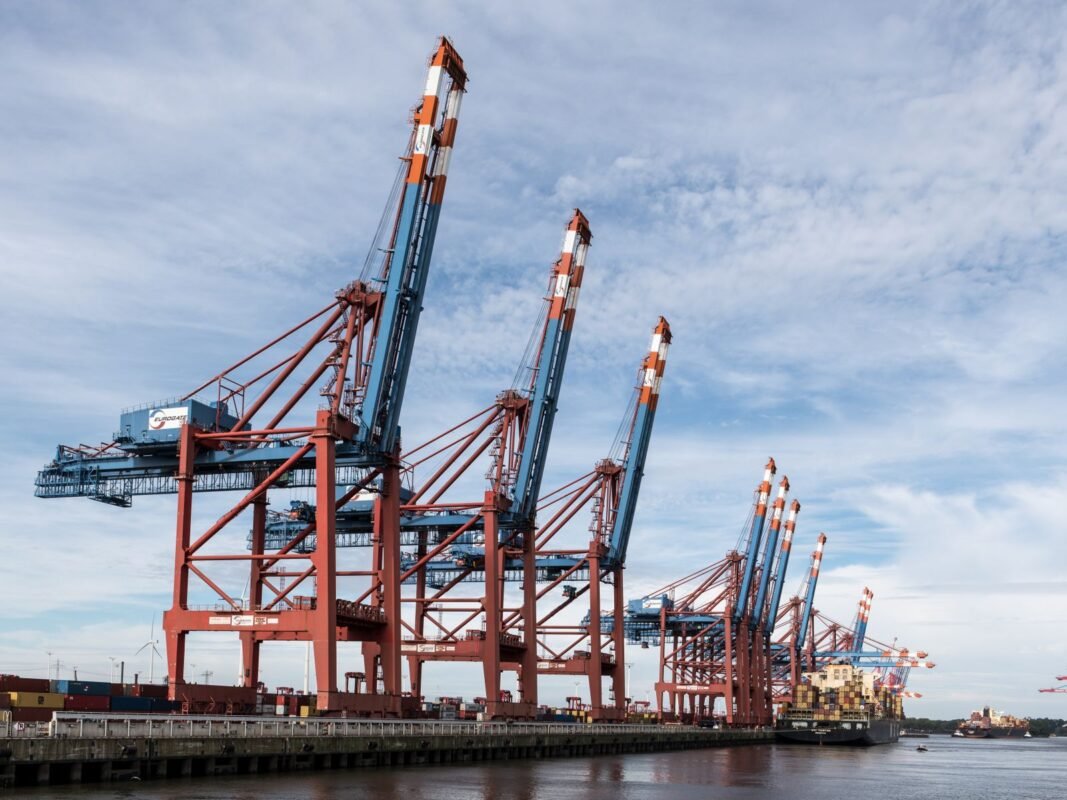
A container of suspected counterfeit goods bearing a Vietnamese brand has just arrived at port — what does the brand owner do within 10 days? The border is a critical “gateway” for stopping IP-infringing goods before they flood the domestic market. This article maps the two border control measures under Article 216 of the Law on Intellectual Property (VBHN 67/VBHN-VPQH), a 4-step cooperation procedure with customs, and the 2026 update allowing customs to suspend clearance proactively.
1. Two border control measures (Article 216)
Article 216.1 provides two measures: (a) suspension of customs clearance for goods suspected of infringing IP rights; (b) inspection and supervision to detect goods showing signs of infringement.
Suspension is applied in two cases (Article 216.2): (a) at the right holder’s request — to gather information and evidence for infringement handling, provisional urgent measures, or securing administrative sanctioning; (b) on customs’ own initiative — where inspection, supervision or control reveals clear grounds to suspect that import/export goods are IP counterfeits.
2. 2026 update: customs may suspend proactively (Circular 06/2026)
Circular 06/2026/TT-BTC (issued 26/01/2026, effective 01/3/2026, amending Circular 13/2015/TT-BTC) adds Article 10a: the Head of the Customs unit where the declaration is registered may issue a suspension decision as soon as inspection, supervision, control, IP-database analysis or professional information gives clear grounds to suspect the goods are counterfeit trademark goods, counterfeit geographical indication goods, or pirated goods — without waiting for the right holder’s request plus security deposit as before.
Other notable updates in Circular 06/2026:
- Requests for inspection/supervision are filed via the electronic customs data processing system (amending Article 6 of Circular 13/2015); customs has 20 working days to verify and notify acceptance or refusal.
- Control scope extends to import/export goods traded via e-commerce.
Right holders are no longer entirely passive. Still, registering an inspection/supervision request in advance remains the way to keep goods bearing your mark under regular watch: the request is valid for 01 year under Article 74.2 of the Customs Law 54/2014/QH13 and is renewable; it terminates when the applicant requests termination, upon expiry without renewal, or when the protection title is revoked (Article 8, Circular 13/2015).
Note on forms: Circular 06/2026 revised/reissued the forms — do not use the old forms (pre-01/3/2026); check the latest appendix of Circular 06/2026 before filing. Customs unit names (General Department/Department/Sub-department) may have changed after the 2025–2026 organizational restructuring — follow the text in force at the time of research and re-verify before filing.
3. Obligations of the suspension requester (Article 217)
A person requesting customs to suspend clearance must:
- (a) prove right-holder status with documents and evidence under Article 203.2;
- (b) provide information identifying the suspected shipment;
- (c) file the request and pay fees and charges as prescribed;
- (d) compensate for damage to the party subject to the measure where the goods turn out not to infringe IP rights.
Security (Article 217.2): 20% of the shipment’s value, or at least VND 20,000,000 where the value cannot be determined, or a bank/credit-institution guarantee.
4. Suspension procedure and time limits (Article 218)
- Once the requester fulfills all Article 217 obligations → customs issues the suspension decision.
- Within 30 days of issuing an administrative sanction decision concerning counterfeit trademark or pirated goods, customs provides the right holder with: names and addresses of the consignor and consignee; goods description; quantity; country of origin (paragraph 1).
- Suspension period: 10 working days from the date the requester receives the suspension notice. Extension for justified reasons is possible but not beyond 20 working days, subject to additional security (paragraph 2).
- Upon expiry, if the requester does not file a civil lawsuit and customs does not accept the case for administrative handling, customs shall: (a) resume clearance of the shipment; (b) compel the requester to compensate all damage to the affected party, including warehousing and preservation costs; (c) refund the remaining security (paragraph 3).
- Customs-initiated suspension (paragraph 4): notify the right holder (if contact information is available) and the importer/exporter immediately; within 10 working days of notification, if the right holder does not sue and customs does not accept the case for administrative handling, clearance resumes.
5. Inspection and supervision (Article 219)
The right holder files a request in advance with customs; upon detecting a shipment showing signs of infringement, customs notifies the requester immediately. Within 03 working days of notification, if the requester does not ask for suspension and customs does not consider administrative handling, clearance of the shipment resumes.
6. What counts as IP counterfeit goods (Article 213)
- Counterfeit trademark goods: goods bearing a mark identical or confusingly similar to a protected trademark used for the same goods, without the trademark owner’s permission;
- Counterfeit geographical indication goods;
- Pirated goods: copies produced without the permission of the copyright or related-rights holder.
7. The risk of “reverse” compensation for a wrong call
The 20%/VND 20 million security and the compensation duty in Articles 217–218 are a two-way safety valve: if the goods turn out not to infringe, the requester must compensate all damage to the cargo owner, including storage and preservation costs during suspension. Before requesting suspension, right holders should therefore carefully assess the grounds for suspicion (genuine-vs-suspect sample comparison, preliminary expert findings) rather than “stop first, think later”. “Clear grounds” for customs-initiated suspension is a qualitative criterion assessed by customs — the law has no rigid checklist, so coordination should be cautious and evidence-based.
8. Business checklist
- Register in advance: inspection/supervision request (using the new Circular 06/2026 forms, filed via the electronic customs data system) + proof of rights (Article 203.2) — valid 01 year, remember to renew;
- When a suspect shipment is detected: suspension request + shipment identification + 20%/VND 20 million security or bank guarantee;
- Within 10 working days (max 20): file a civil lawsuit or request administrative handling — otherwise the shipment is released and you must compensate;
- Keep all customs notices and decisions as evidence for follow-up steps.
Note on customs fees: fees for the suspension procedure follow the customs fee schedule in force (Circular 274/2016/TT-BTC) — check the current rates at the time of filing. Customs’ competence to sanction IP administrative violations at the border follows Decree 99/2013 (as amended by Decree 186/2026) — outside this article’s scope.
FAQs
Can customs suspend a shipment on its own, without the brand owner’s request?
Yes — since 01/3/2026, under Article 10a of Circular 06/2026, the Head of the Customs unit where the declaration is registered may proactively suspend where there are clear grounds to suspect counterfeit trademark, counterfeit GI or pirated goods.
How long is an inspection/supervision request valid?
01 year (Article 74.2, Customs Law 54/2014/QH13), renewable.
How much security is required for a suspension request?
20% of the shipment value, or at least VND 20,000,000 where the value cannot be determined, or a bank guarantee (Article 217.2).
What if no lawsuit is filed within 10 working days?
Customs resumes clearance; the requester must compensate all damage plus storage and preservation costs (Article 218.3).
May I still use the pre-01/3/2026 forms?
No. The new Circular 06/2026 forms must be used.
Legal sources cited
- Law on Intellectual Property — VBHN 67/VBHN-VPQH (23/3/2026): Articles 203.2, 213, 216, 217, 218, 219.
- Customs Law 54/2014/QH13: Article 74.2.
- Circular 13/2015/TT-BTC (as amended by 06/2026/TT-BTC): Articles 6, 8.
- Circular 06/2026/TT-BTC (issued 26/01/2026, effective 01/3/2026): Article 10a (new).
See also: Challenging an IP Administrative Sanction Decision in Vietnam: Procedure and Time Limits — when a shipment is sanctioned and the business needs to challenge the decision; How Long Does Industrial Design Protection Last in Vietnam? Maximum Renewals — protect industrial designs before counterfeits reach the market.
Need to register customs monitoring or handle counterfeit goods at the border? Reach FLAT Law Firm via the Contact page.
The information above is for reference only and does not constitute legal advice.
Transparency note: This article was drafted by FLAT Law Firm\u2019s AI content production system and reviewed by the internal review board (AI Legal Council QA). It has not been reviewed by a human lawyer.