
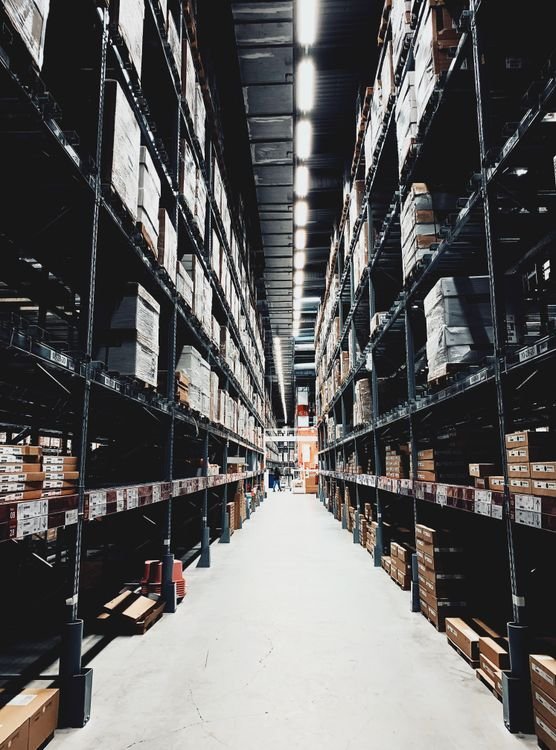
Scenario: Company A’s chemical warehouse inside an industrial park catches fire before dawn; strong wind drives the flames across the fence into Company B’s workshop 40 meters away, destroying a packaging line worth tens of billions of dong. A calls it “an accident beyond anyone’s control”; B demands full compensation. Who is right — and what exactly can B claim?
The short answer: A must compensate, and “accident” is no shield
Non-contractual liability for damages arises when three elements coincide under Article 584 of the 2015 Civil Code: actual damage, an unlawful act (here, violating fire-prevention and chemical-warehouse management rules), and causation between the act and the damage. Fire traveling from A’s warehouse and consuming B’s workshop is a direct causal chain that is hard to deny.
What makes this case particularly bad for A: a chemical warehouse is a source of extreme danger. Article 601 of the Civil Code provides that the owner or possessor of a source of extreme danger must compensate damage it causes even where there is no fault — exemption applies only where the damage results from the intentional fault of the victim or from force majeure. Bluntly: A cannot escape by arguing “I was careful, the spread was unintended”.
What B can claim — and the item most often “forgotten”
Under Article 589 of the Civil Code, compensable damage from infringed property includes:
- Property lost, destroyed or damaged: the burnt production line, machinery, materials and finished goods — valued at the time of loss, supported by invoices, records and expert assessment.
- Benefits attached to the use and exploitation of the property, lost or diminished: the most commonly overlooked item — the profit the packaging line would have generated during the shutdown for remediation. To recover it, B must prove it with accounting books, signed customer contracts and orders cancelled for late delivery.
- Reasonable costs to prevent, limit and remedy the damage: temporary warehouse rental, replacement line hire, clean-up and re-safety-assessment costs.
In real disputes, A typically offers only the book value of the burnt assets (often deeply depreciated), while B claims replacement value plus lost profit — that gap is what gets negotiated or litigated.
Which insurer pays — and the “subrogation” claim back against A
A common misunderstanding: B assumes A’s fire insurance will pay B. It will not. Compulsory fire and explosion insurance (Decree 67/2023/ND-CP) covers the insured facility’s own property — A’s assets, not B’s. B recovers from two sources: (1) B’s own property insurance (if purchased), after which B’s insurer is subrogated — stepping into B’s shoes to reclaim from A what it paid; (2) a direct civil claim against A for non-contractual liability.
Where the damage is large enough (VND 100 million or more in property loss) and the cause is a fire-regulation violation, the responsible individuals at A may also face criminal prosecution under Article 313 of the 2015 Penal Code — and a criminal judgment then becomes powerful evidence for B’s civil damages suit.
What B should do immediately to preserve the claim
Within the first 24 hours: ask the police to record the scene covering both facilities (do not let A clear its warehouse before the record is made); draw up a damage record signed by both sides or witnessed by local authorities; photograph and film the entire affected area; extract B’s own security camera footage (which often captures the moment the fire crossed over). Send A a written notice preserving liability, and notify B’s insurer. Every oral “let’s settle this between ourselves” at this stage should be replaced with writing — goodwill has no evidential value.
Related articles
- Total Cost of Setting Up a Trading/Service FDI Company: Sample Budget
- Total Cost of Setting Up a Manufacturing FDI Company: Sample Budget
- First-Year Office/Headquarters Rent for an FDI Company
- First-Year Costs: Digital Signature, E-Invoices and Accounting Software
- DICA Account Opening and First-Year Bank Fees
This legal analysis has been verified against current Vietnamese regulations and cross-border FDI transaction practices by the attorneys at FLAT LAW FIRM.

