
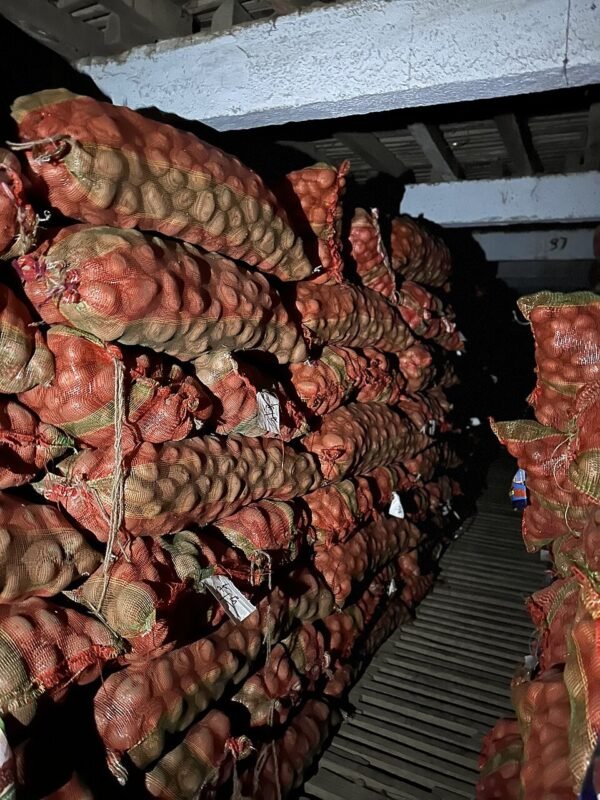
A cold store serving both food and pharmaceuticals walks two entirely different legal corridors: food looks to food-safety conditions, pharmaceuticals to GSP standards and a pharmaceutical business licence. Confusing the two corridors is the error that sends many cold-storage projects back to redo their files from scratch.
Food cold stores: food-safety conditions and the Decree 46/2026 suspension note
Food storage facilities must meet food-safety conditions on premises, storage temperatures per product group, hygiene and traceability, and fall within the scope for a food-safety eligibility certificate as prescribed. On the legal frame, businesses must know the current special situation: Decree 46/2026/ND-CP was issued to replace Decree 15/2018/ND-CP on food safety, but Decree 46/2026 is suspended from application under Government Resolution 15/2026/NQ-CP (following Resolution 09/2026/NQ-CP); during the suspension, procedures in practice still follow Decree 15/2018/ND-CP, and this lasts until the amended Food Safety Law and a new guiding decree take effect. Files and advice for a 2026 food cold-store project must present both layers together.
Pharma cold stores: GSP standards and the pharmaceutical eligibility certificate
Medicines and medicinal materials are special goods under the Pharmacy Law 105/2016/QH14 (amended by Law 44/2024/QH15, in force 1 July 2025). A drug storage facility must meet the Good Storage Practice (GSP) principles and standards issued by the Ministry of Health — temperature control in the prescribed band per product (typically 2–8°C for vaccines and biologics), continuous temperature monitoring with alarms, and out-of-range handling procedures — and hold a certificate of eligibility for pharmaceutical business covering storage. Products need a marketing authorisation number under Circular 32/2026/TT-BYT to circulate; a cold store holding products without valid authorisation is warehousing someone else’s risk.
Cargo spoiled by a power cut: liability under the storage contract
For food or pharma alike, outage disputes return to three questions: did the storage contract promise backup power and a restoration time; does the store keep continuous temperature records proving the incident’s course; and was the cargo owner notified in time to decide on moving the goods. A professional cold store must maintain backup generation, fuel reserves and a written response procedure. Cargo owners should turn these promises into sanction-backed clauses, with periodic rights to inspect temperature data — the store’s licence assures entry conditions; only the contract assures continuous operation.
Frequently asked questions
What permits does a food cold store need?
Depending on product type and scale: the facility must hold a food-safety eligibility certificate where prescribed and meet storage conditions per product group. On the current frame, note that Decree 46/2026/ND-CP replacing Decree 15/2018/ND-CP is suspended under Resolution 15/2026/NQ-CP, so procedures in practice still follow Decree 15/2018/ND-CP until the amended Food Safety Law and a new guiding decree take effect.
Must a pharma cold store meet GDP/GSP standards?
For drug storage, yes: the facility must meet Good Storage Practice (GSP) and hold a pharmaceutical business eligibility certificate with a storage scope under the Pharmacy Law 105/2016 (amended by Law 44/2024). GDP is Good Distribution Practice for the drug distribution chain; a dedicated storage facility centres on GSP. The two are often confused in project files, so identify the facility’s actual activity correctly.
Goods in the cold store spoiled in a power cut — who pays?
The warehouse operator bears primary liability if it failed to maintain backup power and response procedures as promised in the storage contract, or failed to notify the cargo owner in time. An outage is force majeure only where it exceeds reasonable backup capacity. Continuous temperature records are the central evidence for when spoilage began and whose responsibility it is.
FLAT Law Firm — FLAT Law Firm advises cold-storage projects on both corridors: food-safety conditions (with the Decree 46/2026 suspension note) and GSP standards plus pharmaceutical licensing for drug storage.
This article has been quality-reviewed by the FLAW AI Legal Council