
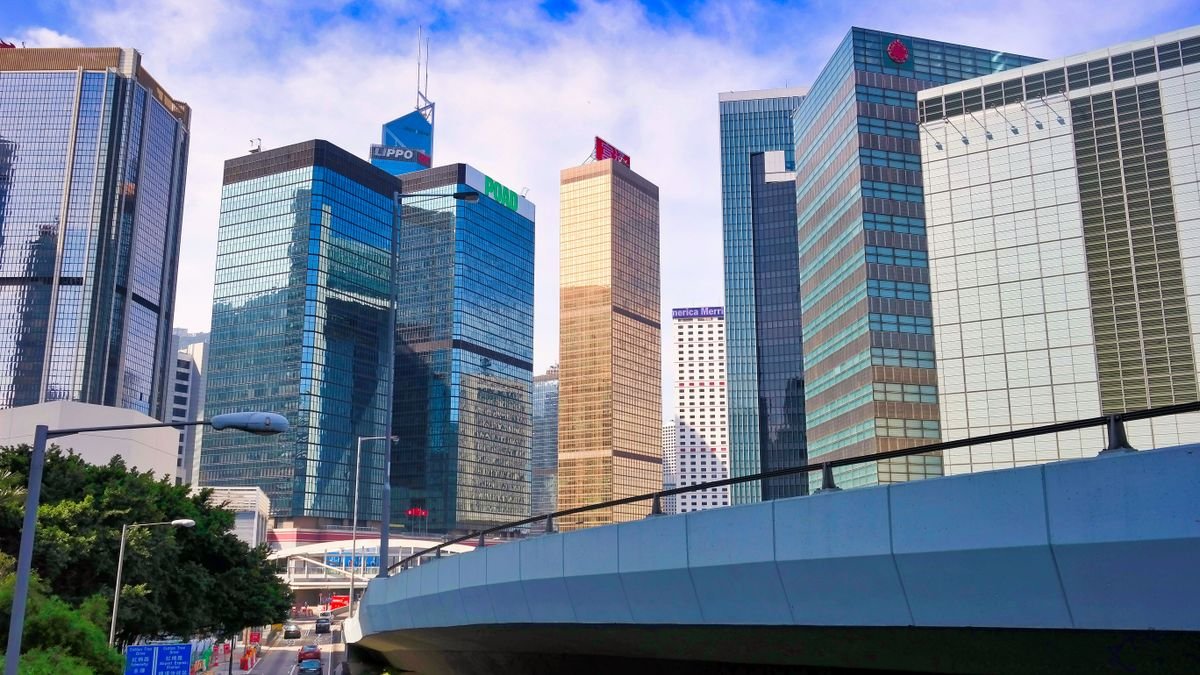
Hong Kong is the economy where mediation is most deeply institutionalised in this series: its own Mediation Ordinance, an accreditation regime for mediators, and long-standing court-linked mediation practice. Set against Vietnam — where commercial mediation is still framed at decree level — this pairing shows what a mature system changes in user experience, and by what road a settlement signed in Hong Kong actually travels to Vietnam.
Legal basis
Hong Kong’s Mediation Ordinance, Cap 620, effective from 2013, frames mediation practice, confidentiality of mediation communications and the HKMAAL accreditation body for mediators. Hong Kong courts promote mediation through practice directions on ADR, making mediation a near-default step in commercial civil litigation in the SAR.
On the Vietnamese side stand Decree 22/2017/ND-CP on commercial mediation and court recognition of successful settlements under the Civil Procedure Code 92/2015/QH13. On the Singapore Convention, China signed in 2019 but has not ratified at the time of writing, and application to Hong Kong depends on a Chinese declaration — so in Hong Kong, as in Vietnam, direct Convention enforcement is not an available road today.
Applied analysis
The first experiential difference is the density of professional bilingual English–Chinese mediators and a mediation culture that prizes voluntary settlement: most commercial disputes in Hong Kong pass at least one mediation round before litigation truly heats up. The second is statutorily tight confidentiality, which makes parties willing to open real numbers in session — something Vietnam’s frame, while also recognising confidentiality, does not yet match in foreign investors’ confidence.
On cross-border enforcement, a settlement signed in Hong Kong and taken to Vietnam currently follows Vietnam’s domestic route for foreign settlements: a recognition request under the civil procedure frame, or suit as a contract; in the Hong Kong direction, a settlement can be enforced with court leave as a court order under the SAR’s Mediation Ordinance and contract law. In both directions the document must stand on its own as a complete contract — the most important drafting discipline today.
Recommended actions
For a deal with a Hong Kong element, the recommended structure is: mediate in Hong Kong where the centre of interest and the commercial relationship sit there, with an HKMAAL-accredited mediator; and build into the agreement a fallback arbitration clause at HKIAC if mediation fails or a party will not perform voluntarily. A mediation-to-arbitration chain inside one jurisdiction lets the settlement, if needed, be converted into a New York Convention award.
This article is delineated from the India pairing in EXP-3239 in this batch — where the 2023 mediation statute is very new — and the Philippines pairing in the published EXP-3241; Hong Kong is the mature end of the comparison spectrum, Vietnam the developing end, and clause conclusions must be written for the less mature end.
Frequently Asked Questions
Is mediation a mandatory step before litigation/arbitration?
Statutorily, no, in either place for ordinary commercial disputes. Practical experience differs: in Hong Kong, the courts’ practice direction on alternative dispute resolution makes mediation close to a must-try step in civil litigation, and unreasonable refusal of mediation can be counted by the court when allocating litigation costs. In Vietnam, commercial mediation under Decree 22/2017/ND-CP is purely voluntary or contractual, with no similar costs consequence. So “not mandatory” in Hong Kong weighs considerably more in practice than “not mandatory” in Vietnam.
How are mediation settlements enforced across borders?
There is no direct Singapore Convention enforcement at the time of writing on either side: China has only signed the Convention and its application to Hong Kong awaits a Chinese decision, while Vietnam has not ratified either. The current roads: a Hong Kong-signed settlement taken to Vietnam is handled under Vietnamese domestic law — a recognition request for the mediated settlement or suit as a civil contract; a settlement taken to Hong Kong can be enforced with the SAR court’s leave as a court order under the SAR’s law. If the Convention takes effect for a side in future, this picture changes and must be rechecked at the time of use.
Reputable mediation centers in each country?
In Hong Kong, representative addresses are the mediation centres operating within the HKIAC ecosystem and professional mediation bodies whose mediators are HKMAAL-accredited, with international commercial mediator lists bilingual in English and Chinese. In Vietnam, the mediation centre in the VIAC system and centres under Decree 22/2017/ND-CP. For a Hong Kong–Vietnam pairing, selection criteria should include: mediators experienced in similar cross-border disputes, a clear med-arb fallback mechanism, and the capacity to perfect the settlement document to the enforcement standard of both places.
When should mediation be chosen over arbitration? Recommendation to check local counsel for foreign law details.
Mediation wins where the dispute sits inside a continuing financial or commercial relationship with a Hong Kong partner, where the parties need a neutral, highly confidential English-language forum, and where voluntary performance is likely. HKIAC arbitration is better where a cross-border New York Convention award is needed, where interim measures linked to Mainland China under the 2019 arrangement are required, or where a party’s good faith is gone. Many contracts choose a tiered mediation-then-HKIAC structure to take both advantages. Hong Kong law details should be reviewed by counsel in the SAR before finalising for a specific deal.
Related articles
- Suing in Thailand vs Vietnam: Litigation and Foreign Judgment Enforcement
- Suing in Philippines vs Vietnam: Litigation and Foreign Judgment Enforcement
- Commercial Mediation in South Korea vs Vietnam (Singapore Convention)
- Commercial Mediation in India vs Vietnam (Singapore Convention)
- Vietnam–Singapore BIT and ISDS Rights: A Shield When Policies Shift
This legal analysis has been verified against current Vietnamese regulations and cross-border FDI transaction practices by the attorneys at FLAT LAW FIRM.