
EVFTA origin rules for textiles are famously strict, built around the “from fabric onwards” principle: the fabric must be woven in Vietnam or the EU for the garment to qualify for tariff preferences. Yet real production is never perfectly “clean” — a shirt may use sewing thread from a third country, a pair of trousers may contain a few percent of non-originating elastane. The de minimis (tolerance) rule is the safety valve for such cases: it allows a small share of non-originating materials without disqualifying the product. This article explains how tolerance is calculated for textiles under Circular 14/2026/TT-BCT (effective 10 May 2026, replacing Circular 11/2020/TT-BCT), with worked numerical examples.
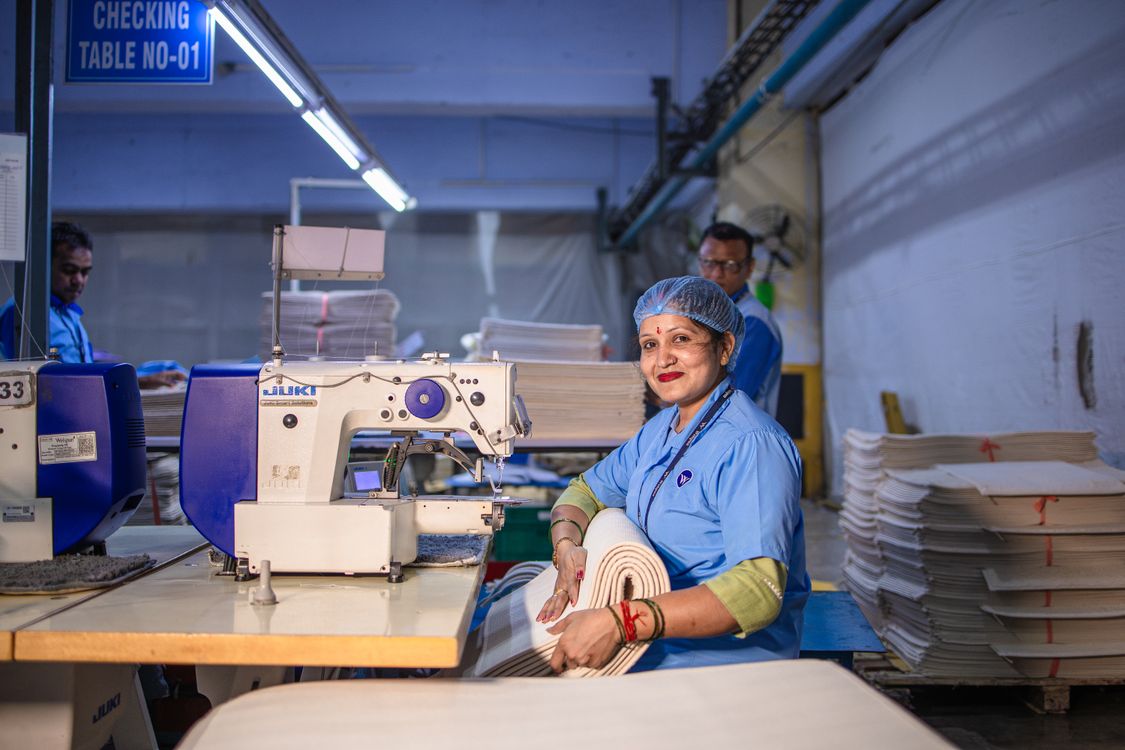
Image: EqualStock IN / Pexels — free stock photo.
1. Where tolerance sits in the EVFTA legal framework
Tolerance is set out in Article 8 of Circular 14/2026/TT-BCT (rules of origin under EVFTA), corresponding to Article 5 of Protocol 1 to the Agreement. The general principle: where a product fails the change-of-tariff-heading criterion or the product-specific rule because it incorporates non-originating materials, it is still deemed originating if the total value or net weight of those non-originating materials stays within the permitted threshold.
A widespread misunderstanding needs correcting: tolerance is not a licence to use unlimited third-country inputs. It is a hard 10% ceiling calculated differently by product group — and textiles (Chapters 50–63) have their own calculation method.
2. Three tolerance thresholds by product group
Article 8 of Circular 14/2026/TT-BCT establishes three groups:
| Product group | Tolerance | Calculation basis |
|---|---|---|
| Chapters 2 and 4–24 (except processed fishery products of Chapter 16) | 10% | 10% of ex-works price or 10% of product weight |
| Other products (except Chapters 50–63) | 10% | 10% of the product’s ex-works price |
| Chapters 50–63 (textiles) | Flexible tolerance | Under Notes 6 and 7 of Annex I |
Textiles therefore do not use the general “10% of ex-works price” formula but a flexible tolerance — explained next.
3. Textiles: measured on the weight of basic textile materials
Note 6 of Annex I to Circular 14/2026/TT-BCT provides: where a product’s origin criterion refers to this Note, the column-3 criterion does not apply to non-originating basic textile materials, provided such materials do not exceed 10% of the total weight of all basic textile materials used in manufacture.
Two concepts exporters must master:
- Basic textile materials: the list in Note 6, including silk, sheep’s wool, animal hair, cotton, flax, hemp, jute, coconut fibre, synthetic and artificial filament fibres, among others. This is the “unit of account” for textile tolerance.
- Mixed products only: the flexible tolerance applies solely to products made from two or more basic textile materials. A product using a single textile material does not qualify.
Note 7 sets separate tolerances for certain specific textile materials — exporters using speciality yarns or inputs should consult Annex I directly before calculating.
4. Worked examples
Example 1 — within tolerance: A consignment of T-shirts (Chapter 61) with 1,000 kg of finished product, made from 950 kg of originating Vietnamese cotton yarn and 50 kg of non-originating polyester yarn. Non-originating basic textile materials = 50/1,000 = 5%, below the 10% ceiling → the consignment retains EVFTA originating status (subject to all other rules and to the maximum percentages in Annex II).
Example 2 — outside tolerance: A consignment of trousers whose principal fabric is originating but whose non-originating lining accounts for 12% of the total weight of basic textile materials. 12% > 10% → tolerance does not apply, and the consignment loses EVFTA preference unless another origin basis exists (e.g., cumulation of Korean fabrics under Article 3 of Protocol 1, if conditions are met).
Example 3 — a common confusion: Buttons, zippers and labels are not “basic textile materials” and do not enter the Note 6 numerator or denominator. They remain subject, however, to the product-specific rule in Annex II — exporters must read both layers of rules, not just the tolerance calculation.
5. Two hard limits
- Annex II maxima still bind: Article 8(2) states clearly that tolerance may not be used to exceed the maximum percentages of non-originating materials laid down in Annex II. Tolerance rescues small within-threshold deviations; it cannot circumvent the product-specific rule.
- No tolerance for wholly obtained goods: Article 8(3) excludes goods that are wholly obtained under Article 6 (e.g., cotton grown and harvested entirely in Vietnam). Wholly obtained goods need no tolerance; tolerance only matters where non-originating inputs are present.
6. Keeping proof ready for verification
Tolerance is a right, but a right that must be documented. Textile exporters to the EU should maintain: a detailed bill of materials per product code showing the weight of each basic textile material; purchase invoices clearly separating originating and non-originating sources; a tolerance calculation sheet per consignment; and the origin documents issued. When EU customs requests verification, this is the first file examined.
Frequently asked questions
1. What is the de minimis percentage under EVFTA?
10%. The calculation differs by group: agricultural goods (Chapters 2, 4–24) use 10% of ex-works price or product weight; other goods use 10% of ex-works price; textiles (Chapters 50–63) use the flexible tolerance — non-originating basic textile materials not exceeding 10% of the total weight of basic textile materials (Note 6, Annex I, Circular 14/2026/TT-BCT).
2. Do buttons and zippers from China count toward textile tolerance?
No — they are not “basic textile materials” and do not enter the Note 6 formula. They must still comply with the product-specific rule in Annex II. Check both layers of rules.
3. Can a product made from a single yarn type use the flexible tolerance?
No. Note 6 expressly limits the flexible tolerance to mixed products made from two or more basic textile materials.
4. Does tolerance override the “from fabric onwards” rule?
Not entirely. Tolerance only covers non-originating basic textile materials within the 10% weight ceiling and may not exceed the Annex II maxima (Article 8(2)). If the main fabric is non-originating and dominant, tolerance cannot fix it — another mechanism such as cumulation is needed.
5. Is Korean fabric used for garments sewn in Vietnam treated as originating?
Yes, under the cumulation mechanism in Article 3 of Protocol 1 to EVFTA (paragraph 7): Korean-origin fabrics are deemed Vietnamese-origin when processed in Vietnam, provided they undergo more than minimal operations and the administrative-cooperation conditions are met, with the statement “Application of Article 3(7) of Protocol 1 to the Viet Nam – EU FTA” on the document.
6. How long should tolerance records be kept?
Exporters must retain complete origin evidence (bills of materials, input invoices, tolerance calculations, origin documents) for the period prescribed by law, to serve post-clearance verification by both Vietnamese and EU customs. In practice, keep them at least for the full post-clearance audit limitation period.
Conclusion
De minimis tolerance is a practical tool, but it demands precise calculation: for textiles the 10% threshold is measured on the weight of basic textile materials (Note 6), not on ex-works price as for many other product groups. Build a standard tolerance worksheet per product code at the costing stage, rather than firefighting after shipment or during verification. For products with complex input structures, Annex II, Note 6 and Note 7 must be read together — always.
—
This article has been quality-reviewed by the FLAW AI Legal Council
Related articles
- Sub-Subsidiaries (Tier 2, Tier 3) in Vietnam: The Test That Decides the Procedure
- Foreign Parent Companies Setting Up Subsidiaries in Vietnam: 3 Consequences to Price In
- Single-Member LLC, Multi-Member LLC or JSC: Which Entity for Foreign Investors?
- Which Sectors Bar Foreign Investors from 100% Ownership?
- Pros and Cons of a 100% Foreign-Owned Company in Vietnam: The Risk Ledger