
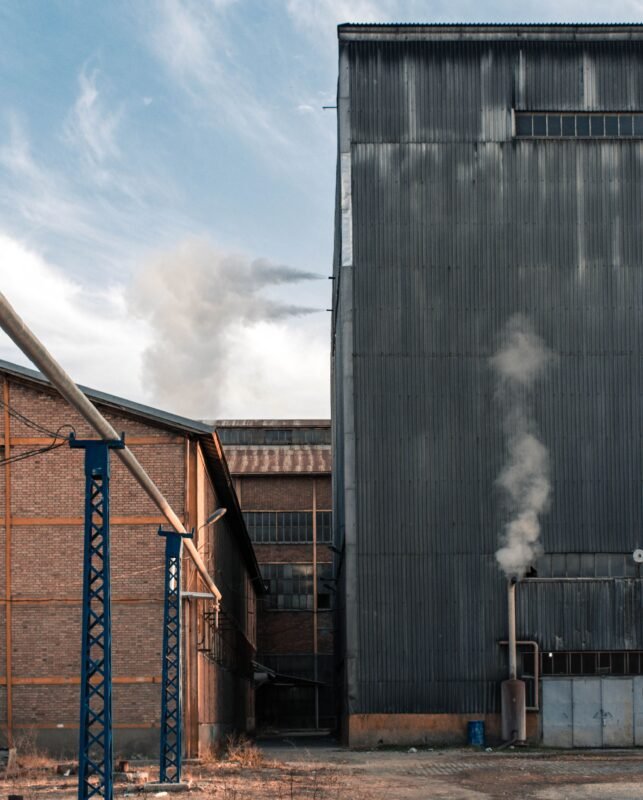
An FDI project manufacturing electronic components inside an industrial zone (IZ) must relocate to a new site because its land lease in the zone is expiring. Management worries about two things: how complex the Investment Registration Certificate (IRC) amendment procedure is, and whether the project will “lose” its tax incentives for leaving the IZ.
1. A two-tier amendment procedure
Tier 1 — projects subject to investment policy approval: changing the investment location requires an adjusted investment policy approval (Article 33.3.b, Investment Law 143/2025), issued by the same authority that granted the original approval.
Tier 2 — projects with only an IRC: amend the IRC under Article 56.2 of Decree 96/2026/ND-CP within 7 working days. The dossier must evidence the right to use the new location (Article 39.3, Decree 96/2026). Note on authority: for a project inside an IZ, the IRC is issued by the IZ Management Board; relocating outside the IZ changes the investment registration authority — to the provincial Department of Finance.
2. Incentives after relocation: “tied to conditions, not to the certificate”
Decree 320/2025/ND-CP sets the principle: changing the certificate without changing whether incentive conditions are met → the project keeps enjoying the remaining incentive period. Conversely, any year in which the project fails to meet all conditions (points g and h, Clause 1, Article 18) → no incentives for that year.
3. The key trap: “investment incentives” vs “CIT incentives”
This is the point both research teams stressed — and where many companies go wrong:
- An industrial zone is an “investment incentive locality” (Article 15.2.b, Investment Law 143/2025) — but an IZ is NOT on the list of “CIT incentive localities” (Article 12.3, CIT Law 67/2025/QH15 — that list covers only disadvantaged or extremely disadvantaged areas, economic zones, hi-tech parks, hi-tech agricultural zones and concentrated digital technology zones).
- Therefore: leaving an IZ does not mean losing CIT incentives. CIT incentives attach to the business line (supporting industries, high technology — Articles 18–19, Decree 320/2025): if the manufacturing line is unchanged → CIT incentives continue.
- Only when an incentive attaches to the locality and the new site is no longer in an incentive locality → the conditions cease to be met from the non-compliant year.
4. Mandatory vs voluntary relocation
Relocation under a state authority’s decision → the project qualifies for investment support (Article 14.3.d, Investment Law 143/2025). Voluntary relocation for business reasons → no support.
On tax: support or compensation received when handing over the old site — after deducting relocation costs and the residual value of fixed assets — counts as other taxable income for CIT (Article 4.n, Decree 320/2025).
5. Unclear points — confirm with the competent authority
- Decree 320/2025 has no dedicated rules for “site relocation”; whether production downtime during relocation counts toward the incentive period has no specific guidance.
- Criteria for determining the incentive “locality” when a project sits on a boundary between localities — confirm with the tax authority.
Conclusion
Relocating an FDI project out of an IZ is a two-sided exercise: procedure (adjusted policy approval, or IRC amendment within 7 working days — noting the change of registration authority when leaving the IZ) and incentives (they continue while conditions are met; an IZ is not a CIT incentive locality, so leaving it does not by itself end CIT incentives). Distinguish this from merely moving the company’s headquarters — analyzed separately.
Does your FDI project have to relocate out of an industrial zone and need a review of IRC amendment procedures and incentive preservation? Contact FLAT Law Firm via the Contact page.
For reference only, not legal advice.
The legal content of this article is reviewed by FLAT’s AI Legal Council and submitted to the owner for approval; it is not an opinion of a licensed lawyer and does not replace legal advice for specific cases.


