
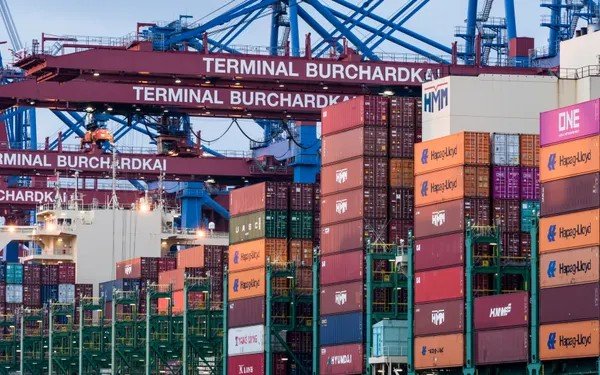
Not all exported goods are subject to export tax. Current law draws a clear line: goods exported through Vietnam’s border gates and borders fall within the persons subject to export tax under Article 2 of the Law on Export and Import Taxes 107/2016/QH13 (see consolidated document 96/VBHN-VPQH dated 31/3/2026) — including goods exported through border gates/borders; goods exported from the domestic market into non-tariff zones; on-spot exports; and exports by enterprises exercising export, import and distribution rights.
Key principle: not listed in the Schedule = 0% rate
Only goods named in the List of taxable goods — Appendix I of the Export Tariff issued with Decree 26/2023/ND-CP are taxed at rates above 0%. Goods not on this list are taxed at 0% upon export. Four distinct concepts must be kept apart:
- Subject to export tax: named in the List, rate > 0%;
- 0% export: not named in the List;
- Export tax exemption: the regime under Article 16 of Law 107/2016;
- Non-collection of tax: the regime under Article 19 of Law 107/2016.
A fundamental difference from import tax: export tariff rates do not depend on the country of destination (there are no preferential or special preferential rates under agreements as with import tax).
Cases not subject to export tax
Under Article 2 of Law 107/2016 (current version, see 96/VBHN-VPQH), certain cases are not subject to export tax, including: transit, trans-shipment and transhipped goods; humanitarian aid and non-refundable aid; goods exported from non-tariff zones abroad; goods imported from abroad into non-tariff zones and used only within those zones; goods transferred between non-tariff zones; and the portion of petroleum used to pay resource tax to the State upon export. (Clause 4, Article 2)
The current export tariff: Decree 26/2023 and six amendments
Decree 26/2023/ND-CP (31/5/2023) issuing the Export Tariff remains in force but has been amended by six decrees — checking the original 2023 text without the amendments gives wrong rates:
- Decree 144/2024/ND-CP (effective 16/12/2024);
- Decree 21/2025/ND-CP (effective 10/02/2025);
- Decree 73/2025/ND-CP (effective 31/03/2025);
- Decree 108/2025/ND-CP (effective 19/05/2025) — amends export rates for certain goods, e.g. cement clinker reduced from 10% to 5%;
- Decree 199/2025/ND-CP (issued 08/7/2025, effective from signing) — amends the Export Tariff, e.g. yellow phosphorus (code 2804.70.00.10) at 5%, 10% from 01/01/2026, 15% from 01/01/2027;
- Decree 260/2025/ND-CP (issued 10/10/2025, effective 10/10/2025) — reduces export rates for groups 71.13, 71.14 and 71.15 to 0%.
The above examples were checked as of 14/10/2026. Rates may change further with new amending decrees — enterprises must re-check the Export Tariff in its latest amended version at the time of export rather than relying on a fixed rate figure over time.
Tax calculation basis and tariff structure
Export tax payable is calculated under Article 5 of Law 107/2016: quantity of goods or dutiable value multiplied by the tax rate. Article 6 of Law 107/2016 provides three forms of tariff: ad valorem percentage rates, specific rates (a fixed amount per unit of goods) and compound rates. The Export Tariff also contains a special rule at item 211 for goods whose resource/mineral value plus energy costs account for 51% or more of production cost.
Note on temporary exports and on-spot exports
Temporary exports for re-import and on-spot exports have their own tax regimes and are not treated as ordinary exports. Enterprises should correctly identify their import-export transaction type before applying the Tariff.
Need to determine whether your goods fall within the taxable List and the rate applicable at the time of export? Contact FLAT Law Firm for advice.
The information above is for reference only and does not constitute legal advice.
For reference only, not legal advice. Content quality-checked by the AI Legal Council; not yet reviewed by a human lawyer.