
Short answer: The golden rule is that the parties agreement decides: the dispute-resolution clause in the logistics contract takes priority. Most fights over “where to resolve” happen because that clause was poorly drafted or left blank. Without a valid agreement, you may sue in Vietnamese courts under general jurisdiction (Article 469 of the Civil Procedure Code 2015) or agree to arbitration after the dispute has arisen (Article 5.1 of the Law on Commercial Arbitration 2010). Key point: carriage contracts are not subject to the exclusive jurisdiction of Vietnamese courts (Article 470 of the Civil Procedure Code 2015 does not cover carriage contracts) — the parties may agree on arbitration or a foreign court.
1. The golden rule: the parties agreement decides
Before arguing court versus arbitration, read the dispute-resolution clause in the logistics contract. That clause — which court, or which arbitration — is respected first (Article 11 of the Commercial Law 2005 on freedom of agreement). The real question is usually not “where does the law force us to go” but whether your clause is clear enough to enforce. Vague wording like “international arbitration” with no named institution, seat, governing law or language is the source of most jurisdictional fights.
2. International carriage of goods by sea
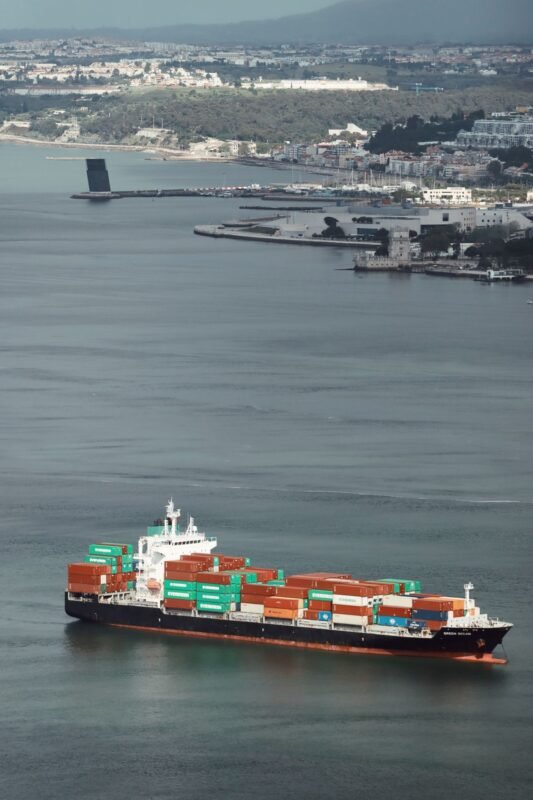
Under the maritime dispute provisions (Chapter XIX of the Maritime Code 2015, No. 95/2015/QH13 — cross-check exact article numbers against consolidated text 52/VBHN-VPQH): for sea carriage contracts with foreign elements, the parties may agree to submit disputes to arbitration or a foreign court. Where all parties are foreign organizations or individuals and agree in writing to choose Vietnamese arbitration, Vietnamese arbitration has jurisdiction even if the dispute arose outside Vietnam. Disputes may also be heard by Vietnamese courts where the relationship was established under Vietnamese law or related assets are in Vietnam.
3. International air carriage: the claimant chooses the court
Vietnam is a party to the Montreal Convention 1999 (effective for Vietnam from 26/11/2018). Article 28 gives the claimant the choice of court for international carriage under the Convention: the court of the carrier domicile, the court of the place of business through which the contract was made, or the court of destination. This is a significant procedural advantage for claimants in air-cargo disputes.
4. No agreement: what doors remain open?
- Vietnamese courts: sue under general jurisdiction for civil cases with foreign elements (Article 469 of the Civil Procedure Code 2015) or exclusive jurisdiction (Article 470 — but as stressed, this does not cover carriage contracts).
- Post-dispute arbitration agreement: Article 5.1 of the Law on Commercial Arbitration 2010 lets parties agree to arbitration even after the dispute has arisen — the escape hatch when the original contract left the clause blank.
- Courts will decline jurisdiction where there is a valid arbitration agreement or the case has already been resolved abroad (Article 472).
5. Identify the role: carrier or forwarder?
Correctly identifying the counterparty role determines the applicable liability regime. The carrier is liable under the carriage regime of the relevant mode. A forwarder acting as agent is liable only for its own faults within the scope of authorization — but if the forwarder contracts as carrier (contracting carrier), it bears carrier liability. Real disputes (e.g. cargo damaged on an international leg, contract signed with a Singapore forwarder) often start with misidentifying this role.
6. Which arbitration, which governing law?
Common choices: VIAC (domestic, reasonable cost), SIAC, HKIAC, ICC (neutral, experienced in complex disputes), LMAA (maritime specialist). Governing law: as agreed by the parties; failing agreement, the tribunal decides the most appropriate law (Article 14.2 of the Law on Commercial Arbitration 2010) and may apply international usages unless contrary to the fundamental principles of Vietnamese law. Foreign court judgments are recognized in Vietnam only under an international treaty or reciprocity — far harder than arbitration, so practice favors arbitration.
7. Enforcing foreign awards in Vietnam
Foreign arbitral awards are recognized and enforced in Vietnam under the New York Convention 1958 (Vietnam acceded via Decision 453/QD-CTN dated 28/7/1995, with 3 reservations: member states on a reciprocal basis only; commercial legal relations only; interpretation under the Constitution and laws of Vietnam) combined with the Civil Procedure Code 2015 (Articles 424, 451, 452, 459). The time limit for recognition requests is 3 years. Domestic arbitral awards are final and enforced through civil judgment enforcement bodies (Law on Civil Judgment Enforcement 106/2025/QH15).
8. Checklist for drafting the dispute clause
So you never have to ask “where to resolve” after a dispute erupts, the logistics contract clause should state: arbitral institution + procedural rules + seat + governing law + language, and consider enforceability (can the award be enforced where the counterparty assets are — the New York Convention is the anchor). Avoid all vague formulations.
Frequently asked questions
The logistics contract has no arbitration clause — can we still arbitrate? Yes — parties may agree to arbitration after the dispute has arisen (Article 5.1 of the Law on Commercial Arbitration 2010).
Must international carriage disputes be resolved in Vietnamese courts? No. Article 470 of the Civil Procedure Code does not place carriage contracts under exclusive jurisdiction — parties may choose arbitration or a foreign court.
Can a Singapore arbitral award be enforced in Vietnam? Yes, through recognition under the New York Convention and the Civil Procedure Code, within 3 years.
Facing an international logistics dispute, an ambiguous dispute-resolution clause, or enforcement of a foreign award in Vietnam? Reach us via the Contact page of FLAT Law Firm.
The information in this article is for reference only and does not constitute legal advice.
The legal content of this article is reviewed by the AI Legal Council of FLAT and submitted to the owner for approval before publication; it is not an opinion of a licensed lawyer and does not replace legal advice for specific cases.


