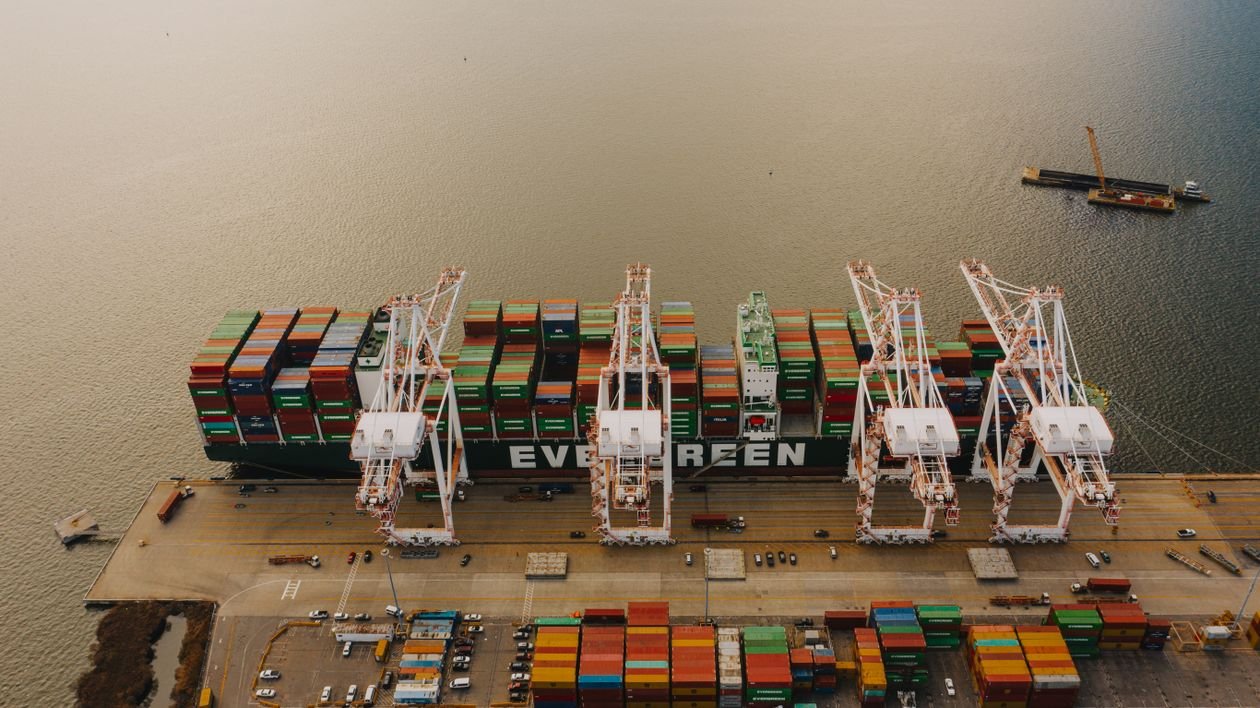
A company imports goods but does not want to bring them into the domestic market immediately — waiting for better prices, purchase orders, or re-export to a third country — and stores them in a bonded warehouse. The biggest benefit: goods arriving from abroad into the warehouse do not yet trigger import duty or import-stage VAT; the tax obligation arises only when the goods move from the warehouse into the domestic market. This article covers VAT on warehouse fees, customs procedures for each cargo flow, and the conceptual traps to avoid.
Table of contents
- What a bonded warehouse is — and three often-confused concepts
- The core tax benefit: duty deferral until when?
- Three cargo flows and where tax arises
- VAT on bonded warehouse leasing fees
- Customs procedures: warehousing, re-export, domestic release
- Selling or transferring ownership of warehoused goods
- Storage time limits: 12 + 12 months
- Checklist for choosing a lawful bonded warehouse
- Frequently asked questions
- Sources
1. What a bonded warehouse is — and three often-confused concepts
A bonded warehouse stores goods that have completed customs procedures, awaiting export to a third country or import into Vietnam. The key tax point: goods arriving from abroad into the warehouse have not completed import procedures, so no import duty or import-stage VAT arises yet.
The first conceptual trap — a bonded warehouse ≠ a non-tariff area ≠ a tax-suspension warehouse:
- Bonded warehouse: stores goods awaiting export/import; goods entering the domestic market complete procedures as imports from abroad;
- Non-tariff area: a geographically defined zone separated from the customs territory; trade with non-tariff areas enjoys its own tax regime (the 0% VAT rate at Article 9 of VAT Law 48/2024/QH15 applies to goods sold into non-tariff areas, not wholesale to every bonded-warehouse transaction);
- Tax-suspension warehouse: a company’s own warehouse for imported raw materials used to manufacture its own exports.
Confusing these three is a common cause of wrong tax-rate application — especially self-applying 0% VAT to every bonded-warehouse-related transaction.
2. The core tax benefit: duty deferral until when?
The bonded warehouse “duty suspension” mechanism works as follows (Law on Export and Import Duties 107/2016/QH13; Decree 134/2016/ND-CP):
- Goods arriving from abroad into the warehouse: no import duty or import-stage VAT yet;
- The tax obligation arises only when goods move from the warehouse into the domestic market;
- The actual import time is the moment the customs authority confirms the goods leave the bonded warehouse (Article 88.2, Decree 08/2015/ND-CP as amended by Decree 167/2025/ND-CP).
In practice, companies use bonded warehouses to: consolidate goods from multiple sources pending full-container re-export; keep goods near the consumer market while deferring duty until domestic orders arrive; or simply “park” goods awaiting better prices without immediate tax.
3. Three cargo flows and where tax arises
- Flow 1 — abroad → bonded warehouse → third country: goods are only stored in transit before re-export; no Vietnamese import duty or import-stage VAT arises;
- Flow 2 — abroad → bonded warehouse → domestic market: when goods leave the warehouse for the Vietnamese market, the owner completes procedures as for imports from abroad — paying import duty + import-stage VAT at the moment customs confirms the goods’ release;
- Flow 3 — domestic (export procedures completed) → bonded warehouse: goods with completed export procedures enter the warehouse pending shipment abroad; this flow concerns duty refund/deduction for exported goods under the applicable rules.
4. VAT on bonded warehouse leasing fees
Bonded warehouse leasing is a VAT-taxable service at the standard 10% rate. However, during the VAT reduction period under Resolution 204/2025/QH15 (01/7/2025–31/12/2026), warehousing services are not on the exclusion list — so the 8% rate applies during this period.
A word of caution: the 8% rate follows from the Resolution 204/2025 exclusion list; companies should check the implementing guidance for the Resolution before applying it to their invoices. From 01/01/2027 (absent an extension), the rate returns to normal.
5. Customs procedures: warehousing, re-export, domestic release
The current procedural framework: Decree 08/2015/ND-CP (as amended by Decree 167/2025/ND-CP — issued 30/6/2025, effective 15/8/2025; repealing Decree 59/2018/ND-CP) and Circular 38/2015/TT-BTC (as amended by Circular 39/2018/TT-BTC and Circular 121/2025/TT-BTC — effective 01/02/2026).
- Who may lease (Articles 84–86, Decree 08/2015): domestic and foreign cargo owners; stored goods must match the warehouse lease contract (Article 86.1);
- Warehousing: combined-transport declaration + import declaration (Article 51, Circular 38/2015);
- Re-export: the owner declares release information to the Customs Sub-department managing the warehouse; independent-transport declaration;
- Domestic release: procedures as for imports from abroad — import declaration, payment of import duty and import-stage VAT; goods from the warehouse into a non-tariff area follow the corresponding procedures.
6. Selling or transferring ownership of warehoused goods
A lesser-known advantage: the sale or transfer of ownership of goods stored in a bonded warehouse is carried out by the cargo owner itself; the warehouse keeper only notifies the Customs Sub-department for monitoring — NO import/export warehouse procedures are required (Article 91, Circular 38/2015/TT-BTC as amended by Article 1.59 of Circular 39/2018/TT-BTC). The storage period runs from the date goods entered the warehouse under the lease between the keeper and the previous owner.
This lets traders consolidate and re-sell goods inside the warehouse while waiting for better prices, without extra customs procedures — a flexible tool in commodities trading.
7. Storage time limits: 12 + 12 months
Under Article 61.1 of the Customs Law 54/2014/QH13 (still in force; consolidated text 54/VBHN-VPQH dated 23/3/2026): goods may be stored in a bonded warehouse for no more than 12 months from the warehousing date; with justified reasons, the Director of the managing Customs Department may grant one extension of no more than 12 months.
Coming change: the amended Customs Law (Law 11/2026/QH16), effective 01/3/2027, will extend the limit to no more than 24 months — not yet applicable; companies still follow the 12 + 12 month rule.
8. Checklist for choosing a lawful bonded warehouse
Not every warehouse qualifies as a bonded warehouse. Establishment conditions are set out in Article 10 of Decree 68/2016/ND-CP (as amended by Decree 67/2020/ND-CP) — tenants should check the following before signing (consult the full text for exact figures):
- The warehouse has been recognized by customs as meeting bonded-warehouse establishment conditions;
- Meets minimum area and perimeter fencing requirements;
- Has cargo management software for stored goods, connected to the customs authority;
- 24/7 online camera surveillance with data retained for the prescribed period;
- The lease contract specifies custody responsibilities, storage fees, and the customs-notification mechanism when ownership of warehoused goods is transferred.
9. Frequently asked questions
Must import duty be paid immediately when goods enter a bonded warehouse?
No. Goods arriving from abroad have not completed import procedures, so no import duty or import-stage VAT arises. The obligation arises only when goods move from the warehouse into the domestic market.
What VAT applies to bonded warehouse leasing fees?
Normally 10%; during the reduction period under Resolution 204/2025/QH15 (through 31/12/2026), warehousing services apply 8%.
Does selling goods stored in a bonded warehouse to another party require import/export procedures?
No. The owner carries out the sale or ownership transfer itself; the keeper notifies the Customs Sub-department for monitoring (Article 91, Circular 38/2015).
How long may goods stay in a bonded warehouse?
No more than 12 months from warehousing, extendable once by no more than 12 months with justified reasons (Article 61.1, Customs Law). From 01/3/2027, the amended Customs Law raises this to 24 months.
Do bonded warehouses enjoy 0% VAT like non-tariff areas?
No. The 0% rate at Article 9 of VAT Law 48/2024 applies to goods and services sold into qualifying non-tariff areas — not wholesale to every bonded-warehouse transaction.
10. Sources
- Customs Law 54/2014/QH13 (in force; consolidated 54/VBHN-VPQH dated 23/3/2026): Article 61.1 (12 + 12 month storage limit); Article 62 (bonded-warehouse establishment conditions);
- Decree 08/2015/ND-CP (as amended by Decree 167/2025/ND-CP — effective 15/8/2025; repealing Decree 59/2018/ND-CP): Articles 84–86 (leasing and managing bonded warehouses), Article 88.2 (actual import time);
- Circular 38/2015/TT-BTC (as amended by Circulars 39/2018/TT-BTC and 121/2025/TT-BTC — effective 01/02/2026): Article 51 (transport declarations), Article 91 (ownership transfer of warehoused goods);
- VAT Law 48/2024/QH15: Article 9 (0% rate for non-tariff areas); Resolution 204/2025/QH15 (VAT reduction 01/7/2025–31/12/2026);
- Law on Export and Import Duties 107/2016/QH13 and Decree 134/2016/ND-CP (when tax obligations arise);
- Decree 68/2016/ND-CP (as amended by Decree 67/2020/ND-CP): Article 10 (bonded-warehouse establishment conditions).
Related articles
- What documents are required for import customs clearance?
- Export customs procedures: documents and process
Does your company need advice on structuring transactions through a bonded warehouse or reviewing tax obligations when releasing goods domestically? Contact FLAT Law Firm.
Disclaimer
This article is for general reference only and does not constitute legal advice for any specific case. It was drafted by AI and quality-checked by the AI Legal Council of FLAT Law Firm; it has not been reviewed or approved by a human lawyer. Regulations may change; please check the current legal texts or consult a lawyer before applying.