
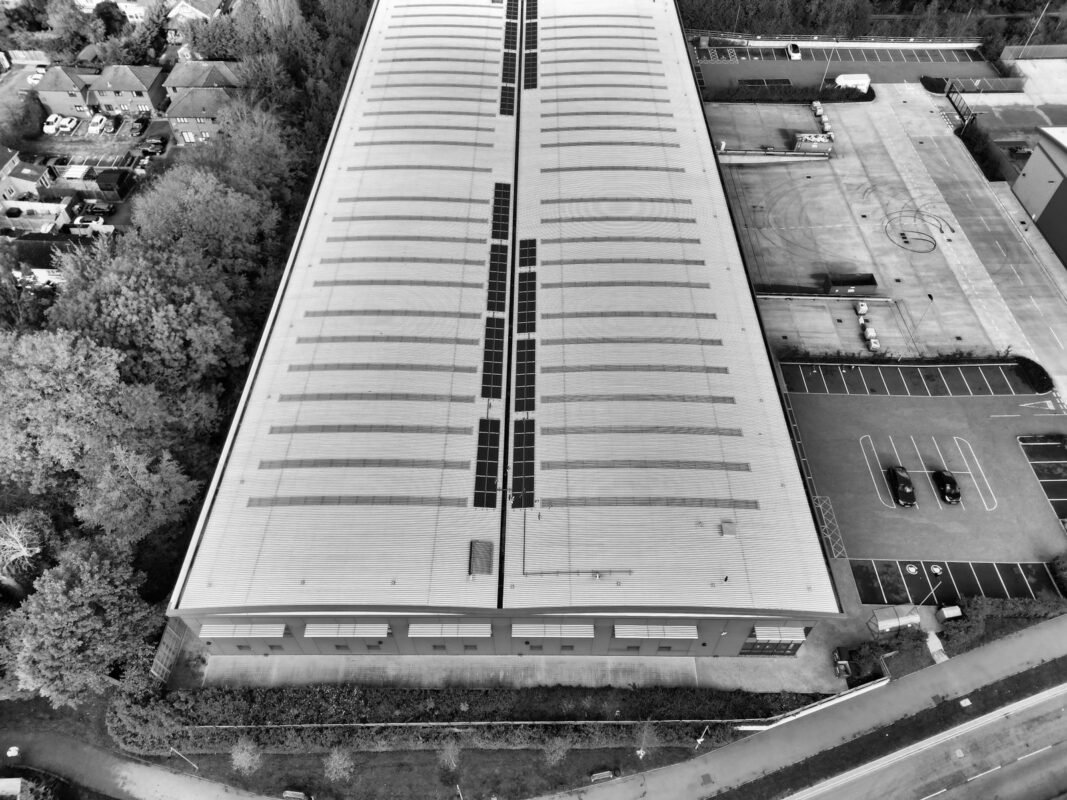
Scenario: an investor leases 4 hectares of park land not for its own factory, but to build standard warehouses and lease them to other manufacturers — the booming build-to-lease model. The legal question is how many rights layers the model stands on, and which layer breaks most easily. This article analyses the legal conditions for building warehouses for lease on sub-leased land under Article 202 of the Land Law 31/2024/QH15 and the Law on Real Estate Business 29/2023/QH15.
The land layer: you can only lease out what you have the right to lease
Under Article 202 of the Land Law 31/2024/QH15, an annual-paying in-park sub-lessee may sell and lease assets attached to the land that it creates — warehouses and factory buildings fall in that asset class. But it holds no right to sub-lease the land use rights themselves (bare land), and construction must stay within the land-use purpose, the plot’s 1/500 detailed plan and the sub-lease terms with the developer. A lump-sum sub-lessee stands far stronger: certified land use rights and the ability to lease out both the land rights and the assets. The decisive practical point: most head sub-leases are drafted for a self-producing investor and do not by default permit building for leasing business — a build-to-lease operator must obtain the developer’s written consent and, if needed, amend the sub-lease before designing, not notify after building.
The real-estate business and investment project layers
Leasing houses and construction works is real estate business under the Law on Real Estate Business 29/2023/QH15 (in force from 1 January 2025): the operator must be a duly established enterprise with real-estate business lines, and property put into business must meet statutory documentation and information-disclosure conditions. In parallel, the tenant’s investment project on its Investment Registration Certificate must state the true objective: if the original certificate records the investor’s own production, switching to building-for-lease is a project content change requiring adjustment under the Law on Investment 143/2025/QH15. These two layers are where build-to-lease models most often snag in large tenants’ and banks’ due diligence: warehouse leases exist, but the investment project and the property’s legal file do not match the leasing activity. Fixing them from the start is cheaper than fixing them when the first tenant demands a complete legal file to sign a five-year lease.
The warehouse lease contract: points that must not go wrong
A warehouse lease between the build-to-lease operator and the end tenant needs four points tighter than an ordinary factory lease. One, a leasing-authority warranty: the lessor warrants it holds the developer’s full consent and the works’ legal file, with compensation mechanics if the warranty fails. Two, nested terms: the warehouse lease term and the tenant’s renewal rights must sit comfortably inside the remaining land sub-lease term, with early-notice duties for any land-layer incident. Three, upper-layer risk allocation: if the land sub-lease terminates through the warehouse lessor’s fault, the tenant is compensated for relocation costs and rent differentials; conversely, the tenant’s own faults must not endanger the land layer (the tenant bears park-rule compliance as if it were a direct land tenant). Four, handover and reinstatement standards: floor loading, clear height and the warehouse’s fire systems recorded in parameters, because logistics tenants value the asset purely on those parameters. Build-to-lease is fully lawful with a real market — the only condition is that every rights layer is aligned before construction starts.
Frequently Asked Questions
Is it permitted to lease industrial park land, build warehouses and lease them out?
Permitted with conditions, under the correct legal model. Building works on leased land and leasing them out is real estate business — leasing houses and construction works — subject to the Law on Real Estate Business 29/2023/QH15: the operator must be an established enterprise, and the property put into business must have complete legal documents (land use rights, construction permit, completion file) and not be in a prohibited category. On the land side: an annual-paying sub-lessee may only lease assets attached to the land (ready-built warehouses), not sub-lease bare land; warehouse construction must also fit the plot’s land-use purpose and detailed plan (production/warehousing zoning), and typically needs the developer’s consent under the sub-lease plus investment-project adjustment for the leasing activity.
Is logistics accepted inside a production-specialised industrial park?
It depends on the park’s two sector-approval layers, not on the label ‘logistics’. The planning layer: the park’s zoning and detailed plans assign each plot to production, warehousing or services — a plot in the warehousing/logistics zone accepts a logistics project normally; a plot in a pure production zone may make a warehouse built for third-party leasing inconsistent with its approved land-use purpose. The attraction-orientation layer: a specialised park (accepting only supporting industries, high technology or one anchor sector) has grounds to refuse out-of-orientation sectors when issuing the Investment Registration Certificate, and the developer has the commercial right to refuse the lease. The correct order is therefore checking the plot’s zoning and seeking sector acceptance from the Management Board and the developer before negotiating rent — sector approval must be a condition precedent in the land agreement for a logistics project.
How are taxes and invoices handled for warehouse leasing on leased land?
Warehouse rental revenue is real-estate/asset-leasing business revenue: subject to value-added tax as prescribed (real-estate leasing generally bears the standard 10% VAT rate, subject to period-specific reduction policies), and corporate income tax on profits. The tax-accounting points: land rent paid to the developer and depreciation of the warehouse works are deductible expenses with valid documents; when the project sells/transfers the warehouses together with the land lease rights, transfer income is determined under the real-estate transfer framework of the Law on Corporate Income Tax 67/2025/QH15. Leasing is a documentation-conditioned business line, not a foreign-investment-prohibited one — an FDI build-to-lease model is entirely feasible if structured correctly from the Investment Registration Certificate onward.
Can the park Management Board refuse a warehousing/logistics project?
Yes, through two different mechanisms. The park Management Board (the state authority) appraises investment projects against the park’s planning, sector orientation and criteria when issuing or adjusting the Investment Registration Certificate — a project inconsistent with the zoning plan or the park’s attraction orientation may be refused or required to adjust. The park developer, as sub-lessor, holds an independent commercial right to select tenants fitting the park’s sector structure. The negotiation consequence: a logistics investor should not sign a land lease with heavy penalties before sector acceptance is confirmed; the safe structure is a memorandum or reservation agreement with Management Board and developer acceptance as a condition precedent, converting into the formal lease only once the condition is satisfied.

