
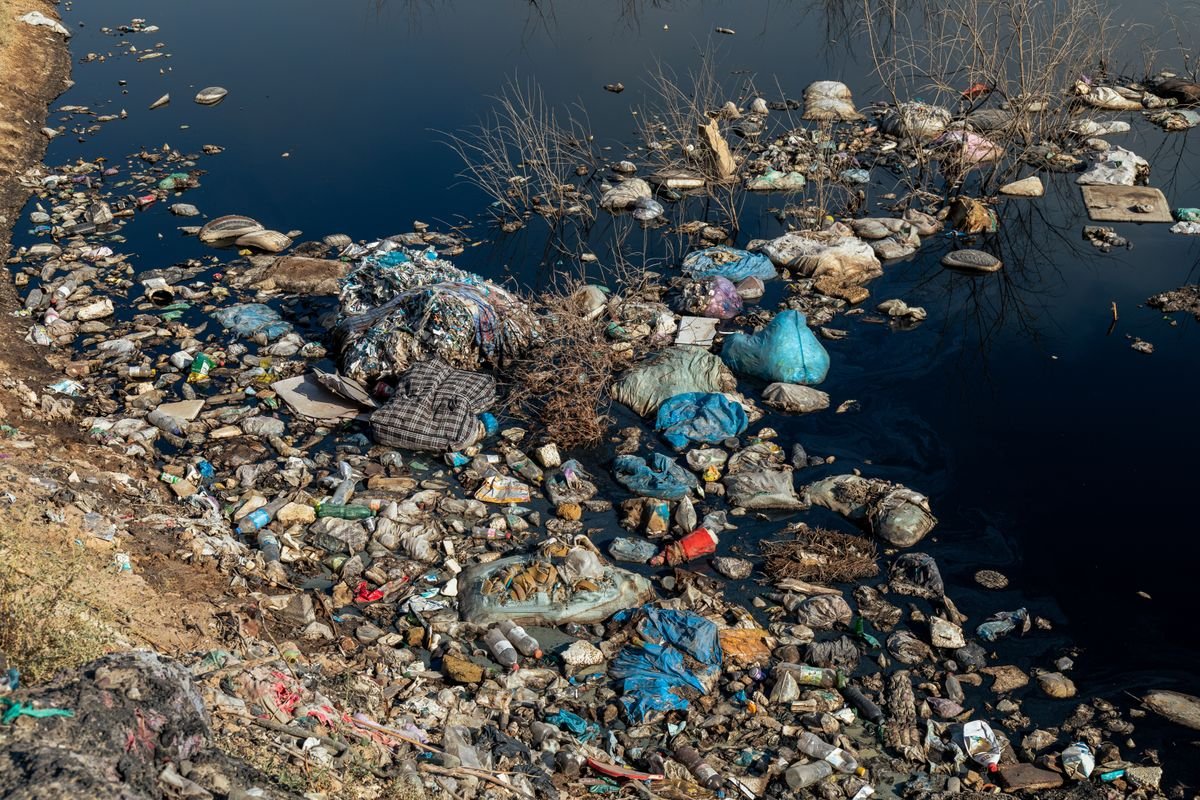
A factory discharges waste causing pollution — crops die, fish float dead, residents fall ill. Who has the right to demand compensation? Vietnamese law answers clearly: not only direct victims, but also authorities and any organization or individual detecting pollution may demand compensation — and victims may authorize a state agency to pursue the case on their behalf.
This article systematizes who may claim compensation for pollution damage under current law.
1. Two types of damage to distinguish
- Damage to the environment (degraded functions and utility of the environment: land, water, air, biodiversity…): state agencies are responsible for claiming compensation;
- Damage to life, health, property and lawful interests of organizations and individuals: the victims themselves (or their authorized representatives) claim.
This distinction matters because the procedures and initiating subjects differ between the two.
2. Four subjects entitled to claim (Article 131, 2020 Law on Environmental Protection)
- People’s Committees at all levels;
- Organizations and individuals detecting signs of environmental pollution or degradation;
- The Ministry of Agriculture and Environment — leading cases spanning two or more provinces, coordinating with provincial People’s Committees to collect and verify data and evidence of damage.
Responsible agencies rely on data, evidence and damage calculations to resolve claims by: agreement with the polluter; arbitration; or court proceedings.
3. A victim-friendly innovation: the right to authorize
Under Clause 3, Article 131, organizations and individuals suffering damage to life, health, property or lawful interests from degraded environmental functions may personally or through authorization have a state agency, organization or other individual determine the damage and claim compensation.
This is a notable effort of the 2020 Law on Environmental Protection: in practice, individual residents can hardly pursue a pollution compensation lawsuit alone — from expert assessment costs and evidence gathering to facing the polluting enterprise.
4. No need to prove the polluter’s fault
Under Article 602 of the 2015 Civil Code, a subject polluting the environment and causing damage must compensate as prescribed by law. This liability does not depend on fault: victims need only prove three elements — (1) the polluting act, (2) actual damage, (3) the causal link between them.
The principle is also affirmed in Clause 6, Article 4 of the 2020 Law on Environmental Protection: polluters must pay, compensate for damage and remediate.
5. Resolution methods and practical challenges
For damage to organizations and individuals: negotiation → mediation → court proceedings under civil law. The biggest challenge lies not in the rules but in proof: how much is the damage, and is there a direct causal link to the discharge?
The lesson from the Vedan case polluting the Thi Vai River (affecting over 6,000 households): the case dragged on and ended through negotiation — showing residents must prepare thoroughly: environmental monitoring results, damage assessments, expense receipts, medical records.
6. Frequently asked questions
Q: Can a neighbor (not the authorities) demand compensation from a business?
A: Yes — for damage to their own health or property, individuals and organizations may directly demand, negotiate or sue.
Q: Can one both report the violation and claim compensation?
A: Yes — these are independent channels: reporting for administrative handling; suing for civil damages.
Q: When does the limitation period start?
A: Under civil law, it runs from when the victim knew or should have known their lawful rights and interests were infringed.
Has your family or business suffered pollution damage? Contact us for advice.
This article was prepared by the FLAW AI Legal Council. Content is pending QA Council review before submission for approval; information is for reference only and does not replace legal advice for your specific case.


