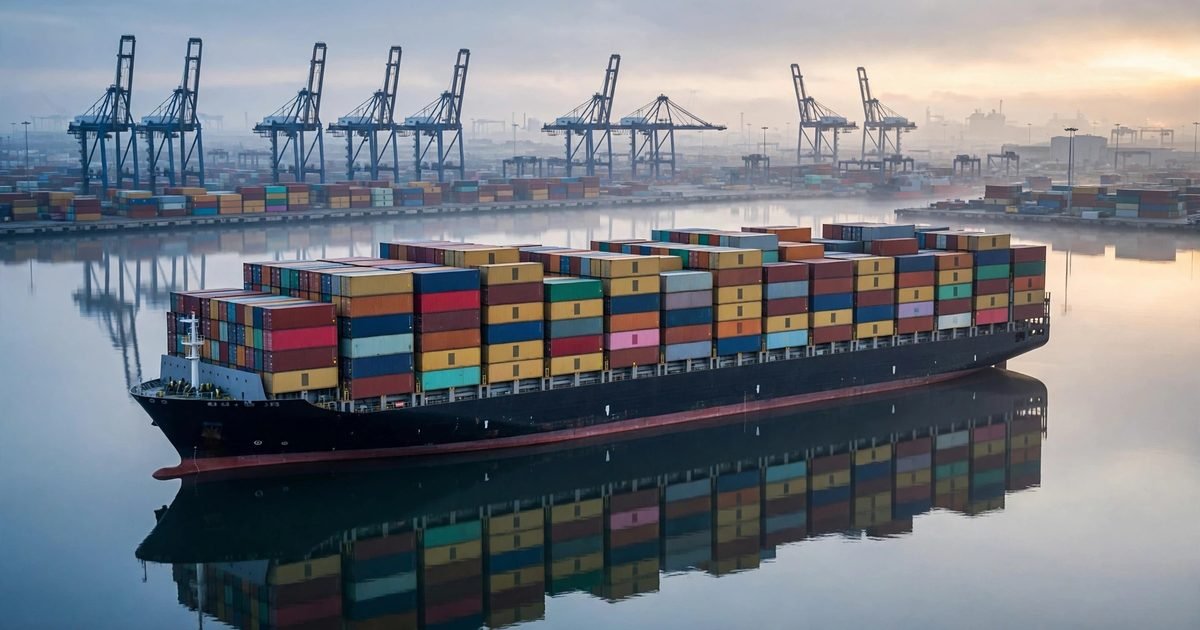
Toll manufacturing for export (gia công xuất khẩu) is one of the most common business models used by FDI enterprises in Vietnam: the foreign party supplies the raw materials, the Vietnamese enterprise contributes the factory, machinery, and labor to process them, the finished products are then exported, and the enterprise earns a tolling fee. On the tax side, this model enjoys a significant incentive "package" — exemption from import duty on materials, 0% VAT on exports and on tolling revenue, and refunds of input VAT — but each incentive is tied to strict conditions. Failing a single condition, for example not having your own processing facility and instead sub-contracting out the entire job, can cost an enterprise the whole import duty exemption.
This handbook sets out the full range of tax obligations and incentives for export toll manufacturers under the law in force as of September 2026, and draws a clear line between three often-confused models: toll manufacturing, export production (sản xuất xuất khẩu — SXXK), and export processing enterprises (doanh nghiệp chế xuất — EPE).
1. What toll manufacturing is — and why its tax treatment is distinctive
Under Articles 178 to 183 of the Commercial Law 36/2005/QH11 (Luật Thương mại 36/2005/QH11), tolling (processing) in commerce is an arrangement in which the processor uses some or all of the raw materials and supplies of the ordering party to perform work as required, in return for a fee. Where the ordering party is a foreign trader, the tolling contract must be in writing and must contain at a minimum the contents prescribed in Article 39 of Decree 69/2018/ND-CP (Nghị định 69/2018/ND-CP): the names and addresses of the parties; the name and quantity of the processed products; the processing price; the payment term and method; the list, quantity, and value of imported and domestic materials; and the material consumption norms and wastage allowances.
The core of pure toll manufacturing: title to the materials and the finished products remains with the foreign ordering party throughout the process. The Vietnamese enterprise neither buys the materials nor sells the finished products — its revenue is the tolling (processing) fee. It is this feature that produces a tax treatment different from an enterprise that buys its own materials, manufactures, and exports on its own account:
- Imported materials used for tolling are exempt from import duty (Article 10 of Decree 134/2016/ND-CP (Nghị định 134/2016/ND-CP)).
- Exported tolling products and tolling revenue are subject to 0% VAT when the conditions are met (Article 9 of the Law on Value-Added Tax 48/2024/QH15 (Luật Thuế giá trị gia tăng 48/2024/QH15)).
- The enterprise may claim a refund of uncredited input VAT of VND 300 million or more (Article 29 of Decree 181/2025/ND-CP (Nghị định 181/2025/ND-CP)).
- The tolling fee is income subject to corporate income tax at 20% (Article 10 of the Law on Corporate Income Tax 67/2025/QH15 (Luật Thuế thu nhập doanh nghiệp 67/2025/QH15)).
- The tolling price between related parties falls within the scope of the transfer pricing rules (Decree 255/2026/ND-CP (Nghị định 255/2026/ND-CP)).
2. Distinguishing the three models: toll manufacturing, export production (SXXK), and export processing enterprises (EPE)
This is the section enterprises confuse most often, and it is also what distinguishes this article from the article on import and export duties for export processing enterprises (EPE).
Export toll manufacturing is a business model: any enterprise in the territory of Vietnam may sign a tolling contract with a foreign trader. The tax incentives attach to the tolling activity — exemption from import duty on materials under Article 10 of Decree 134/2016/ND-CP (Nghị định 134/2016/ND-CP), on condition that the enterprise holds ownership or usage rights over a processing facility and over the machinery and equipment at the processing facility in the territory of Vietnam.
Export production (SXXK) is also a business model, but it differs in that the enterprise buys the materials itself (bearing its own price and inventory risk), manufactures on its own, exports in its own name, and sells the finished products. Imported materials used to manufacture exports are exempt from import duty under Article 12 of Decree 134/2016/ND-CP (Nghị định 134/2016/ND-CP) — a different provision from Article 10 applicable to tolling. On VAT and CIT, SXXK is treated like ordinary exports.
An export processing enterprise (EPE) is a legal status tied to a location and an investment project, not a business model. Under clause 21, Article 2 of Decree 35/2022/ND-CP (Nghị định 35/2022/ND-CP), an export processing enterprise is an enterprise carrying out export processing activities in an export processing zone, industrial park, or economic zone. The distinctive feature: an EPE is treated as a non-tariff zone — purchases and sales between an EPE and the domestic market are treated as export and import transactions. An EPE enjoys the tax policy applicable to non-tariff zones from the time the EPE-establishment investment objective is recorded in the Investment Registration Certificate, but after construction is completed it must be certified by the customs authority as meeting the conditions for customs inspection and supervision before it may officially operate (clause 3, Article 26 of Decree 35/2022/ND-CP (Nghị định 35/2022/ND-CP)).
Quick comparison table:
| Criterion | Export toll manufacturing | Export production (SXXK) | Export processing enterprise (EPE) |
|---|---|---|---|
| Nature | Business model | Business model | Legal status tied to a project and a location |
| Title to materials | Held by the foreign ordering party | Held by the enterprise | Depends on the EPE's specific business model |
| Main revenue | Tolling fee | Finished-product selling price | Depends on activity (may include tolling) |
| Import duty exemption on materials | Article 10 of Decree 134/2016/ND-CP | Article 12 of Decree 134/2016/ND-CP | Non-tariff zone tax policy |
| Condition for the import duty exemption | Own processing facility | Own manufacturing facility | IRC stating the EPE objective + customs confirmation |
| Domestic sales | Normal (taxes paid as prescribed) | Normal | Must complete import/export procedures and pay duties under the Law on Export and Import Duties |
| Can also be an EPE | Yes — an EPE may still take tolling orders | Yes | — |
The practical consequence of this distinction: a tolling enterprise is not required to be an EPE to enjoy the import duty exemption on materials — Article 10 of Decree 134/2016/ND-CP (Nghị định 134/2016/ND-CP) applies to every enterprise that meets the conditions. Conversely, registering as an EPE brings a "private customs territory" but comes with a compliance burden: operating in a fenced-off area, being subject to regular customs inspection and supervision, and completing import/export procedures for every transaction with the domestic market. Enterprises should weigh this on the share of domestic sales, the factory location, and compliance capacity — the EPE regime is covered separately in the article on import and export duties for export processing enterprises.
3. Import duty: exemption for materials imported for tolling
3.1. Scope of exempt goods
Under clause 6, Article 16 of the Law on Export and Import Duties 107/2016/QH13 (Luật Thuế xuất khẩu, thuế nhập khẩu 107/2016/QH13) and Article 10 of Decree 134/2016/ND-CP (Nghị định 134/2016/ND-CP) (as amended by Decree 18/2021/ND-CP (Nghị định 18/2021/ND-CP)), goods imported for tolling and tolling products exported under a tolling contract are exempt from export and import duties, including:
- Raw materials, semi-finished products, and supplies (including supplies used as packaging or packaging used to pack export products), and components imported directly to form the export products or to participate directly in the tolling process — including where the processor itself imports the materials, supplies, and components to perform the tolling contract;
- Goods imported solely as samples, not for sale, exchange, or consumption;
- Machinery and equipment imported as agreed in the tolling contract to perform the tolling;
- Finished products imported to be attached to the tolling products or packed together into synchronized items for export, as shown in the tolling contract or its appendices;
- Components and spare parts imported to warrant the exported tolling products;
- Tolling products exported abroad, exported into a non-tariff zone, or exported on the spot to organizations or individuals in Vietnam as designated by the ordering party;
- Scrap and waste generated in the tolling process, when exported back to the foreign ordering party, are exempt from export duty; goods imported for tolling that are permitted to be destroyed and have actually been destroyed in accordance with customs law are exempt from import duty.
3.2. The mandatory condition: you must have your own processing facility
This is the condition enterprises trip over most often. Under clause 2, Article 10 of Decree 134/2016/ND-CP (Nghị định 134/2016/ND-CP) (as amended by Decree 18/2021/ND-CP (Nghị định 18/2021/ND-CP)), to qualify for the exemption the taxpayer must hold ownership or usage rights over the facility used to process export goods and over the machinery and equipment at the processing facility in the territory of Vietnam.
The General Department of Vietnam Customs (Tổng cục Hải quan) clarified this position in Official Letter 1606/TCHQ-TXNK dated 6 May 2022 (Công văn 1606/TCHQ-TXNK): where a company signs a tolling contract with a foreign trader but sub-contracts out the entire job, and the company itself holds no ownership or usage rights over a production or processing facility — then the conditions are not met and the goods imported for tolling are not exempt from import duty. In other words, the model of a "trading company that signs the tolling contract and hands the entire job to another workshop" does not enjoy the import duty exemption on materials.
What enterprises should do: before signing the first tolling contract, review the usage rights over the factory (ownership, or a long-term lease with complete documentation) and the list of machinery and equipment used for tolling; and notify the processing facility to the supervising Sub-Department of Customs under Article 56 of Circular 38/2015/TT-BTC (Thông tư 38/2015/TT-BTC) (as amended by Circular 39/2018/TT-BTC (Thông tư 39/2018/TT-BTC)).
3.3. When the exemption is lost
The import duty exemption for tolling materials is a conditional, liquidation-based exemption: the materials must actually end up in products that have been exported. The following situations lead to duty becoming payable:
- Products are not exported, or imported materials remain in excess and are not exported: the taxpayer must register a new customs declaration, declare, and pay duty at the duty rate and dutiable value of the imported goods applicable at the time the new declaration is registered. The Department of Customs has given detailed guidance on this mechanism in Official Letter 13251/CHQ-NVTHQ of 2026 on tax policy for the re-processing of imported goods.
- Selling duty-exempt materials into the domestic market, or using them for the wrong purpose: in addition to back-tax assessment, administrative penalties for tax and customs violations may apply.
- For on-the-spot exports: goods imported for tolling to produce on-the-spot export products are exempt from import duty if the on-the-spot exporter notifies the customs authority of the information on the corresponding on-the-spot import declaration for which import procedures have been completed within 15 days of the customs clearance of the on-the-spot export products. If the deadline passes without notification, the enterprise must register a new declaration and pay the duty (any overpaid duty is handled after the duty has been paid and the notification has been made in accordance with tax administration law).
What enterprises should do: build accurate material consumption norms from the outset (norms are a mandatory content of the tolling contract under Article 39 of Decree 69/2018/ND-CP (Nghị định 69/2018/ND-CP)), track the inventory of duty-exempt materials separately from ordinary materials, and prepare the annual finalization report on the use of imported materials and supplies under Article 60 of Circular 38/2015/TT-BTC (Thông tư 38/2015/TT-BTC).
4. VAT: the 0% rate and input VAT refunds
4.1. Exported tolling products and tolling revenue are subject to the 0% rate
The Law on Value-Added Tax 48/2024/QH15 (Luật Thuế giá trị gia tăng 48/2024/QH15) took effect on 1 July 2025 (replacing Law 13/2008/QH12). Under Article 9 of this Law, the 0% rate applies to:
- Exported goods, including goods sold from Vietnam to overseas organizations and individuals and consumed outside Vietnam;
- Exported services, including services supplied directly to overseas organizations and individuals and consumed outside Vietnam;
- Goods sold from domestic Vietnam to organizations in a non-tariff zone and consumed in the non-tariff zone directly serving export production;
- Goods processed on a successive-tolling basis for export in accordance with the law.
For an export toll manufacturer, this means: tolling products exported abroad (or exported on the spot as designated by the ordering party, or exported into a non-tariff zone) are subject to the 0% rate; tolling revenue (the tolling fee) collected from the foreign party is also subject to the 0% rate when the conditions for exported services are met — that is, a service supply contract signed with the foreign party and bank payment documentation; no customs declaration is required for the tolling fee itself — in accounting practice, the VAT invoice states the processing price and the quantity of goods processed for the foreign party, at the 0% rate.
Note the cases that are not eligible for the 0% rate (point (d), clause 1, Article 9 of Law 48/2024/QH15 (Luật 48/2024/QH15)): technology transfer and transfers of intellectual property rights abroad; reinsurance services abroad; credit-granting services; capital transfers; derivative products; postal and telecommunications services, and certain other special cases. Toll manufacturers with ancillary activities such as technology transfer to a foreign party need to separate them to apply the correct rate.
4.2. The conditions for the 0% rate — separated for goods and services
The most common misunderstanding here: the customs declaration is a condition for exported goods only, not a general condition for exported services. The two groups follow separate condition sets:
A. Exported goods (including tolling products exported abroad, on-the-spot exports, and exports into non-tariff zones) — all three conditions must be satisfied simultaneously:
- A contract for export, tolling, or entrusted export;
- Bank payment documentation for the exported goods;
- A customs declaration in accordance with the law.
B. Exported services (including tolling fees collected from the foreign party) — only two conditions must be satisfied simultaneously:
- A service supply contract signed with a foreign organization or individual;
- Bank payment documentation for the exported services — no customs declaration is required.
(Legal basis: Article 9 of Law 48/2024/QH15 on Value-Added Tax; the dossiers and procedures are detailed in Article 18 of Decree 181/2025/ND-CP (Nghị định 181/2025/ND-CP) and Circular 69/2025/TT-BTC (Thông tư 69/2025/TT-BTC).)
What enterprises should do: standardize the documentation set from the very first shipment or service engagement — the tolling contract (a Vietnamese or bilingual version kept on file), the bank transfer advice matching the invoice, and the export customs declaration for goods — because the absence of any single link in the applicable condition set can lead the tax authority to deny the 0% rate on audit.
For hybrid models — enterprises that both manufacture exported tolling goods and supply services to foreign parties — the dossier must be reviewed revenue stream by revenue stream: goods revenue against group A, service revenue against group B. Borderline cases (for example, service fees bundled into the tolling unit price, or services performed alongside delivery abroad) need case-specific advice on allocation and evidence before the rate is applied — contact FLAT at hotline 0988424851 to review the contract and documentation before signing.
4.3. On-the-spot exports as designated by the ordering party
In tolling practice, the foreign ordering party often designates that the finished products be delivered to another enterprise in Vietnam (for example, the next stage of the supply chain). This is an on-the-spot export: the tolling enterprise completes on-the-spot export procedures, and the receiving party in Vietnam completes on-the-spot import procedures. Tolling products exported on the spot still enjoy the 0% VAT rate and the export duty exemption if the conditions are met, but the enterprise must pay special attention to the 15-day deadline for notifying the corresponding on-the-spot import declaration to the customs authority, as noted in section 3.3 — this is a common failure point that triggers back-assessment of import duty on the materials.
4.4. Input VAT refunds
Export toll manufacturers typically incur large amounts of input VAT (purchases of machinery, equipment, services, and domestic auxiliary materials) while their outputs are taxed at 0%, leaving no output VAT to credit against. The refund mechanism is set out in Article 29 of Decree 181/2025/ND-CP (Nghị định 181/2025/ND-CP):
- A business establishment that in a month or quarter has exported goods or services, if its uncredited input VAT is VND 300 million or more, is entitled to a VAT refund on a monthly or quarterly basis;
- Except for goods imported and then exported to another country — but this does not include materials imported to manufacture or process exports, so toll manufacturers are not excluded;
- For successive tolling, the party entitled to the refund is the business establishment that signed the export tolling contract with the foreign party.
The Tax Department (Cục Thuế) has given specific guidance on VAT refunds for enterprises with goods-export activities in Official Letter 2268/CT-CS of 2026 (Công văn 2268/CT-CS), issued on 10 April 2026. What enterprises should do: separately track input VAT serving export/tolling-for-export activities and reconcile it monthly so the refund dossier is filed as soon as the VND 300 million threshold is reached, instead of letting it pile up until year-end.
5. Corporate income tax: 20% on the tolling fee
The Law on Corporate Income Tax 67/2025/QH15 (Luật Thuế thu nhập doanh nghiệp 67/2025/QH15) took effect on 1 October 2025 and applies from the 2025 tax year (replacing Law 14/2008/QH12). The standard CIT rate is 20% (Article 10). For export toll manufacturers:
- Taxable income includes the entire tolling fee collected from the foreign ordering party, plus any other income (such as the sale of scrap domestically or deposit interest).
- Deductible expenses in determining taxable income include labor costs, depreciation of machinery and equipment, management expenses, and other expenses serving the tolling activity that meet the conditions on invoices, documentation, and payment. Note: interest expenses of enterprises with related-party transactions are capped under the rules on tax administration of related-party transactions (see section 6).
- CIT incentives (preferential rates, tax holidays, tax reductions) for new investment projects — including foreign-invested tolling projects — depend on the investment location, the incentivized business line, and the contents of the project's Investment Registration Certificate. There is no one-size-fits-all answer; this is a point to review specifically with counsel before building a tax plan, because self-applying an incentive without meeting the conditions will lead to back-tax assessment and penalties.
6. Transfer pricing: the 15% safe harbor for tolling activities
Most export toll manufacturers in Vietnam are subsidiaries or affiliates of foreign groups — the tolling price (usually set under the cost-plus method) therefore falls within the scope of the rules on tax administration of related-party transactions.
Decree 255/2026/ND-CP (Nghị định 255/2026/ND-CP), issued on 30 June 2026, took effect on 1 July 2026 and applies from the 2026 CIT tax year (replacing Decree 132/2020/ND-CP and Decree 20/2025/ND-CP). Point (c), clause 2, Article 20 of the Decree lists the cases exempt from preparing the transfer pricing documentation file. One of the conditions is that the taxpayer has revenue below VND 500 billion, derives no revenue or expenses from intangibles, and achieves minimum profit margins by function: distribution 5%, manufacturing 10%, and tolling 15%.
This is a threshold of particular significance for toll manufacturers dealing with related parties: if the profit margin of the tolling activity reaches 15% or more (and the remaining conditions are met), the enterprise is exempt from the obligation to prepare the pricing documentation file — a substantial reduction of the compliance burden. It must be understood correctly, however: the 15% threshold is a condition for exemption from preparing documentation, not a "safe profit level" that the tax authority is deemed to accept in every audit. If the profit margin is below 15%, the enterprise must still prepare and retain the full documentation file, and the tax authority may impose tax where the taxpayer fails to comply with the obligations to declare and determine related-party transaction prices (point (i), clause 2, Article 24 of the Law on Tax Administration 108/2025/QH15 (Luật Quản lý thuế 108/2025/QH15)).
What enterprises should do: from the moment the tolling contract with the parent or an affiliate is negotiated, build an economically grounded tolling price mechanism (a reasonable cost-plus analysis with comparability references), track the actual annual profit margin against the 15% threshold, and prepare the explanatory dossier ahead of the first CIT finalization period to which Decree 255/2026/ND-CP (Nghị định 255/2026/ND-CP) applies (the 2026 tax year).
7. Foreign contractor tax: when the toll manufacturer must withhold
Foreign contractor tax (currently governed by Article 12(3) of Decree 320/2025/ND-CP and Article 7(3) of Circular 20/2026/TT-BTC; Circular 103/2014/TT-BTC was repealed in full from 01/7/2026 by Article 99 of Circular 89/2026/TT-BTC) applies to foreign organizations and individuals doing business in Vietnam or earning income arising in Vietnam. Two directions must be distinguished:
- Inbound: the tolling fee that the Vietnamese enterprise receives from the foreign party is the Vietnamese enterprise's own income, subject to 20% CIT as noted — it is not an amount on which the enterprise withholds foreign contractor tax.
- Outbound: when the tolling enterprise pays foreign organizations or individuals — for example, leasing machinery or equipment from a foreign party; paying technical service fees, royalties, or technology transfer fees; buying materials from a foreign trader as designated — the enterprise has the obligation to withhold, declare, and pay foreign contractor tax on their behalf (VAT under Decree 181/2025/ND-CP; CIT at the deemed rates in Article 12(3) of Decree 320/2025/ND-CP and Article 7(3) of Circular 20/2026/TT-BTC, depending on the type of income; filing and payment procedures under Circular 89/2026/TT-BTC).
What enterprises should do: review every payment abroad under the tolling contract and the ancillary contracts, determine the foreign contractor tax obligation for each payment before paying, because the withholding obligation arises at the time of payment and late declaration is penalized.
8. Key customs procedures not to miss
The tax incentives of the tolling model are inseparable from customs procedural discipline. Three key procedures:
- Notifying the processing/manufacturing facility to the Sub-Department of Customs where import procedures are expected to be carried out (the supervising Sub-Department of Customs), via the electronic customs data processing system (Article 56 of Circular 38/2015/TT-BTC (Thông tư 38/2015/TT-BTC), as amended by Circular 39/2018/TT-BTC (Thông tư 39/2018/TT-BTC)). Export processing enterprises do not have to complete this procedure — another difference between ordinary tolling and EPEs.
- Declaring on the customs declaration: the receipt number of the tolling contract is declared on the import and export declarations for materials, supplies, machinery, equipment, and the products under the tolling contract.
- The annual finalization report on the use of imported materials and supplies and exported goods (Article 60 of Circular 38/2015/TT-BTC (Thông tư 38/2015/TT-BTC)). This is the tool the customs authority uses to reconcile the volume of duty-exempt imported materials against the volume of products actually exported — any unexplained discrepancy is grounds for back-tax assessment.
9. Seven common tax traps for export toll manufacturers
- Sub-contracting out the entire job while still declaring the import duty exemption. The company signs the tolling contract, has no factory or machinery of its own, and hands the entire job to another unit — it does not meet the conditions in clause 2, Article 10 of Decree 134/2016/ND-CP (Nghị định 134/2016/ND-CP), and all imported materials are subject to back-tax assessment (Official Letter 1606/TCHQ-TXNK of 2022 (Công văn 1606/TCHQ-TXNK)).
- Confusing tolling with SXXK when declaring the exemption. Applying Article 10 to what is in substance export production (buying the materials yourself) or vice versa — the wrong exemption basis, and the dossier is rejected on audit.
- Duty-exempt materials "leaking" into the domestic market. Selling, giving, or donating duty-exempt imported materials to domestic enterprises without changing the use purpose, without registering a new declaration and paying duty — back-tax assessment and penalties follow.
- Missing the 15-day deadline for on-the-spot exports. Failing to notify the corresponding on-the-spot import declaration on time means import duty on the materials becomes payable even though the goods were delivered exactly as designated.
- Missing a condition for the 0% VAT rate under the applicable condition set. For exported goods: a tolling contract that is not watertight, payment not routed through a bank, or errors in the customs declaration. For the tolling fee (exported services): a missing service supply contract with the foreign party or payment not routed through a bank — any broken link causes the corresponding revenue to be re-taxed at the ordinary rate.
- Letting the VAT refund dossier pile up. Not tracking the VND 300 million monthly/quarterly threshold and waiting until year-end to file — this both slows cash flow and increases the risk of documentation errors.
- A tolling price with a related party that cannot be defended. Setting the tolling price on the parent company's instruction without a cost-plus analysis and without tracking the profit margin against the 15% threshold — when a transfer pricing audit comes, the enterprise has no dossier to defend itself.
10. Frequently asked questions
Can a domestic enterprise (with no foreign capital) do export tolling and enjoy the import duty exemption on materials?
Short answer: Yes. The exemption regime in Article 10 of Decree 134/2016/ND-CP (Nghị định 134/2016/ND-CP) applies to every enterprise that meets the conditions, regardless of whether the capital is domestic or foreign.
Explanation: The only condition on the subject is that the taxpayer holds ownership or usage rights over the processing facility and the machinery and equipment at the processing facility in the territory of Vietnam. A 100% Vietnamese-owned enterprise that signs a tolling contract with a foreign trader and meets this condition is exempt from import duty on materials just like an FDI enterprise.
Legal basis: Clause 2, Article 10 of Decree 134/2016/ND-CP (Nghị định 134/2016/ND-CP) (as amended by Decree 18/2021/ND-CP (Nghị định 18/2021/ND-CP)).
What to do: Prepare complete documentation evidencing the usage rights over the factory and machinery before importing the first shipment of materials.
How are scrap and waste generated in the tolling process taxed?
Short answer: Scrap and waste exported back to the foreign ordering party are exempt from export duty; if destroyed in accordance with customs regulations, they are exempt from import duty; if sold domestically, duty must be declared and paid.
Explanation: Article 10 of Decree 134/2016/ND-CP (Nghị định 134/2016/ND-CP) (as amended by Decree 18/2021/ND-CP (Nghị định 18/2021/ND-CP)) provides that scrap and waste generated in the tolling process, when exported back to the foreign ordering party, are exempt from export and import duties. Goods imported for tolling that are permitted to be destroyed and have actually been destroyed in accordance with customs law are exempt from import duty. Where scrap is sold into the domestic market, the enterprise must complete the procedures to change the use purpose and pay duty as prescribed.
Legal basis: Article 10 of Decree 134/2016/ND-CP (Nghị định 134/2016/ND-CP) (as amended by Decree 18/2021/ND-CP (Nghị định 18/2021/ND-CP)).
What to do: Account for scrap and waste separately; choose the disposal option (return, destruction, or domestic sale) and complete the corresponding procedures as soon as it arises, rather than letting it pile up at year-end.
Are machinery lent by the foreign party for tolling exempt from import duty?
Short answer: Yes, if the lending of the machinery and equipment is agreed in the tolling contract.
Explanation: Point (c), clause 1, Article 10 of Decree 134/2016/ND-CP (Nghị định 134/2016/ND-CP) lists "machinery and equipment imported as agreed in the tolling contract to perform the tolling" within the scope of the exemption. The condition is that the tolling contract or its appendix clearly shows the foreign party lending machinery and equipment to perform the tolling. When the tolling contract ends, the handling of leased or borrowed machinery and equipment follows customs law.
Legal basis: Point (c), clause 1, Article 10 of Decree 134/2016/ND-CP (Nghị định 134/2016/ND-CP); Official Letter 2733/TCHQ-GSQL of 2015 (Công văn 2733/TCHQ-GSQL) guiding Circular 38/2015/TT-BTC.
What to do: Put the machinery-lending clause in the tolling contract or its appendix from the outset; do not add it after the machinery has already been imported.
Can an enterprise do export tolling and also sell goods domestically?
Short answer: Yes, but the two flows of goods, materials, and accounting must be kept fully separate.
Explanation: The law does not prohibit a tolling enterprise from simultaneously manufacturing and trading goods for domestic sale. However, materials imported duty-free for export tolling may not be used to manufacture goods for domestic sale; if conversion is needed, a new customs declaration must be registered and duty paid. On VAT, domestic revenue is subject to the ordinary rates (5% or 10% depending on the goods), while export tolling revenue is subject to 0% — the enterprise must separately account for input VAT serving each activity to credit and refund it correctly.
Legal basis: Article 10 of Decree 134/2016/ND-CP (Nghị định 134/2016/ND-CP); Article 9 of the Law on Value-Added Tax 48/2024/QH15 (Luật Thuế giá trị gia tăng 48/2024/QH15).
What to do: Organize warehousing, material codes, and the accounting system separately for the export tolling flow and the domestic flow from the outset; this is also what the customs authority checks when inspecting the processing facility.
Should we register as an export processing enterprise (EPE) instead of ordinary tolling?
Short answer: It depends on strategy — an EPE suits an enterprise that exports nearly all of its products and accepts the customs supervision discipline of a non-tariff zone.
Explanation: An EPE enjoys the non-tariff zone tax policy comprehensively (import duty exemption, 0% VAT on goods and services from the domestic market directly serving export production), but must operate in a fenced-off area, be subject to regular customs inspection and supervision, and complete import/export procedures for every transaction with the domestic market. An ordinary tolling enterprise, meanwhile, still enjoys the import duty exemption on materials under Article 10 of Decree 134/2016/ND-CP (Nghị định 134/2016/ND-CP) without the non-tariff zone constraints, and is more flexible when a significant share of sales is domestic.
Legal basis: Article 2 and clause 3, Article 26 of Decree 35/2022/ND-CP (Nghị định 35/2022/ND-CP); Article 10 of Decree 134/2016/ND-CP (Nghị định 134/2016/ND-CP).
What to do: Assess the projected export/domestic ratio over 3–5 years, the customs compliance cost, and the factory location before deciding; refer to the in-depth article on import and export duties for export processing enterprises (EPE) and work with counsel to model the tax obligations of each option.
11. When to work with a lawyer
Tax for an export toll manufacturer is an interlinked system: the tolling contract determines the import duty exemption conditions; the export documentation determines the 0% VAT rate; the tolling price determines the transfer pricing risk. One mistake at the contract stage can trigger back-tax assessment across all three tax types. Enterprises should work with a lawyer when: preparing to sign the first tolling contract with a foreign trader; designing the transaction structure across tolling, SXXK, and domestic sales; considering registration as an export processing enterprise (EPE); building a tolling pricing policy with the parent or affiliated companies ahead of the 2026 tax year — the first year Decree 255/2026/ND-CP (Nghị định 255/2026/ND-CP) applies; or when under customs or tax inspection or audit over duty-exempt materials, VAT refunds, or related-party transaction pricing.
FLAT LAW FIRM provides comprehensive tax advice for export toll manufacturers and FDI enterprises: reviewing tolling contracts, import duty exemption conditions on materials, VAT refunds, CIT incentives, transfer pricing compliance, and representing clients before customs and tax authorities. Contact our hotline at 0988424851 for advice on your enterprise's specific model.
References
- Commercial Law 36/2005/QH11 (Luật Thương mại số 36/2005/QH11) (Articles 178–183: tolling in commerce)
- Decree 69/2018/ND-CP dated 15 May 2018 (Nghị định số 69/2018/ND-CP ngày 15/5/2018) detailing a number of articles of the Law on Foreign Trade Management (Article 39: the tolling contract)
- Law on Export and Import Duties 107/2016/QH13 (Luật Thuế xuất khẩu, thuế nhập khẩu số 107/2016/QH13) (clause 6, Article 16: duty exemption for goods imported for tolling and exported tolling products)
- Decree 134/2016/ND-CP dated 1 September 2016 (Nghị định số 134/2016/ND-CP ngày 01/9/2016) detailing a number of articles of and measures to implement the Law on Export and Import Duties (Articles 10 and 12; as amended and supplemented by Decree 18/2021/ND-CP (Nghị định số 18/2021/ND-CP))
- Law on Value-Added Tax 48/2024/QH15 (Luật Thuế giá trị gia tăng số 48/2024/QH15) (effective 1 July 2025; Article 9: the 0% rate)
- Decree 181/2025/ND-CP (Nghị định số 181/2025/ND-CP) detailing the implementation of a number of articles of the Law on Value-Added Tax (Article 18: dossiers for the 0% rate; Article 29: refunds for exports)
- Circular 69/2025/TT-BTC (Thông tư số 69/2025/TT-BTC) guiding the dossiers and procedures for applying the 0% value-added tax rate
- Law on Corporate Income Tax 67/2025/QH15 (Luật Thuế thu nhập doanh nghiệp số 67/2025/QH15) (effective 1 October 2025, applicable from the 2025 tax year; Article 10: the 20% rate)
- Decree 255/2026/ND-CP dated 30 June 2026 (Nghị định số 255/2026/ND-CP ngày 30/6/2026) on tax administration of related-party transactions (effective 1 July 2026, applicable from the 2026 CIT tax year; Article 20: exemption from preparing transfer pricing documentation)
- Law on Tax Administration 108/2025/QH15 (Luật Quản lý thuế số 108/2025/QH15) (effective 1 July 2026)
- Decree 320/2025/ND-CP (Article 12(3): foreign contractor tax), Circular 20/2026/TT-BTC (Article 7(3): FCT computation), Circular 89/2026/TT-BTC (filing and payment procedures; Article 99 repealing Circular 103/2014/TT-BTC in full from 01/7/2026)
- Decree 35/2022/ND-CP dated 28 May 2022 (Nghị định số 35/2022/ND-CP ngày 28/5/2022) on the management of industrial parks and economic zones (Articles 2 and 26: export processing enterprises)
- Circular 38/2015/TT-BTC dated 25 March 2015 (Thông tư số 38/2015/TT-BTC ngày 25/3/2015) on customs procedures; customs inspection and supervision; export and import duties and tax administration of exported and imported goods (as amended by Circular 39/2018/TT-BTC (Thông tư số 39/2018/TT-BTC); Article 56: notification of the processing facility; Article 60: the finalization report)
- Official Letter 1606/TCHQ-TXNK dated 6 May 2022 (Công văn số 1606/TCHQ-TXNK ngày 06/5/2022) of the General Department of Vietnam Customs on the tax treatment of goods sub-contracted for processing
- Official Letter 13251/CHQ-NVTHQ of 2026 (Công văn số 13251/CHQ-NVTHQ năm 2026) of the Department of Customs guiding tax policy for the re-processing of imported goods
- Official Letter 2268/CT-CS dated 10 April 2026 (Công văn số 2268/CT-CS ngày 10/4/2026) of the Tax Department guiding value-added tax refunds for enterprises with goods-export activities
—