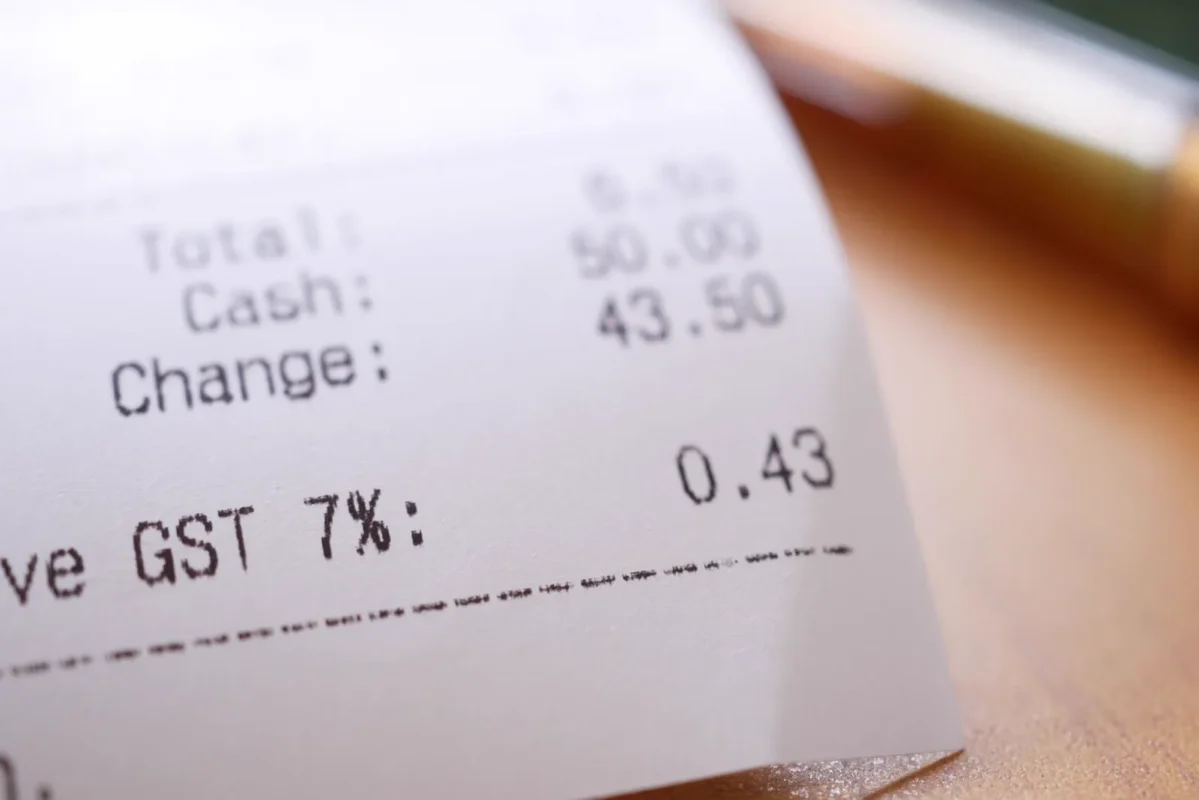
An invoice missing the buyers tax code, one reading “retail customer” for a corporate buyer, a forgotten digital signature — small errors that can render an invoice unlawful to use, trigger penalties, and disqualify expenses from deduction. So what mandatory contents must a valid electronic invoice (e-invoice) carry?
This article is a 14-item mandatory-content checklist under Article 10, Decree 123/2020/ND-CP (as amended by Decree 70/2025/ND-CP) — with permitted omissions, the new strict buyer-information rule, and the three e-invoice types distinguished.
Method note: All citations follow Decree 123/2020 as amended by Decree 70/2025; the original 2020 text is never applied without checking the amendments. Illustrative examples are examples only, not official forms issued by the tax authority.
1. The 14 mandatory contents of an e-invoice
Under Article 10, Decree 123/2020/ND-CP (amended by Article 1.7, Decree 70/2025/ND-CP), a valid e-invoice must contain:
- Invoice name: VAT invoice, sales invoice, or other invoice type;
- Invoice symbol and form symbol: per tax authority regulations;
- Invoice number: sequential, non-duplicated;
- Sellers name, address, tax code;
- Buyers name, address, tax code (see the new rule in Section 2);
- Goods/services name;
- Unit of measure;
- Quantity;
- Unit price;
- Amount exclusive of VAT;
- VAT rate, VAT amount per rate; total VAT;
- Total payment inclusive of VAT (in figures and in words);
- Sellers digital signature (and buyers in prescribed cases);
- Issuance time and the tax authority code (for coded e-invoices).
Accountants should print this checklist and verify every input invoice — a 30-second check can save tens of millions of VND in penalties and disallowed costs.
2. Whats new: strict buyer information for business buyers
Under Article 1.7, Decree 70/2025/ND-CP and Official Letter 2921/DTTNG-QLDN, where the buyer is an organization or business individual, the invoice must fully state the buyers name, address, and tax code — writing “retail customer” or leaving it blank is not allowed.
The “retail customer” trap: Many sellers still habitually invoice corporate buyers as “retail customer” because “the customer did not provide a tax code.” Under the new rules, such an invoice lacks mandatory contents — the seller faces penalties, and the buyer loses input VAT credit and deductible expenses.
Correct practice: The sales process must collect the tax code of organizational/business buyers before invoicing; the invoicing system should block saving invoices missing a required buyer tax code.
3. Cases exempt from full contents
Under Article 10.14 (amended by Article 1.7(d), Decree 70/2025/ND-CP), certain special cases are not required to carry all 14 contents, e.g.:
- Retail invoices at supermarkets, shopping malls;
- Petrol and oil invoices;
- Stamps, tickets, cards (bus tickets, cinema tickets, phone cards);
- Other special documents as prescribed.
Note: exemption from full contents does not mean inaccuracies are allowed — stated contents must still be correct, and exemptions are construed narrowly per the text.
4. The three e-invoice types distinguished
| Criterion | Coded e-invoice | Non-coded e-invoice | Cash-register e-invoice |
|---|---|---|---|
| Tax authority code | Yes (code issued before sending to buyer) | No | Coded, generated from a cash register connected to the tax authority |
| Users | Most enterprises | Enterprises meeting IT-infrastructure conditions | Direct retail to consumers (F&B, retail, services) |
| Signing & data transmission | Sign, obtain code, then send to buyer | Sign and send to buyer; report data to tax authority | Per Art. 11, Decree 123/2020 (amended by Art. 1.8, Decree 70/2025): data transmitted automatically upon payment |
Detailed e-invoice guidance: Circular 69/2025/TT-BTC.
5. Consequences of missing mandatory contents
Under Article 4.2, Decree 125/2020/ND-CP (amended by Decree 310/2025/ND-CP), an invoice lacking mandatory contents counts as unlawful use of invoices. Consequences:
- Seller: administrative penalties for invoice violations;
- Buyer: no input VAT credit; the corresponding cost is non-deductible for CIT purposes;
- Adjustment/replacement invoices must be issued — costing time and risking counterparty disputes.
6. Seven errors accountants should catch on every input invoice
Beyond the headline items, these are the defects most often found in real-world audits:
- Buyer tax code missing or mistyped — the single most common defect since the Decree 70/2025 tightening; a single wrong digit invalidates the mandatory content;
- Invoice symbol not matching the registered form — especially after a company changes its invoicing software and forgets to re-register the form symbol;
- Issuance time later than the actual delivery/service completion date — late invoicing is itself a violation, separate from content defects;
- Amounts in figures and words do not match — the written amount prevails in disputes, but the mismatch flags the invoice for review;
- Digital signature missing or from an expired certificate — check the signature validity period, not just its presence;
- Wrong VAT rate for the goods — e.g., applying 10% to goods subject to 8% or 5%; the rate must follow the VAT law, not the contract;
- Duplicate invoice numbers across the series — a system-configuration error that is easy to miss and hard to fix retroactively.
7. Worked example: checking an invoice in 60 seconds
(Illustrative example — not an official tax authority form.) Suppose you receive an invoice: “VAT invoice, symbol 1C26TYY, No. 0001234; Seller: ABC Trading Co., Ltd., address, tax code 0312345678; Buyer: XYZ Manufacturing Co., Ltd., address, tax code 0309876543; Goods: steel pipes, unit: kg, quantity: 500, unit price: 20,000 VND, amount excl. VAT: 10,000,000 VND, VAT 10%: 1,000,000 VND, total incl. VAT: 11,000,000 VND (eleven million VND); seller digital signature present; issuance date matches delivery date.”
Walk the 14 items: name ✓, symbols ✓, number ✓, seller info ✓, buyer info ✓ (full name, address, tax code — not “retail customer”), goods name ✓, unit ✓, quantity ✓, unit price ✓, pre-VAT amount ✓, VAT rate and amount ✓, total in figures and words ✓, digital signature ✓, issuance time ✓. Only coded invoices additionally need the tax authority code. This invoice passes.
8. FAQ
Q: The buyers address is wrong — must the invoice be cancelled?
A: Not necessarily — issue an adjustment invoice or adjustment record as prescribed. Cancellation/replacement applies only in statutory cases.
Q: Must a non-business individual buyers tax code be stated?
A: No. The strict rule applies only where the buyer is an organization or business individual.
Q: The buyer refuses to provide their tax code. What should we do?
A: For an organizational or business buyer, you cannot issue a compliant invoice without it. Explain the Decree 70/2025 requirement, document the refusal in writing, and consider declining the sale on invoice — issuing a defective invoice exposes the seller to penalties.
Q: How long must e-invoice data be retained?
A: E-invoices are accounting vouchers directly used for bookkeeping, so the 10-year retention tier applies (Law on Accounting 88/2015, Decree 174/2016/ND-CP) — keep them readable and retrievable for the full period.
9. Legal bases
- Decree 123/2020/ND-CP, Art. 10 (amended by Art. 1.7, Decree 70/2025/ND-CP), Art. 11 (amended by Art. 1.8, Decree 70/2025/ND-CP)
- Circular 69/2025/TT-BTC
- Official Letter 2921/DTTNG-QLDN
- Decree 125/2020/ND-CP, Art. 4.2 (amended by Decree 310/2025/ND-CP)
Transparency note: This article was prepared by the FLAW AI Legal Council; its legal content is awaiting review by the QA Council before approval. This is general legal information, not a substitute for legal advice on a specific matter.
For advice on a specific case, please contact FLAT Law Firm.