
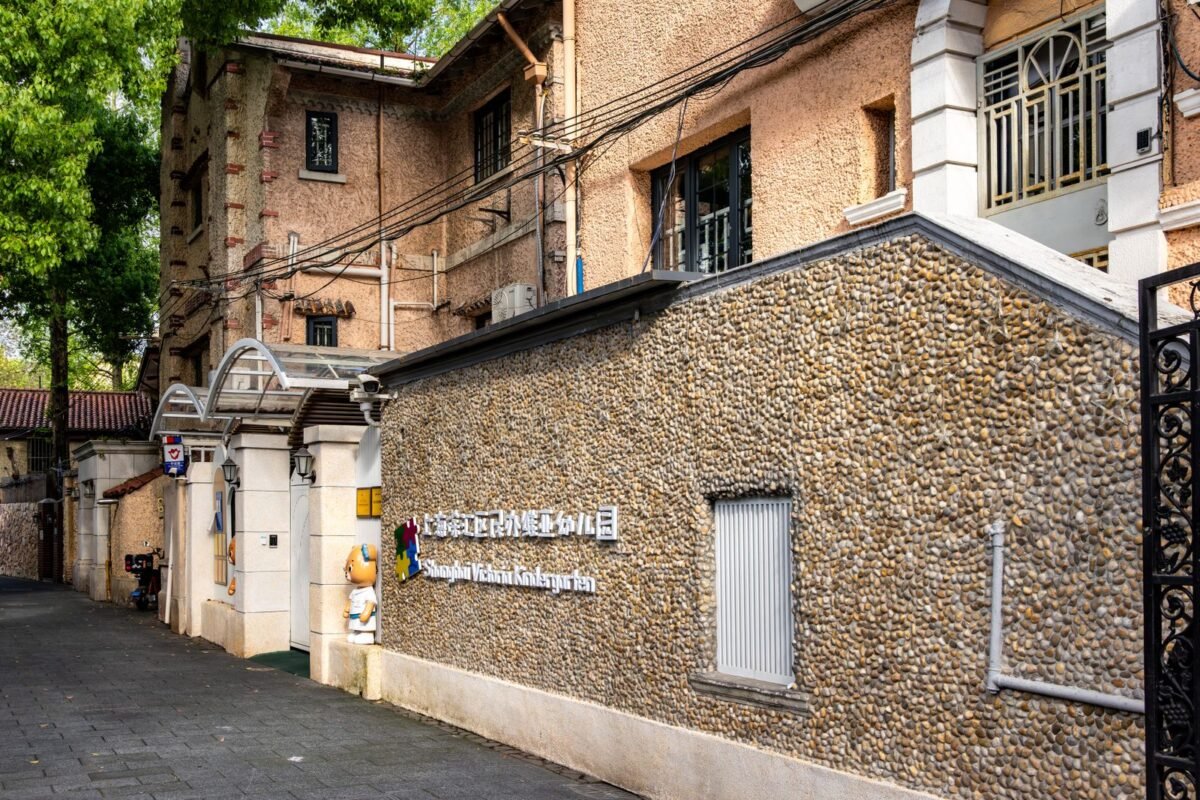
Many foreign education investors start a kindergarten project by leasing an attractive villa or ready retail space, and only later discover that floor area per child, a one-way kitchen flow and a walled playground are hard conditions inspected on site. This article deals only with that physical layer and its design consequences, separate from establishment and operating licensing in general.
The opening numbers: 8 sqm, 12 sqm and VND 30 million per child
Decree 86/2018/ND-CP on foreign cooperation and investment in education, as amended by Decree 124/2024/ND-CP, sets two quantitative yardsticks for a kindergarten. The first is construction floor area measured against class groups and enrolment: an average of at least 8 square metres per child in cities and towns, and 12 square metres per child in rural areas. The second is investment intensity: a project must reach at least VND 30 million of investment per child, excluding land use fees, with total minimum capital calculated at the point of maximum planned scale. Where the investor builds nothing new and instead leases existing premises or receives facilities as capital contribution, the minimum investment must still reach 70% of those levels.
The design consequence is very practical: 600 square metres in an urban district does not automatically hold 75 children, because the per-child average covers the whole school site rather than classrooms alone, and registered scale must also fit the mandatory functional rooms. Project teams should fix maximum enrolment from the floor area before signing a long lease, instead of leasing first and trimming scale inside the appraisal dossier.
The room list that inspectors actually walk through
Article 36 of Decree 86/2018/ND-CP lists the minimum physical structure of a preschool institution: a single concentrated site with a healthy environment; classrooms and children nap rooms plus functional rooms adequate in area, lighting and equipment; an office block covering the principal office, administration, a medical room, a guard room and staff space; clean water, drainage and child-safe sanitary facilities. If the school cooks on site, the kitchen must run a one-way process flow with equipment meeting food safety requirements. Outdoors there must be a playground, a wall enclosing the whole school area, a gate bearing the school name as prescribed, and greenery on site, with every design element, toy and device absolutely safe for children.
The commonly underestimated point is completeness at the moment of the operating appraisal: the medical room cannot be a temporary corner of the office, and the playground cannot be an area promised for completion after opening day. For leased space inside a commercial complex, investors should additionally test whether children can have a separated circulation route, how the building fire safety status reads, and what noise and hours restrictions the lease imposes on school operations.
Curriculum, fees and admissions: three connected questions
Facilities do not stand alone. A foreign curriculum may only be taught if it is recognised or accredited by the competent authority in its home country, has been taught directly in that country for at least five years up to the filing date, and is licensed by its owner for use in Vietnam; the programme must be approved before the school enrols. On student mix, Vietnamese children following the foreign programme must account for less than 50% of all children on that programme, a ratio that directly shapes admissions planning in predominantly Vietnamese residential areas.
Fees at a non-public institution are set by the school itself under the price autonomy mechanism, but the school must publish its fee schedule and any increase roadmap, and must honour the fee commitment for the school year as announced to parents. In other words, the state imposes no fee ceiling on an international kindergarten, yet fee transparency and refund terms when a child withdraws are exactly what parents and regulators scrutinise most closely in day-to-day operation.
Frequently Asked Questions
What site area is required to open an international kindergarten?
Under Article 36 of Decree 86/2018/ND-CP, the school construction floor area is set by class groups and enrolment at an average minimum of 8 square metres per child in cities and towns and 12 square metres per child in rural areas. That is whole-school area covering classrooms, nap rooms, functional rooms, offices, kitchen and auxiliaries, not classroom area alone. Alongside it, the project must reach minimum investment of VND 30 million per child, excluding land use fees.
Does the curriculum require approval?
Yes. A foreign education programme may be taught only if it meets the Decree 86/2018/ND-CP conditions: recognition or quality accreditation by the competent body in the home country, at least five years of direct teaching in that country up to the filing date, and consent of the programme owner for use in Vietnam. Approval must be completed before teaching begins, and content must not harm national defence, security or Vietnamese cultural values and customs.
Are tuition fees regulated?
There is no hard ceiling of the public-school type. A foreign-invested kindergarten sits in the non-public sector and sets its own tuition under the autonomy mechanism, but it must publish tuition and other charges, publish any increase roadmap, and keep the fee commitment for the school year as notified to parents. In practice the exposure lies in refunds and mid-year increases that depart from the commitment, the most common source of disputes between parents and international schools.
How is student admission regulated?
The school may enrol only after it holds an education operating licence and the programme has been approved. One quantitative limit belongs in the business plan from day one: Vietnamese children on the foreign programme must remain below 50% of all children on that programme at the school under Decree 86/2018/ND-CP. Maximum enrolment is also locked by the appraised floor area and investment intensity, so recruiting beyond the appraised scale breaches the operating conditions.
Related articles
- Guaranteeing Loans: Signing Means Paying & 5 Self-Protections
- Personal Debt Collection in Vietnam: 4 Steps to Sue & Enforce
- Maximum Lending Rate 20%/Year: The Cap & Usury Crime
- Lending to Friends & Collecting Lawfully: Notes, 3 Rungs, 3 Bans
- Foreign-invested audit firms: business conditions
This legal analysis has been verified against current Vietnamese regulations and cross-border FDI transaction practices by the attorneys at FLAT LAW FIRM.

