
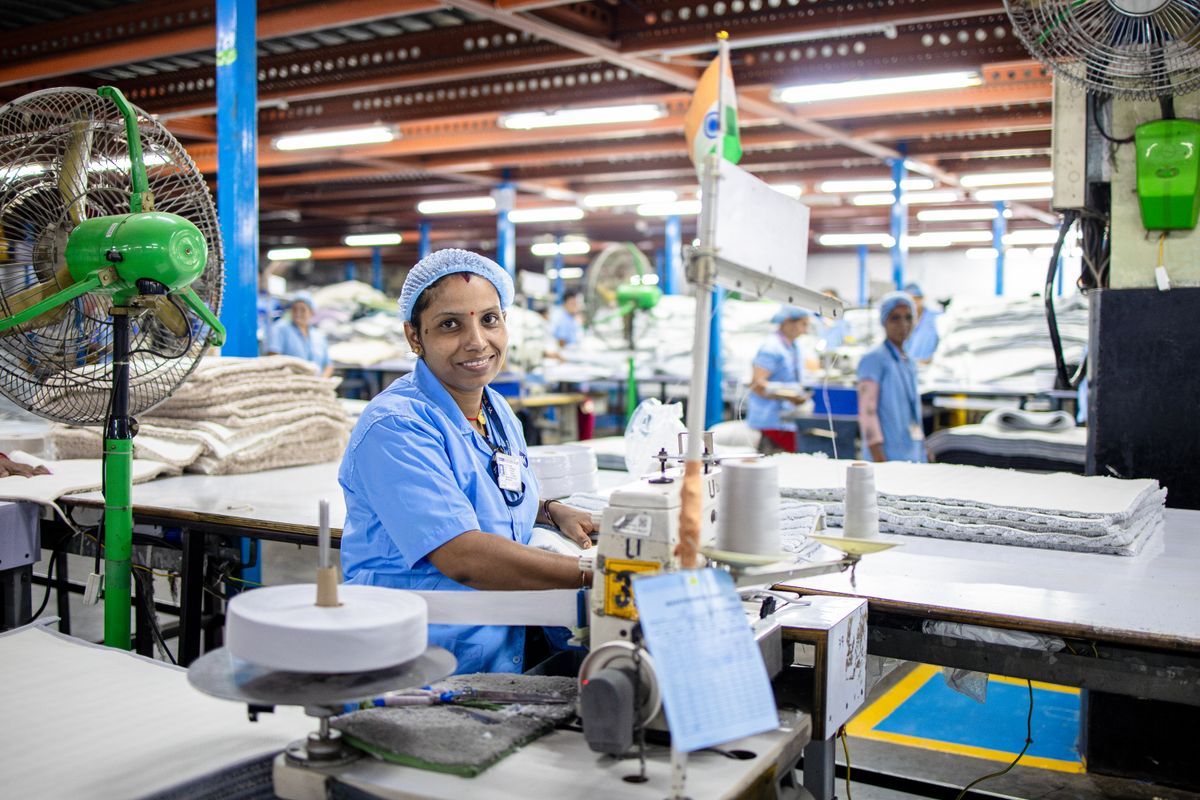
Image: Factory workers — Source: Pexels, by EqualStock IN (Pexels License).
International commitments meet the buyer’s questionnaire
A garment exporter shipping to Canada and Mexico — both CPTPP members — receives a social-responsibility questionnaire from its buyer: “Does the company respect workers’ freedom of association? How are collective agreements negotiated?”
This is not small talk. The CPTPP (effective for Vietnam since 14 January 2019) devotes a full chapter to labour, in which members commit to respecting workers’ fundamental rights under the ILO Declaration — including freedom of association and the effective recognition of collective bargaining. Buyers in CPTPP countries increasingly use these commitments as supplier-evaluation criteria. Vietnamese businesses need to understand: what the international standard requires, how far Vietnamese law goes, and how practice actually works.
The CPTPP labour standard: core requirements
The CPTPP labour chapter requires each member to adopt and maintain in its laws the fundamental labour rights: freedom of association and collective bargaining; elimination of forced labour; abolition of child labour; and elimination of employment discrimination. Members must also not weaken labour standards to attract trade or investment.
On freedom of association, the spirit is that workers may form and join organisations of their own choosing, that such organisations operate free from interference, and that they are protected against employer discrimination. This is the international benchmark Vietnam accepted upon joining the CPTPP.
Vietnamese law has moved: the 2019 Labor Code
Vietnam’s most important legal step toward CPTPP commitments is the Labor Code 2019 (Law No. 45/2019/QH14, effective 1 January 2021). For the first time, Vietnamese law recognises “worker representative organisations at the grassroots level” — comprising grassroots trade unions (within the Vietnam General Confederation of Labour system) and workers’ organisations at enterprises lawfully established outside the union system.
Under the 2019 Labor Code:
- Workers may establish and join representative organisations of their own at the enterprise;
- A grassroots worker representative organisation may request collective bargaining upon reaching the minimum membership ratio set by the Government (Article 68);
- Where an enterprise has multiple representative organisations, the one with the largest membership may request bargaining; others may join with its agreement (Articles 68–69).
On paper, this is a watershed change from the era of a single union system.
Practice: the gap between text and operation
Implementation, however, shows features that businesses and international buyers should face squarely:
First, the Vietnam General Confederation of Labour (VGCL) remains central. Union chapters within the VGCL system continue to be the most common representative bodies at enterprises. At sectoral and national levels, the VGCL retains the exclusive representative role in dialogue and bargaining with the Government and employer organisations.
Second, non-VGCL workers’ organisations remain rare in practice. Although legally permitted since 2021, few such organisations have been established and operated substantively; many businesses and workers are unfamiliar with the model.
Third, collective bargaining quality is uneven. Many enterprise-level collective agreements remain formalistic — copying statutory provisions rather than genuinely bargaining over above-minimum wages and working conditions. Years of wildcat strikes outside the official union framework reflect this representation gap.
Fourth, the grassroots union role at enterprises is often blurred. Many grassroots union officers double as company HR staff, limiting their capacity to represent and protect workers in dealings with employers.
What exporting businesses should do
For exporters serving CPTPP markets, practical advice:
- Build substantive — not formalistic — labour relations. Genuine collective bargaining and above-the-law collective agreements are the most convincing evidence before buyer audit teams.
- Respect workers’ right to establish representative organisations under the 2019 Labor Code; never interfere with or discriminate against participants.
- Set up regular dialogue between management and worker representatives to resolve issues early and reduce wildcat dispute risks.
- Prepare a labour-compliance dossier: collective agreements, dialogue minutes, grievance procedures — ready when buyers request assessment.
Conclusion
The CPTPP sets international benchmarks on freedom of association and collective bargaining; the 2019 Labor Code created the legal framework for Vietnam to approach them through grassroots worker representation. But the gap between text and reality — few non-union organisations, uneven bargaining quality — remains the challenge. For exporters, the wise approach is not to wait for the law to perfect itself but to build substantive labour relations today: meeting international buyers’ expectations while securing long-term production stability.
Frequently asked questions
What does the CPTPP require on union rights?
CPTPP members must respect and ensure fundamental labour rights per ILO standards, including freedom of association and the effective recognition of collective bargaining, and must not lower labour standards to compete for trade.
May Vietnamese workers establish organisations outside the trade union?
Yes. The 2019 Labor Code allows workers to establish workers’ organisations at enterprises outside the VGCL system, subject to lawful establishment.
Are collective agreements mandatory?
The law encourages collective bargaining and provides the mechanism; grassroots worker representative organisations may request bargaining upon meeting membership conditions. Businesses should engage proactively rather than wait to be asked.
How do CPTPP buyers assess labour compliance?
Through questionnaires, on-site audits, and document requests: collective agreements, dialogue mechanisms, grievance procedures, and evidence of non-discrimination against worker-organisation participants.
What should a business do when workers want to form a new organisation?
Respect the right under law, do not interfere or obstruct; cooperate within the dialogue framework; and treat it as an opportunity to build an official representation channel rather than letting grievances accumulate into wildcat disputes.
This article has been quality-reviewed by the FLAW AI Legal Council
Related articles
- Vietnamese Textiles to Canada: CPTPP Yarn-Forward Origin Rules
- EUDR vs the US Lacey Act: Exporting Wood to the EU and the US Compared
- De Minimis Tolerance in EVFTA Rules of Origin: How It Applies to Pharmaceuticals
- Getting EVFTA, UKVFTA and CPTPP Tariff Rates Right: a 5-Step Process for Trading Companies
- Annual Administrative Reviews: Lowering US AD/CVD Rates